
Laces and fancy knits novelty
Between Transparency and Design – What Are Laces and Fancy Knits?
Lace fabrics are known for their ornamental openwork construction, created through embroidery, warp knitting, or chemical etching. They offer a delicate, romantic aesthetic and are widely used in:
-
Bridalwear and lingerie
-
Eveningwear and couture pieces
-
Inserts, overlays, and accessories
Fancy knits, on the other hand, include open-structured, decorative knit fabrics developed with specialty yarns and patterning techniques. They provide:
-
Elasticity and softness
-
Surface interest through textured or eyelet designs
-
Airy comfort with visual character
Together, these fabrics represent a versatile category where function and beauty meet.
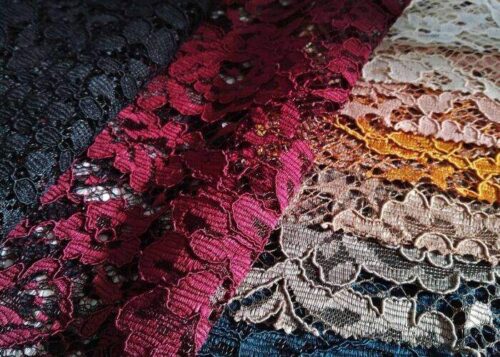
ARNIA’s Laces and Fancy Knits – Italian Technique Meets Contemporary Design
At ARNIA TEXTILE FASHION, we collaborate with highly specialized mills in the Busto Arsizio and Gallarate districts, Italy’s historical epicenter for industrial lace and knit innovation.
Our collection features:
-
Corded lace, stretch lace, embroidered tulle
-
Eyelet knits (broderie anglaise-inspired)
-
Fancy meshes, jacquard knits, and textured jerseys
-
Base cloths made from polyester, polyamide, viscose, and GRS-certified yarns
We offer both ready-made qualities and custom developments to align with your brand identity.
Bring a lace or fancy-knit reference to our B2B fabric sourcing service, or explore custom fabric development for changes to construction, motif, yarn or finish. We assess technical feasibility, repeatability and agreed quality checks against the intended garment. Production timing and any certification pathway are confirmed article by article and lot by lot. Share quantities, garment use, target cost and delivery requirements through the Project Brief.
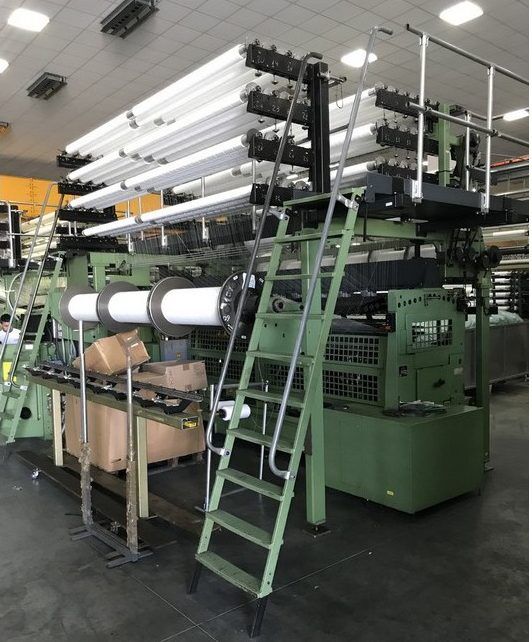
Designed for Soft Structures and Delicate Impact
These fabrics are ideal for:
-
Lingerie, bridal and intimatewear
-
Transparencies in blouses, dresses, tops
-
Light layering pieces, decorative panels, and trims
-
Fashion that requires both stretch and style
Their combination of comfort, drape, and intricate design makes them perfect for collections where fabric becomes detail.
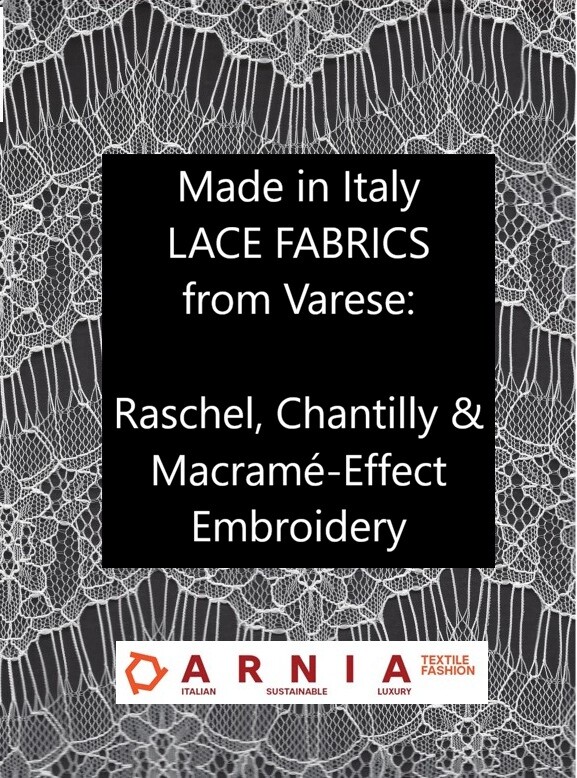
Responsible Materials, Elegant Execution
Our lace and fancy knit production is aligned with ARNIA’s values of ethical sourcing and responsible innovation:
-
Many fabrics are available with GRS- or OEKO-TEX®-certified yarns
-
Local production ensures short transport chains and reduced emissions
-
Designed for durability and seasonless reuse
We believe delicate doesn’t mean disposable.
Stock-Supported & Custom Options Available
ARNIA offers:
-
Stock-supported fabrics for quick-turn projects and prototyping
-
Custom development of patterns, finishes, and compositions
-
Small minimums to support independent and agile collections
We also support:
-
Foil printing, devoré embroidery, and fabric layering on request
-
Coordination with other fabric families for harmonized textile collections
Explore ARNIA TEXTILE FASHION's Laces and Fancy Knits range, featuring exquisite designs and luxurious textures. Our collection blends elegance with sustainability, offering high-quality, eco-friendly materials perfect for sophisticated fashion creations. Elevate your designs with our premium, Italian-crafted fabrics.
** please note that THE PRICES ON THE PHOTOS ARE NOT UPDATED / they are only indicative - the updated quotations will be provided on request
Please do not hesitate to contact us for any kind of questions or inquiries and we'll be happy to assist you
Buyer guide for laces and fancy knit fabrics
Laces and fancy knits combine open structures, decorative yarn effects and varying degrees of stretch or stability. The correct article depends on how the material will be supported and constructed in the final garment.
Define the intended garment and visual role
Define transparency, stretch, recovery, surface relief and whether the material is used for a full garment, overlay, insert or trim. The relationship with lining or backing should be considered from the beginning.
Explain whether the fabric is the main visual statement, a coordinated secondary material or a functional layer. This helps determine which technical characteristics matter most when comparing articles.
Confirm the exact article and variant
Record the article name or code, the preferred colour or pattern and the gallery image used for selection. If several photographs show the same quality from different angles or colourways, keep them together in the enquiry. Physical samples remain the reference for hand, colour, surface, transparency and drape.
Evaluate construction before approving the design
Review mesh or knit stability, edge behaviour, snagging, stretch and recovery, seam visibility and the way the fabric responds to gathering or shaping. Complex open structures should be tested with the intended sewing construction.
Review the material together with lining, trims and any secondary fabrics that will be used in the garment. The interaction between materials often changes perceived colour, bulk and movement.
Assess scale, placement and cutting implications
For directional motifs, engineered borders or large decorative repeats, compare the usable width and motif position with the garment pattern. Border placement can influence both design and consumption.
When placement is important, provide a garment sketch or technical drawing and identify the zones where the motif or surface effect should fall. This allows consumption and cutting feasibility to be assessed before production fabric is committed.
Use physical sampling to validate the route
A swatch provides an initial evaluation, but a representative panel or prototype is the stronger decision tool for complex surfaces. Use sampling to review seams, pressing, edge finishing, drape, stability and interaction with other materials. Record the approved reference and date so later production can be checked against the same standard.
Custom development should be specific
If colour, embroidery, yarn effect or another decorative development is required, provide the exact visual target and garment application. ARNIA can assess the suitable base and specialist process route.
Ask ARNIA to confirm the development steps, sample approvals, technical minimums and commercial conditions. Keep an approved physical or documented reference at each stage and record subsequent changes clearly.
Confirm current availability and quotation
Availability is confirmed by article, colour or pattern and quantity. Historical prices visible in photographs or archived cards are indicative references only. Request a current quotation and current availability for the selected reference. If the project requires a special colour, print, finish or new production, the applicable route is assessed separately.
Certification and traceability are project-specific
If GOTS, GRS or FSC is required, ask ARNIA to confirm the applicable article, production route, technical minimums and supporting documentation. A certified upstream material does not automatically make the finished garment a certified product; the relevant Chain of Custody pathway and brand certification status must be considered before a final-product claim.
If your sustainability or compliance team requires traceability data, testing or declarations, identify those requirements at enquiry or order stage so they can be linked to the selected SKU or lot.
Prepare a complete request
- Article, gallery reference and preferred colour or pattern.
- Garment category and intended silhouette.
- Placement, repeat or surface requirements.
- Sample metres and expected production metres by variant.
- Custom development, testing, certification or traceability needs.
- Target sample approval date, production window and destination.
ARNIA works as a B2B textile development and production partner in the Lombardy district, coordinating specialist processes, quality control, documentation and a selected supply-chain network. The objective is to turn a visual textile reference into a technically controlled and commercially workable material choice.
Send your material shortlist and project brief to ARNIA to define the next sampling and development step.
Technical decision framework for laces and fancy knits
Once a material has been shortlisted visually, the buyer should turn that preference into a production-ready specification. For laces and fancy knits, the main decision points include open structure, transparency, stretch and embellishment. A clear specification reduces unnecessary sampling and makes it easier to compare stock, standard production and custom-development routes.
Define the approved physical reference
Identify the exact article, colour or pattern and the physical sample that represents the approved direction. Record the date and any condition attached to the approval. If colour is approved but hand or finish is still open, state that explicitly so the next sample is not mistaken for a fully released production reference.
Connect the fabric to the actual garment
State the garment category, silhouette and the construction areas where the material is critical. Seams, hems, gathers, folds, pockets, facings, linings and closures can change the way a textile behaves. A fabric should not be treated as approved for production until the important construction points have been reviewed in a representative sample or prototype.
Open or decorative structures should be evaluated with the intended lining or backing. Border motifs, engineered sections or unstable edges can affect placement and consumption.
Estimate consumption after direction and placement are clear
Consumption should reflect usable width, one-way direction where relevant, motif repeat, matching requirements and garment size. A simple estimate based only on garment area can be misleading for directional, decorative or open-structure fabrics. If placement rules are flexible, define the acceptable range because this can improve cutting efficiency.
Approve colour in the final material context
Review colour on the actual article and, where relevant, with the intended lining, underlayer, trim or complementary fabric. Physical approval under consistent lighting provides a more reliable reference than screen images. Record the accepted colour reference together with the article and finishing stage.
Define what must be tested
Testing should respond to the product and market, not simply to the fibre name. Depending on the project, relevant checks can include dimensional stability, colourfastness, pH, restricted substances or other brand requirements. If the material will be used close to the skin or in a sensitive category, identify this before production approval.
Keep sample and production quantities separate
State the metres needed for development and the expected bulk quantity separately, divided by colour or pattern. This helps determine whether existing stock, a running production route or a custom program is the most appropriate solution. A laboratory or sample-scale result should not be assumed to represent the commercial route until production quantity and process are confirmed.
Plan custom development as a controlled change
If the selected article needs modification, define exactly which characteristic should change and which must remain. Colour, motif, scale, yarn effect, hand, weight or finishing should be treated as separate variables. Approve each meaningful development stage rather than changing several characteristics at once without a comparison standard.
Use documentation as part of the material decision
If the project requires GOTS, GRS, FSC, traceability data, REACH or brand-specific RSL/MRSL evidence, include that requirement before the final article is released. The applicable documentation depends on the selected article, process and order. A certified upstream material does not automatically create a certified finished product.
Prepare the final material release
- Approved article, colour or pattern.
- Approved physical sample and date.
- Garment category and construction notes.
- Required direction, placement or repeat rules.
- Sample and production metres by variant.
- Testing and compliance requirements.
- Certification or traceability requirements.
- Target production and delivery dates.
When these elements are defined, the quotation and production route refer to a controlled material specification rather than a generic fabric family. This is the basis for repeatability, quality control and clearer communication between buyer, designer and production partners.


