
If you’re reading this, you care. You want your collections to be beautiful and responsible. You want to do right by people and planet—and you want to say so without risking your reputation. This Sustainability Practical Guide is tailored for you.
Why Sustainability Practical Guide for Emerging Brands matters (and why we’re on your side)
At ARNIA TEXTILE FASHION, we’re a non-profit cooperative that lives and breathes ESG: environmental responsibility, social inclusion, and solid governance. We employ differently-abled people in excellence-driven roles and run a tightly monitored supply chain bound to our Code of Ethics and Values Charter. But even with deep experience, we still treat sustainability as a journey of continuous improvement, not a sticker you slap on a hangtag.
We see many early-stage designers approach sustainability in good faith, assuming that buying a certified fabric makes the entire collection “certified” or “sustainable.” The intention is right. The conclusion, unfortunately, can be wrong—and legally risky.
Below you’ll find:
-
a plain-English map of ESG and major textile certifications (GOTS, GRS, FSC®, ECOVERO™),
-
what “chain of custody” really means (and why it changes what you can claim),
-
the realistic path for small runs, pilots, and capsule drops,
-
how to communicate without greenwashing, and
-
a step-by-step continuous-improvement roadmap you can start today.
ESG for fashion—what a brand actually controls
-
Environmental (E): Materials (preferred fibers, chemistry), processes (dyeing/finishing), energy/water use, waste minimization, logistics.
-
Social (S): Safe work, fair pay, inclusion, supplier due diligence, grievance channels.
-
Governance (G): Policies, contracts, audits, traceability, truthful marketing, responsible claims.
Key truth: ESG is more than the fabric you buy. It’s your policies + partners + proof.
Certifications in fashion textiles (and what they do—and don’t—say)
GOTS — Global Organic Textile Standard
Covers organic fiber content and strict social, environmental and chemical criteria across the the whole processing chain. Use of the GOTS logo or product-level claim requires that every entity up to the brand is certified and that your product complies with labeling rules [the entire processing supply chain must be certified and the product carries complete and approved GOTS labelling]. If only the fabric or yarn stage is certified, the final product must NOT be marketed as GOTS-certified. Retailers or brand owners who sell finished, ready-labelled GOTS products may be exempt from certification themselves, but may reference GOTS only when the on-product labelling is complete and correct, in accordance with GOTS labelling rules. global-standard.org GOTS – LABELLING
GRS — Global Recycled Standard (Textile Exchange)
Focuses on recycled content (with chain of custody), plus processing requirements (chemistry, social, environmental). Product claims require a certified chain from recycler to final product. (Textile Exchange also frames how scope and transaction certificates work.) Textile Exchange GRS – RECYCLED CLAIM
FSC® — Forest Stewardship Council® (for viscose and acetate certified FSC®)
FSC® Chain of Custody certification governs fiber sourcing and on-product labeling. Only organizations holding valid CoC certificates may apply FSC® labels or sell products with FSC® claims on documents. If you’re not certified, you cannot present the product as FSC® -certified; at most, you may make permitted promotional references if you follow trademark guidance. fsc.org FSC® – CHAIN OF CUSTODY
Bottom line on claims: Certifications regulate who may say what. Product-level logos/claims are allowed only when the entire certified chain up to your brand is intact (and verified).
“Chain of Custody” (CoC): the rule that decides your claims
CoC is the traceability system that keeps certified material separate and documented from source to finished product. In practice, all sites handling the product (including the brand, if a claim is made) must be certified; otherwise, you break the chain and lose the right to use product-level labels. Textile Exchange’s CoC model explains how scope and transaction certificates evidence that chain. Textile Exchange CHAIN OF CUSTODY
If you are NOT certified as a brand:
-
You cannot label the garment as GOTS/GRS/FSC®-certified.
-
You can say: “Made with GOTS-certified fabric” (or GRS/FSC®), without logos, provided that statement is true and verifiable.
Certification ≠ Magic Wand: Why Transaction Certificates (TCs) Matter
One of the most common—and dangerous—misunderstandings in fashion is assuming that once a Supplier company is certified (for example, GOTS or GRS), everything it produces automatically becomes “certified.”
That is simply NOT true.
Certification applies only to specific products and lots, and only when accompanied by a valid Transaction Certificate (TC).
A TC is the official document that confirms certified material has passed through a controlled chain of custody. Without it, the final product cannot be claimed as GOTS- or GRS-certified, no matter how reputable the supplier may be.
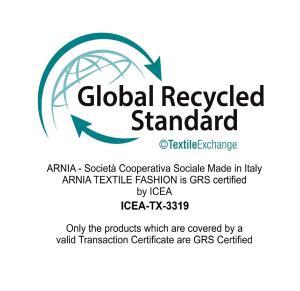
GRS CERTIFICATE example
Think of it this way:
Being a certified company does not make you a “King Midas of sustainability” who turns every fabric into gold just by touching it. Certification isn’t a blanket status—it’s a transaction-by-transaction assurance, supported by documents you can verify.
That’s why sustainability means transparency and accountability. Any claim must be backed by hard evidence, measurable KPIs, and documents open to verification. If a partner can’t—or won’t—show you their TCs, data, or audit reports, the sustainability claim simply doesn’t hold.
Legal & commercial risks: why careful wording matters
Across the EU, vague or misleading environmental claims are restricted under the Unfair Commercial Practices Directive (UCPD) and its guidance, which explicitly addresses environmental claims. The Commission has also campaigned to clean up “green claims” to protect consumers, reduce greenwashing, and bring clarity to business (though the proposed Green Claims Directive’s status has shifted in 2025). Regardless of those politics, the duty to substantiate environmental claims remains very real under existing consumer law frameworks.
European Commission – rules about UNFAIR COMMERCIAL PRACTICES
Environment – rules about GREEN CLAIMS
Parlamento Europeo – rules about GREEN WASHING
lw.com – rules about GREEN CLAIMS
In practice: If you market a product as “sustainable,” “eco-friendly,” or “certified” without proper basis and proof, you could face takedowns, fines, reputational damage, and buyer distrust. (Our articles on IP protection, supply-chain legal risk, and slow fashion discuss these exposures—and how to prevent them.)
The small-lot reality: why certified micro-runs are (usually) not feasible
Certificates require segregation (keep the certified materials strictly separate from standard production orders), documentation, traceability, and sometimes dedicated machine cleaning and setups. That drives minimums in real factories. In our supply chain, to preserve traceability and keep certification costs realistic, we set operational thresholds for fully certified runs (typical MoQs):
-
GRS PRINTED: 500 mt
-
GRS WOVEN JACQUARD YARN DYED: 300 mt
- GRS PLAIN PIECE DYED : 500 mt
-
FSC®: 500 mt
-
ECOVERO™ PLAIN PIECE DYED: 800 mt
- ECOVERO™ PRINTED: 500 mt
-
GOTS: 1,000 mt
These are ARNIA MADE IN ITALY’s operational minimums – per pattern and color – to run a certified production with reliable chain-of-custody—not global standard-imposed “rules.” They reflect the technical and audit reality for clean segregation and economics at industrial scale.
If you’re below those quantities, don’t give up. You can still build a responsible product and a credible sustainability story—just communicate it accurately (see “Good-faith claims for small brands,” below).
Good-faith claims for small brands (that won’t get you in trouble)
If you’re not certified as a brand and you run small quantities:
You can say
-
“This garment is made with GOTS-certified fabric.” (Truthful component claim, no GOTS logo.)
-
“Contains recycled fibers” (if verified) or “viscose from FSC®-certified sources in the fabric supply.”
-
“Manufactured in a monitored supply chain adhering to ARNIA’s Code of Ethics and Values Charter” (and be ready to show our policies and audit summaries).
You should NOT say
-
“GOTS/GRS/FSC® certified garment” unless you hold the certificate and the CoC is intact.
-
“100% sustainable” or “eco-friendly” without specific, verifiable metrics and scope.
This approach aligns with certification labelling frameworks and with EU consumer-law expectations for truthful, specific, and verifiable green claims.
Sustainability Practical Guide for Emerging Brands – practical roadmap: Continuous Improvement (6–18 months)
Phase 1 – Start clean (0–3 months)
-
Material policy: Prioritize preferred fibers (certified organics, recycled content, FSC-sourced man-made cellulosics).
-
Supplier onboarding: Work only with partners who sign a Code of Conduct and accept audits.
-
Claims hygiene: Replace vague terms with specific, verifiable statements (percentages, standards, process steps).
-
Data room: Save POs, scope/transaction certificates, test reports—so your story has proof.
Phase 2 – Make it measurable (3–9 months)
-
KPI set: % certified yardage, % recycled content, % local production, defect rate, on-time rate, incidents/near-misses, training hours.
-
Process upgrades: Lower-impact dye/finish options, cutting-room yield improvements, waste capture.
-
Footprint light: Start with hotspot metrics (water in dyeing, energy per meter, cutting waste).
-
Marketing governance: Pre-approve sustainability copy with a “legal + technical” checklist based on UCPD guidance. European Commission
Phase 3 – Raise the bar (9–18 months)
-
Brand certification (optional): If your volumes justify it, pursue GOTS/GRS/FSC® Chain of Custody so you can move from “made with certified fabric” to product-level certified claims.
-
Design for longevity: Fewer styles, higher quality, repairability guidance—aligned with slow fashion principles.
-
Assurance: Commission a light third-party review (or align with buyer audits) to validate the claims you make.
This is exactly how we work at ARNIA: tight supplier due diligence, monitored processes, three-layer controls, and honest storytelling—never over-promising.
How ARNIA supports you (especially if you’re new to this)
-
Monitored, ethical supply chain: All partners adhere to our Code of Ethics and Values Charter; we monitor quality, social, and safety conditions and conduct third-party audits.
-
Clear operational options: For small runs, we help you make accurate component claims; for larger runs, we can structure fully certified productions within our MoQs.
-
Brand-reputation defense: We’ll review the exact wording of your sustainability copy to keep it truthful, specific, and compliant—protecting you from greenwashing risks.
-
Inclusive impact: By working with us, you help create qualified jobs for differently-abled people in Italy—real social impact, not just rhetoric.
Communicating responsibly: simple rules of thumb
OK – DO
-
Be precise: “Made with 65% GRS-certified recycled polyester fabric.”
-
Show proof: “Transaction certificate available on request.”
-
Share context: “Small batch—component certified; garment not certified.”
-
Report progress annually with KPIs and goals.
X – DON’T
-
Use broad, unqualified claims (“eco-friendly,” “planet-positive”) without proof.
-
Use certification logos unless you hold the right certificate and CoC.
-
Confuse “brand values” with verified performance—measure and disclose.
(These rules reflect certification labelling frameworks and EU consumer-law expectations for environmental claims.)
European Commission UNFAIR COMMERCIAL PRACTICES
Want to go deeper? Recommended reading on our blog
-
Protecting know-how & fashion legality – why contracts, NDAs, and precise claims protect your creativity and your business.
-
Supply-chain legal risks – how poor oversight becomes liability, and how to set up due diligence that works.
-
Slow fashion – practical ways to design for durability, care, and reduced waste.
-
Welcome to the ARNIA blog: Made in Italy with purpose – our mission and how we align luxury with social inclusion and sustainability.
(These pieces expand the legal and operational angles we touched on here and show how to translate principles into daily decisions.)
A final word: progress over perfection
If you’re just starting, you won’t have everything certified tomorrow—and that’s okay. What matters is that you:
-
tell the truth,
-
measure what you can,
-
improve step by step, and
-
align your claims with what the law and the standards actually allow.
That’s how you build trust. That’s how you build a brand that lasts.
Notes & references (plain-English takeaways)
-
EU policy aims to curb greenwashing and require substantiation of environmental claims (even as the Green Claims Directive’s future is debated, UCPD guidance still applies). Environment Parlamento Europeo lw.com European Commission
-
GOTS: product-level labelling/logo use requires certification along the chain and adherence to labelling rules. GOTS CHAIN OF CUSTODY
-
GRS/RCS: recycled claims rely on certified chain of custody; scope & transaction certificates evidence the chain. Textile Exchange GRS CHAIN OF CUSTODY
-
FSC®: only CoC-certified organizations may on-product label or sell with FSC claims. fsc.org CHAIN OF CUSTODY


