

The Lombardy Textile District : Varese–Como–Milan, Italian Excellence
A history, skills map, and techniques from Italy’s most complete textile district ecosystem of pure excellence
Why this Textile district matters
Northern Lombardy has concentrated complementary textile capabilities for over 150 years: cotton and viscose weaving and dyeing in Busto Arsizio; machine embroidery and dye-houses in Gallarate; silk weaving, jacquard, and world‑class printing in Como; and garment prototyping and “confezione” in Milan. The resulting “short‑radius” chain allows luxury houses to go from concept to finished garment within a few dozen kilometers. Intesa Sanpaolo bank report on the Lombardy textile district
VARESE textile district — Busto Arsizio & Gallarate
Busto Arsizio: from water power to “Manchester of Italy”
By the mid‑19th century, Busto Arsizio leveraged the Olona River for industrial growth; within decades it earned the nickname “Manchester d’Italia.” Among the early mills were Cotonificio Ercole Bossi (1875), Cotonificio Bustese (1887) and others that anchored spinning, weaving and finishing on cotton and other cellulosics. Today the Textile & Industrial Heritage Museum sits in the former Cotonificio Carlo Ottolini/Bustese, preserving looms, a beetle‑mangle, and a full jacquard section that explains how punched cards enabled complex patterns with a single operator. History of Busto Arsizio
Technique focus (cellulosics: cotton/linen/viscose)
-
Preparation & bleaching remove sizing and impurities ahead of coloration; mercerization (NaOH under tension) adds luster, strength, and dye affinity. Textiles details
-
Reactive dyeing forms covalent bonds with cellulose under alkaline conditions (followed by efficient wash‑off to remove hydrolyzed dye). SDC
-
Dimensional control: sanforization (controlled compressive shrinkage) minimizes residual shrinkage; calendering and softening set hand and surface. sanfor
Anecdote—Enrico Dell’Acqua, the “merchant‑prince”
Busto’s outward reach owes much to Enrico Dell’Acqua (1851–1910). After work in his family’s cotton business, he co‑founded a mechanical weaving mill in 1871 and—crucially—built Italy’s first robust cotton export network toward South America, opening plants and commercial branches in Argentina and Brazil. Economist Luigi Einaudi famously profiled him as a model of Italian commercial expansion; a monument and centenary celebrations in Busto still honor his legacy. In short: Dell’Acqua didn’t bring textiles to Busto—he took Busto’s textiles to the world. Enrico dell’Acqua – bio
Products & signatures
Busto’s mills produced durable cotton twills (e.g., fustagni/moleskins) and refined shirtings, later complemented by viscose blends as fiber innovation spread; dye-houses scaled alongside weaving.
Gallarate: machine embroidery & dye-houses
A service backbone grew a few kilometers south‑east: Gallarate developed industrial embroidery (Schiffli multi‑needle machines) serving lingerie and ready‑to‑wear, while dye-houses and finishers supported the cotton giants. The Tintoria Giovanni Clerici dates activity from 1869, illustrating how finishing and dyeing professionalized early to serve Crespi, Ottolini, Bassetti and others. The town’s embroidery culture persists—local ricamifici reach centenary status—underpinning high‑end detailing for couture and premium RTW. Tintoria Industriale Clerici Italian excellence
Technique focus—Schiffli embroidery
Invented in Switzerland in the 1860s by Isaak Gröbli, the Schiffli machine uses a shuttle (“Schiffli” = little boat) to form lock‑stitches across a wide fabric field, enabling continuous motifs on batiste, organza, tulle at industrial speed; the technology underlies much of Lombardy’s embroidery capacity.
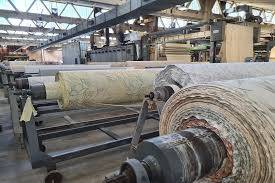
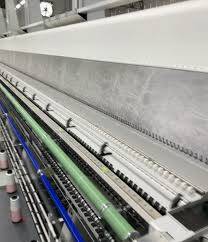
COMO textile district — Silk weaving, jacquard, dyeing & printing
Como is Italy’s historic silk city. The Silk Museum documents the full cycle from silkworm to colored yarns and printed cloth; the Setificio “Paolo Carcano” technical school (1867–69) trained generations of designers, weavers and colorists. Alongside household names (e.g., Mantero, founded 1902), Como built a tightly knit network for weaving (twill, satin, jacquard), dyeing, and printing. Museo Seta Como
Printing specializations—From screens to ink-jet
-
Flat‑bed and rotary screen printing: color pastes are pushed through patterned screens; ideal for rich, layered effects.Textile print
-
Digital ink-jet: inks match fiber chemistry—acid (silk), reactive (cellulosics), disperse (polyester)—with post‑print fixation (steaming/thermosol) and wash‑off to set color and handle. Como’s mastery sits as much in color science and finishing as in design. Textile digital print
Design culture
The Comocrea Textile Design Show (est. 1990) keeps the district’s print design engine humming, connecting studios and mills with global brands twice yearly on Lake Como
By the numbers (illustrative)
Multiple sources consistently note Como’s commanding share of European silk activity (often cited around 80% of EU silk textiles), underscoring it’s centrality in luxury supply chains. Forbes Italia
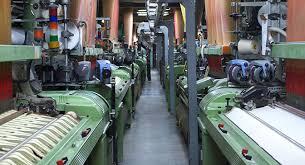
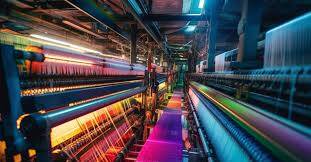
MILAN textile district — Prototyping and “confezione”
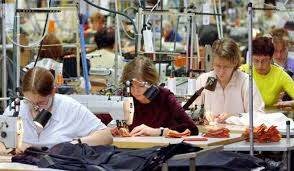
Milan orchestrates design, prototyping and apparel manufacturing (“confezione”). Pattern‑making schools like Istituto Secoli (1934) and Istituto di Moda Burgo train modelists and technical designers in CAD/CAM, grading, industrial sewing, and pre-production controls (from fit samples to PPS), feeding ateliers and CMT partners that turn Como/Varese fabrics into runway‑ready garments. Milan also houses Camera Nazionale della Moda Italiana (CNMI), anchoring the fashion calendar and sustainability frameworks. Camera Nazionale Moda Italiana history
Techniques & finishing (quick reference)
Cellulosics (cotton/linen/viscose)
Scouring/bleaching → mercerization → reactive dyeing (covalent fixation) → wash‑off → sanforization (compressive shrinkage) → calendering/softening/functional finishes. SDC
Silk
Degumming → acid dyeing or printing → delicate mechanical/chemical finishing to preserve hand and drape. SDC
Polyester & blends
Preparation → heat setting for dimensional stability → disperse dyeing or thermosol printing → finishing.
The converter’s role: from idea to compliant product
Within Lombardy’s short‑radius chain, the textile converter is the project manager of fabric creation: sourcing greige, orchestrating weaving/printing/dyeing, specifying finishes, scheduling fixation and wash‑off, running quality control, and compiling chain‑of‑custody proof for brand claims. Converters sit between mills and brands, turning briefs into repeatable, claim‑ready articles—crucial in luxury, where traceability and compliance are non‑negotiable
Anecdotes & micro‑stories from the Textile district
-
Factory‑museum continuity: Busto’s museum, housed in the neo‑Gothic Ottolini/Bustese spinning block, keeps the industrial jacquard memory alive—complete with punched‑card looms and Zucchi print blocks. Wikipedia
-
Embroidery streets: In Gallarate, clusters of ricamifici line the same roads—evidence of a dense, still‑active supply base supporting fashion and bridal (e.g., centenary firms celebrating 100 years in 2025). VareseNews
-
Silk institutions: Como’s Silk Museum and Setificio school form a museum‑plus‑training axis that has supplied skilled technicians for over a century. museosetacomo
About ARNIA TEXTILE FASHION — a KM‑Zero approach
ARNIA TEXTILE FASHION operates as a converter embedded in the Lombardy textile district. We coordinate KM‑0 partners across Varese–Como–Milan to develop fancy jacquards, devoré, fil coupé and prints, supervise finishing, run per‑lot traceability, and execute quality controls aligned to luxury‑house standards—so brands can source novelty with reliability and a documented local footprint.


