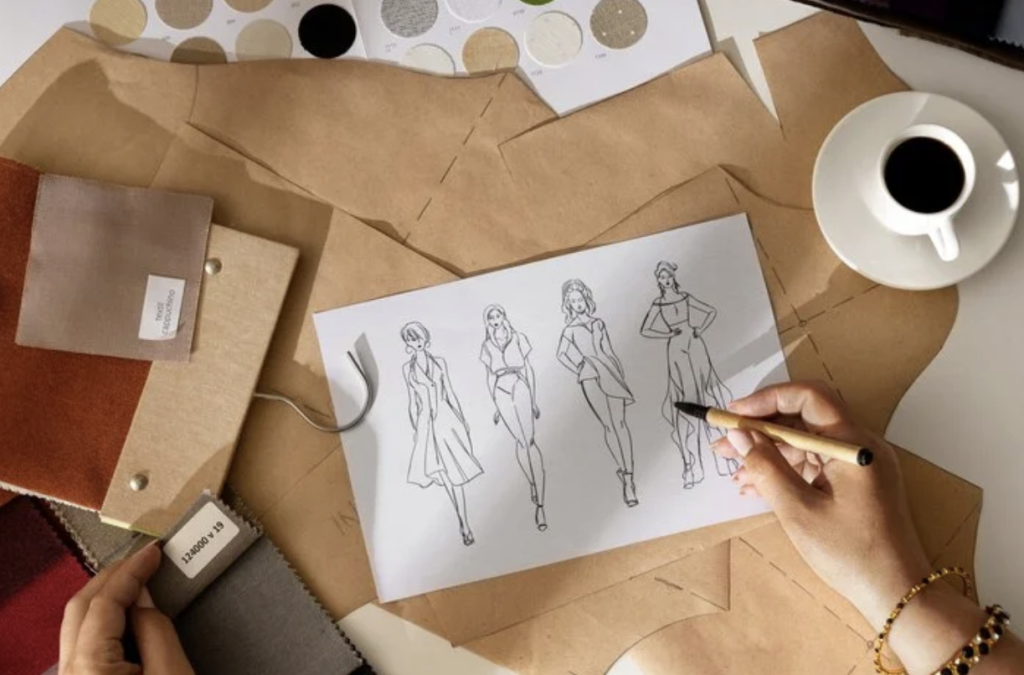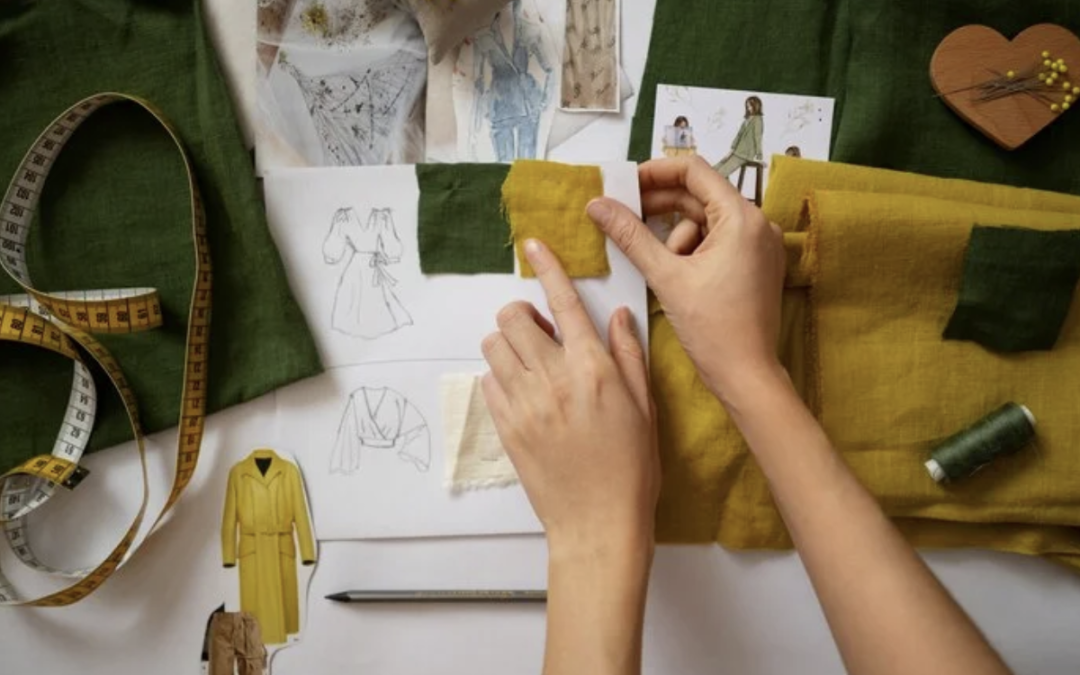
Why a First call of 45 Minutes Decide Whether Your Fashion Collection Will Survive
THE FIRST CALL for a FASHION COLLECTION PRODUCTION ONBOARDING
If you’re building a fashion brand, your first real production decision is not the fabric, not the factory, and not the photoshoot.
At ARNIA TEXTILE, we’ve seen the pattern hundreds of times: founders invest in prototypes, pay for multiple sample rounds, and then discover—too late—that the numbers don’t work, the fabric cannot be secured for production, or the sales channel they chose destroys their margins.
Our position is clear: ARNIA TEXTILE FASHION has no interest in selling prototypes or small projects that lead nowhere. That approach is not sustainable, and it conflicts with the spirit of ARNIA.
This is why we start with a paid onboarding call—a structured first step that protects your timeline, your budget, and your brand reputation, while ensuring mutual seriousness and professional commitment.
And yes: the onboarding fee is 100% credited back on your first bulk production order (not sampling-only / prototype-only work), because sampling should be a bridge to production—not the finish line.
Table of Contents about FIRST CALL FASHION PRODUCTION ONBOARDING
- Why the first call matters (and what it prevents)
- Why ARNIA’s first call is paid (and credited back)
- What we cover in the first call: the full agenda
- Start from retail price and work backwards (costing sanity check)
- The real cost drivers founders underestimate
- The #1 launch risk: not securing fabrics for production
- Why you must plan across 3–4 collections
- Real-world scenarios we fix in the first call
- How to prepare for the call (so you get maximum value)
- Conclusion: ARNIA vs other “models” in the industry (with links)
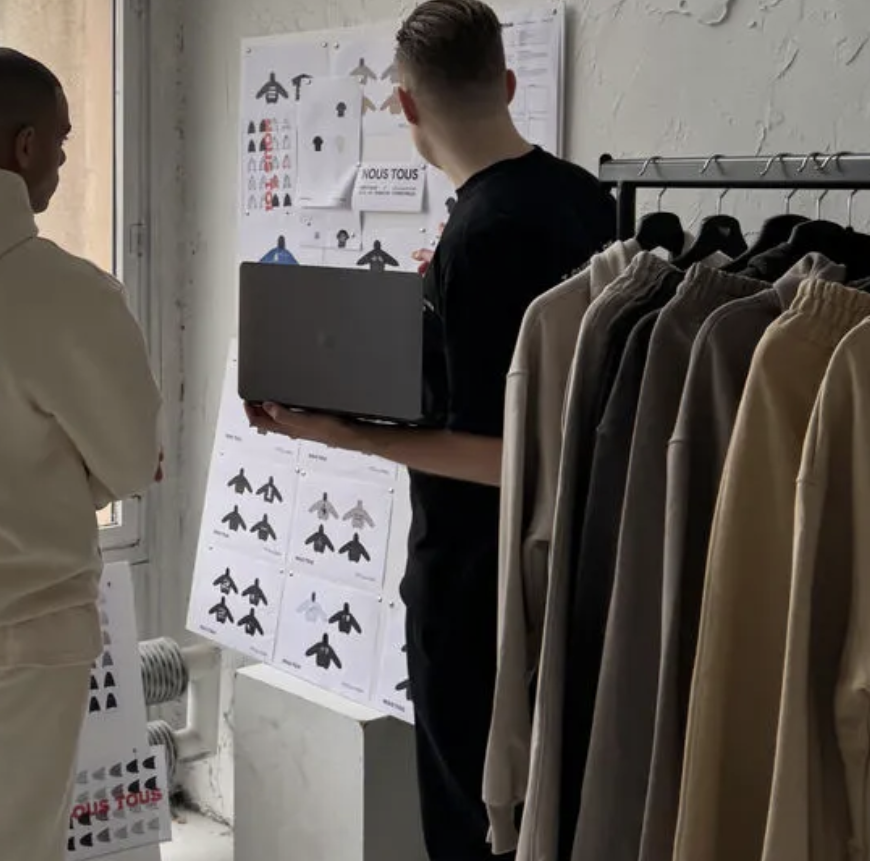
1) Why the first call matters (and what it prevents)
In fashion, mistakes are expensive because every decision touches multiple departments at once:
- Design impacts material consumption, manufacturing complexity, and timing.
- Fabric choice impacts availability, continuity, shrinkage, performance, and compliance.
- Channel choice (B2B vs B2C) impacts pricing logic, margins, quantities, and deadlines.
Without a structured first call, most startups fall into one of these traps:
- Prototype-first, strategy-later: you build samples before you know if the business model works.
- Deadstock roulette: you launch with a fabric that disappears, then fail the second drop.
- Pricing fantasy: you pick a retail price because “it looks right”, not because it supports production and growth.
- Too many styles, too little depth: you create a “collection” that is unbuyable, unscalable, and financially fragile.
The first call is where we stop the silent killers before they destroy your timeline, your cashflow, or your customer trust.
If you want to understand ARNIA’s broader approach to startup production planning, read our guide here:
Textile StartUp Guide.
2) Why ARNIA’s first call is paid (and credited back)
Let’s be direct and respectful to your time:
ARNIA is not a prototype shop.
We do prototyping—of course. But we do it as part of a responsible path that leads to bulk production, continuity, and deliverability.
When ARNIA follows a new project, we invest time and resources in:
- technical review and risk mapping
- supplier and capacity checks
- material feasibility and continuity planning
- pricing and margin logic alignment
- project management attention
If the project stops at prototypes, it becomes a loss—financially and operationally—and it also creates waste. That is why the call is paid: it is a mutual guarantee of seriousness.
Crediting rule: the onboarding fee is credited back on your first bulk production order (not sampling-only / prototype-only work), because ARNIA wants sampling to lead to production.
For transparency, ARNIA’s onboarding options and terms are described on our Cut & Sew page:
Cut & Sew Services — Onboarding Options.
Confidentiality: if you need to protect tech packs, cost sheets, supplier details, or design documentation, we can countersign your NDA (or provide a mutual NDA) before onboarding starts. Related reading:
Industrial Property & NDA in Fashion.
3) What we cover in the first call: the full agenda
This is not a generic chat. It’s an operational and strategic alignment. Below is the agenda we use because it prevents expensive mistakes.
3.1 Market approach: B2B or B2C (or a hybrid)?
The first question is not “What do you want to make?” It’s:
How do you plan to sell it?
Your channel defines everything:
- B2C / DTC: you keep retail price, but you absorb marketing, returns, payment fees, warehousing, and fulfillment risk.
- B2B / Wholesale: you sell at a lower price, but you may gain volume and predictable calendars—if you deliver on time and meet buyer expectations.
We discuss where you will sell:
- your own e-commerce
- marketplaces
- pop-ups
- wholesale accounts
- showrooms / agents
Because if you don’t know your channel, you can’t price correctly—and if you can’t price correctly, sampling is a waste.
3.2 Timeline and deliverability
We align timelines to reality:
- when you want to launch
- when you must deliver (stores or final customers)
- fabric and trims lead times
- sampling rounds and fitting schedule
- production windows and QC
Because a brand is not what you design.
A brand is what you deliver, on time, as promised.
3.3 Product definition & technical readiness
We evaluate what you have (and what is missing):
- tech pack (preferred), or reference photos + construction notes
- patterns / size specs / grading needs
- BOM (bill of materials): fabrics, trims, accessories
- packaging and labeling requirements
- target quantities per style and target dates
If you’re early-stage, that’s fine. The first call gives you a readiness checklist and the fastest path forward.
4) Start from retail price and work backwards (costing sanity check)
Most founders ask: “How much will it cost to make?” and then they try to invent a retail price later.
This is how brands die.
Instead, we start from the market price and reverse-engineer what is financially possible.
Step 1 — Start from your intended retail price
Define your target retail price range for the core products.
Step 2 — Deduct taxes and delivery logic
You must clarify:
- Are taxes included (VAT / sales tax)?
- Is shipping included in the retail price or charged separately?
- Do you expect free returns (and what return rate is realistic for your category)?
This gives a more realistic “net” revenue per piece.
Step 3 — Apply a fast channel rule (sanity check)
From your net retail revenue:
- If you are B2C (DTC): divide by 2
- If you are B2B (Wholesale): divide by 3
Then:
- Divide again by 2 to protect the brand’s required margin/markup and business sustainability.
Why we do this: it forces realism. It prevents you from building a product that looks great but can never be profitable—especially once marketing, returns, and overhead hit.
Example table (simplified but revealing)
| Scenario | Retail Price (example) | Net after taxes/shipping (example) | Channel step | Brand markup protection | Result: max “product budget” |
|---|---|---|---|---|---|
| DTC / B2C | €280 | €220 | direct / internal | €220 / 2 = €110 | €110 |
| Wholesale / B2B | €280 | €220 | €220 / 3 = €73 | €73 / 2 = €36.5 | €36.5 |
This “product budget” must cover everything that makes the garment real:
- fabric (and consumption)
- labels, trims, accessories
- packaging
- sampling amortization (development cost spread)
- cut & sew manufacturing
- INTERNAL / DIRECT cost to sell (the time you must invest in each single sale)
If the math doesn’t work, we don’t “push sampling.” We adjust strategy.
5) The real cost drivers founders underestimate (the hidden ones kill margins)
Once the target product budget is clear, we map the real costs that most emerging brands underestimate.
5.1 Packaging
- box / mailer / dust bag
- tissue paper, stickers, inserts
- barcode labeling
- packaging assembly and handling time
5.2 Trims & accessories
- zippers, buttons, snaps, elastics
- interlinings, tapes, shoulder pads
- metal hardware (buckles, rings, rivets)
- special trims (custom dyed, engraved, branded)
5.3 Labels and compliance labeling
- brand label
- composition label
- care label
- size label
- hangtags and stringing
5.4 Fabric cost is not “€/meter” — it’s “€/garment”
We calculate fabric as:
fabric price per meter × consumption per garment
As a practical starting reference:
- ~1.5 meters per simple garment
- higher consumption for complex garments (long dresses, wide trousers, lined jackets, coats, oversized pieces)
Then we add realistic allowances:
- shrinkage
- pattern efficiency
- matching stripes/checks
- defects and cutting loss
- lining and interfacing
5.5 Development & setup (“startup tax”)
- pattern making and grading
- fitting sessions and revisions
- lab dips, strike-offs, print approvals
- special machinery setup for certain constructions
5.6 Seeding / influencer gifting (often ignored in financial plans)
If you plan to gift garments for launch PR, treat it as a real cost:
- free units reduce sellable inventory
- they must be included in your cost plan, not “after launch”
After these deductions, what remains is your cut & sew budget. This is the truth moment. If that budget is too low for your required quality, the strategy must change.
6) The #1 launch risk: not securing fabrics for production
This is the most common scenario we see:
You launch with a fabric that looks perfect (often deadstock). You sell. Customers love it. Then you try to reorder—and:
- the fabric is not available anymore, or
- it’s available but not in the same quality/finish, or
- lead times become too long, or
- documentation is incomplete (composition, compliance, traceability)
The result is predictable:
- delays after launch
- backorders
- customer dissatisfaction
- reputation damage
To protect your brand and timeline, we secure the fabric plan as early as possible—either the exact fabrics for continuity, or validated alternatives.
ARNIA can support this through:
- Stock-Supported Fabrics (fast development, structured continuity planning)
- Fabric Sourcing with reliable supply chain partners in Lombardy
For a deeper view on the deadstock risk (and why “cheap” can become expensive), read:
Textile Deadstock vs Just-in-Time.
7) Why you must plan across 3–4 collections (and budget across at least 3 seasons)
This is not motivational talk. It’s operational truth.
Your budget for fabrics, packaging, trims/accessories, and production should be planned across at least three seasons. Ideally, you should have an horizon of 3–4 collections.
Why?
- The first drop is rarely perfect (fit, construction, supplier rhythm).
- You need continuity planning for fabrics and trims.
- You need breathing room to correct mistakes without panic.
- You need stable suppliers to avoid delays and inconsistency.
A brand that plans only one drop is exposed to rushed decisions, unexpected costs, and supply interruptions.
Related reading that connects strategy and operations:
Why the Textile Project Manager is a strategic asset.
8) Sustainability & compliance: what you can claim (and what you cannot)
Many emerging brands—often in good faith—believe:
“If I buy a certified fabric, my garment is certified.”
Not necessarily.
In the first call we clarify sustainability expectations and communication boundaries, because wrong claims become legal and reputational risk. We discuss:
- what documentation exists (and what is missing)
- what can be claimed at fabric level vs product level
- how to communicate responsibly (without greenwashing)
- minimum quantities required for certain certification pathways
To explore ARNIA’s approach to sustainability as a measurable process (not marketing), see:
- Sustainability (Fundamental Value)
- Transparency & Corporate Commitments
- Sustainable Textiles (ECO / GRS / GOTS / FSC®)
- Sustainability Practical Guide
9) Real-world scenarios we fix in the first call
Scenario A — The “beautiful product / impossible price” problem
Typical case: DTC brand targets €160 retail for a Made in Italy piece requiring premium fabric, complex finishing, and low MOQ.
What happens: prototypes get made, but bulk pricing breaks the business.
How the first call fixes it: we run the reverse costing sanity check early, then adjust one of three levers:
- increase retail price
- simplify construction/materials
- change channel strategy (or shipping/returns policy)
Scenario B — Too many styles, not enough depth
Typical case: 25–40 styles for the first drop, tiny quantities per SKU.
What happens: costs explode (development, labels, packaging, complexity), stock becomes unmanageable, and you cannot reorder the winners.
How the first call fixes it: we reduce SKU count, increase depth on core pieces, and build a reorder plan based on secured fabrics.
Scenario C — Launching with deadstock without continuity planning
Typical case: deadstock fabric looks perfect for drop 1.
What happens: fabric disappears; second drop becomes inconsistent; delays damage trust.
How the first call fixes it: we secure the fabric plan early or validate alternatives, using stock-supported options or controlled sourcing partners.
Scenario D — Sustainability claims that are not claimable
Typical case: brand wants “certified” messaging, but the pathway isn’t structured, or quantities are not aligned.
What happens: communication risk and potential compliance issues.
How the first call fixes it: we define what can be claimed, what must be avoided, and what documentation can support marketing without overpromising.
Scenario E — Giving away too many garments for launch PR
Typical case: gifting 20–40 units to influencers from a tiny first run.
What happens: the real cost per sellable unit increases, margins collapse, and inventory becomes too thin.
How the first call fixes it: we budget seeding as a planned cost and propose a proportional strategy aligned with production scale.
10) How to prepare for the First Call (so you get maximum value)
You don’t need to be “ready.” You need to be honest and organized.
Bring what you have:
- target customer + positioning
- sales channel plan (B2C / B2B / hybrid)
- target retail price range
- sketches or reference images
- any tech pack elements you already have
- desired materials or performance needs
- target quantities per style
- timeline expectations (launch + delivery constraints)
- packaging/label preferences
- sustainability goals (so we can validate what is feasible)
Ready to start? Contact ARNIA here:
Contact ARNIA.
11) Conclusion: ARNIA vs other “models” in the industry (with links)
Before you choose a partner, it helps to understand the different business models available. There is no “best” option universally—only what fits your strategy, budget, quality target, and risk tolerance.
Model 1 — Fabric retailers / wholesalers (great for access, not for production management)
If you mainly need access to fabric inventory, wholesale pricing, and fast purchasing, an online fabric retailer can be useful. Example:
Key difference: these players typically do not manage your full cut & sew roadmap, feasibility, or continuity plan. You still need a production strategy and manufacturing partner.
Model 2 — Luxury fabric makers / textile companies (excellent materials, you still need apparel production coordination)
If your priority is premium textiles and collections, textile-focused companies can be strong sources. Examples:
- Gratacós (high-end fashion fabrics)
Key difference: you may still need a separate structure to industrialize the garment, manage sampling rounds, packaging, labeling, and delivery calendars.
Model 3 — Production platforms that connect brands with workshops (structured access across Italy)
If you want a platform approach with access to multiple workshops and centralized management, production platforms exist. Example:
Key difference: platform models can be helpful for matchmaking and management across many workshops, while ARNIA focuses on a short, audited Lombardy supply chain and a feasibility-first path designed to protect continuity, compliance, and reputation.
Model 4 — Large industrial hubs / groups (scale and breadth, different entry thresholds)
Industrial groups aggregate multiple companies and capabilities. Examples:
Key difference: these ecosystems can be strong for scale and multi-category manufacturing. Emerging brands should check entry thresholds, minimums, and organizational fit.
Model 5 — Independent manufacturers / sampling and production specialists
Some companies offer sampling and production services as dedicated manufacturers.
Key difference: you may need separate textile development/sourcing, traceability structure, and certification pathway management depending on your goals.
So where does ARNIA TEXTILE FASHION sit?
ARNIA is built for brands that want:
- Feasibility-first decision making (so sampling leads to production)
- Short, audited supply chain rooted in the Lombardy Textile District
- Textile + apparel integration (fabric sourcing and cut & sew under coordinated supervision)
- Reputation protection through careful planning, documentation, and controlled partners
- Real sustainability as a measurable process, not a label
If you want to build something real, start with the first call.
Because prototypes are not the destination. They are the bridge to production.
Start here: read the onboarding options on our Cut & Sew page:
Cut & Sew Services — Onboarding.

Or contact us directly to schedule your FIRST CALL:
Contact ARNIA TEXTILE FASHION Team