
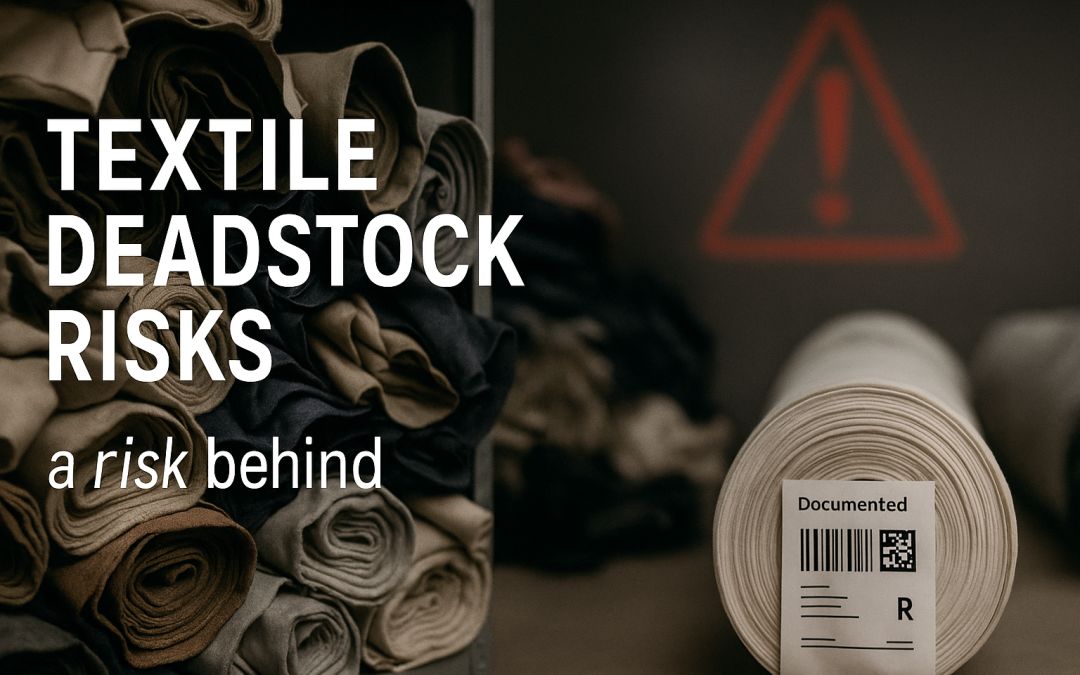
Textile deadstock: when “reuse” isn’t sustainable (and what to do instead)
Deadstock: No traceability, No sustainability.
In fashion, that goes double: without verified fiber composition, origin, processes and documents, a deadstock fabric cannot meet ESG requirements, cannot support your environmental claims, and exposes you to legal and reputational risk. Our solution is: JUST IN TIME / LEAN MANUFACTURING
TL;DR / “too long; didn’t read”
- Dead stocks — mill leftovers, end-of-line rolls, remnants — almost never come with traceability and compliance paperwork: verified fiber composition, technical datasheets, REACH declarations, chain-of-custody certificates.
- Without these, you risk non‑compliance (fiber labeling, restricted substances) and greenwashing.
- The alternative: ARNIA’s JUST IN TIME → on‑demand micro‑lots, certified, traceable Italian supply chain, fast, no waste.
What “deadstock” really is
“Deadstock” is a catch‑all term for unsold fabrics: warehouse leftovers, end rolls, past‑season stock or items from closed businesses.
In practice, this often means you lack:
- Official, unambiguous fiber composition;
- Provenance of yarns and processes (dyeing, finishing);
- Chemical documentation (e.g., declarations/test reports for regulated substances);
- Chain‑of‑custody to back up certifications (GOTS, GRS, FSC, etc.).
Without those elements, reuse isn’t automatically more “green”: it’s opaque.
#deadstock fabric
Why deadstock is a sustainability (and compliance) problem
- Fiber composition labeling
Without a verified composition you can’t label products correctly under EU rules. “Polyester?”, “viscose?”, “blend?” — “maybe” doesn’t cut it. - Chemical safety
Fabrics may contain restricted substances (azo dyes, formaldehyde, heavy metals, phthalates, etc.). Without known processes and up‑to‑date declarations/reports, you cannot assure compliance of your finished garment. - Certifications & environmental claims
With no chain of custody you cannot claim certifications (e.g., GOTS/GRS) nor make robust environmental claims. Generic lines like “sustainable because deadstock” risk being greenwashing. - Digital Product Passport on the way
The EU is introducing the Digital Product Passport (DPP) for textiles: products without structured data on composition, origin and processes will be disadvantaged. Deadstock with missing data is not compatible with this future.
Bottom line: if the fabric is born “without a history,” your brand assumes all the risk.
Myths to bust
“I’m saving material, so it’s sustainable.”
Reuse is great only if you can guarantee compliance and traceability. Otherwise you’re just pushing risk down the chain.
“One lab test and I’m done.”
A one‑off test can’t rebuild origin, processes or chain of custody. It also rarely covers all applicable substances and limits.
“The supplier promised. I trust them.”
Trust is a value. Documentation is a requirement. Without signed, traceable documents, you are responsible.
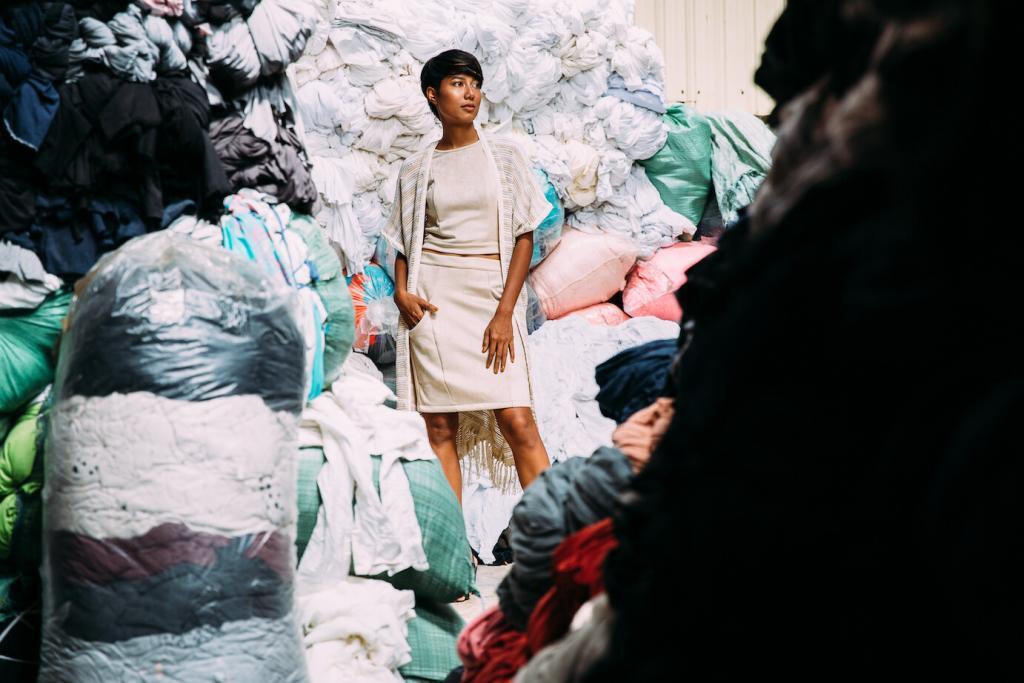
#fashion risks
Checklist: 10 questions to ask anyone offering deadstock
- What is the origin (yarn, weaving/knitting, dyeing, finishing)?
- Is there a verified, unambiguous composition per lot?
- Are REACH declarations and/or recent test reports available?
- Which restricted substances have been checked (e.g., azo dyes)?
- Is a complete, signed technical datasheet available?
- Can I obtain traceability documents (POs, delivery notes, lot numbers)?
- Are chain‑of‑custody certifications available (GOTS/GRS, etc.)?
- Is the fabric compatible with an upcoming Digital Product Passport?
- What’s the storage condition and age (years in warehouse, state)?
- What residual risks am I taking on as a brand?
If the answer to more than half is “I don’t know,” STOP
The alternative: ARNIA’s JUST IN TIME
JUST IN TIME is designed for brands that need speed, transparency and ESG consistency.
What you get:
- On‑demand micro‑lots: produce only what you need → zero overstock.
- Short, traceable Italian supply chain: vetted partners, paperwork in order.
- Verified composition and complete technical datasheets.
- Chemical compliance: declarations and, where needed, current tests.
- Compatibility with certifications (GOTS/GRS, FSC, etc.) and DPP.
- Fast lead times and direct access to our technical team.
This is the responsible way to reduce waste: produce less, but better, with reliable data.
Talk to us: ARNIA’s JUST IN TIME
Deadstock vs Just in Time: side‑by‑side
| Aspect | Deadstock | ARNIA’s JUST IN TIME |
|---|---|---|
| Traceability | Little to none | Complete (docs, lots, partners) |
| Fiber composition | Often uncertain | Verified, unambiguous |
| Chemical compliance | Not demonstrable without broad testing | Declarations plus testing when required |
| Certifications | Inapplicable (broken custody) | Compatible (GOTS/GRS, etc.) |
| DPP readiness | Missing data | Ready for required information |
| Legal/reputation risk | High | Low (controlled process) |
| Environmental impact | Potential reuse but opaque | Waste reduction with data & control |
| Time‑to‑market | Variable, hard to plan | Fast and plannable |
How it works, step by step
- Technical brief: fiber, handfeel, weights, end uses.
- ARNIA proposal: certified base + finishing/texture + timelines.
- Approval & sampling: instant feedback, fast iterations.
- Production: targeted lots, full documentation.
- Delivery: ready for labeling, audits and sales.
Want to see our selection?
▷ Sustainability pratical Guide
▷ Innovative collections
▷ Cut & Sew (from prototype to finished garment)
▷ Transparency & ESG
FAQ
Can I use deadstock if I have the paperwork?
Yes—if origin, composition, chemistry and chain of custody are demonstrable. These cases are rare; audit thoroughly.
Is reuse always better than producing new?
It’s better when you can demonstrate compliance and impacts. Without data, you risk greenwashing.
What’s the minimum documentation I need?
Per‑lot composition, signed technical datasheets, REACH declarations, relevant test reports, traceability documents and, if you use claims/certifications, a complete chain of custody.
What is the DPP (Digital Product Passport)?
An EU system that will require structured data on composition, origin and processes. Just‑in‑time fabrics made in a traceable supply chain are natively compatible.
Call to Action
If you want speed with zero compromises on traceability and compliance, ARNIA’s JUST IN TIME is the natural choice.
Write to us now — we respond fast.
Note to readers: ARNIA is an Italian social cooperative operating with a short supply chain, international standards and a strong ESG commitment. Learn more about how we work: Transparency & Corporate Sustainability.


