

If a lab swatch ever matched perfectly in your studio but shifted on the shop floor, it’s not your eyes — it’s the light. This post explains what Daylight D65 is, why it’s the global reference for evaluating color in textiles (under standard illuminant), and how we implement it across ARNIA — from sample approval to product photography, so your colors hold up from screen to seam.
Contractual reminder (GCS): ARNIA’s General Terms and Conditions of Sale require color comparisons to be made under D65 and measured by spectrophotometer; contractual color tolerance is Delta E ≤ 5 under D65. See our GCS / General Conditions of Sale, clause “Commercial Tolerances”.
1) What Daylight D65 is — and what it is not
D65 is the CIE standard daylight illuminant that represents average midday light with a correlated color temperature around 6504 K. Crucially, D65 is not just a “6500 K” number: it is a defined spectral power distribution (SPD) and a precise white point (xy ≈ 0.3127, 0.3290). Two different 6500 K lamps can look different; a D65 simulator aims to match the spectrum of daylight, not only its chromaticity.
Why it matters for textiles
- Shared language: everyone in the chain (designer → dyehouse → quality → showroom) judges color under the same light.
- Less metamerism risk: fewer surprises when garments move between daylight, retail (TL84/F11), and warm incandescent (A).
- Digital–physical alignment: most web/product imagery uses sRGB, whose white point is D65. Working under D65 reduces photo vs fabric discrepancies.
2) Where Daylight D65 lives in the ARNIA workflow
- Visual approval in a light booth: D65 as the primary illuminant, plus A and TL84/F11 to check metamerism.
- Instrumental checks: spectrophotometer readings and ΔE calculations using D65/10° observer.
- Imaging: camera white balance and monitors calibrated to D65, exports in sRGB for web.
- Procurement: we specify D65-grade simulators with documented daylight MI class and maintenance logs.
3) Practical setup — Light booth, viewing conditions & hygiene
- Illuminant: CIE D65 (primary). Add A (incandescent) and TL84/F11 (~4000 K retail) for metamerism checks.
- Illuminance at plane: 1,500 ± 500 lux (acceptable 1,000–4,000 lux; aim higher for dark colors).
- Surround/background: matte neutral grey; for general use L* ≈ 45–55. Keep the room free from stray light.
- Observer & geometry: 10° field; viewing geometry 45°/0° or 0°/45° for visual assessments.
- People factor: trained evaluators with verified color vision (Ishihara / Farnsworth); short visual breaks to avoid fatigue.
Tip: Many textile booths ship with Munsell N5 (mid grey) or N7 (light grey) panels. Consistency and cleanliness matter more than the exact code.
4) Measurement — How we compute and decide
- Condition: Compute CIE Lab* under D65 /10°.
- Difference formula: prefer CIEDE2000 (ΔE00) for perceptual decisions; keep CMC (l:c) if required by legacy specs.
- Typical internal targets (guidance, material‑dependent):
- Standard solid shades (no OBA/fluorescence): ΔE00 ≤ 1.0–1.2
- With OBAs/fluorescents: ΔE00 ≤ 1.5–2.0
- Lot‑to‑lot consistency: ΔE00 ≤ 0.8–1.0
- Metamerism check: verify at least D65 + (A or TL84). If the match fails, agree a metameric tolerance or reformulate.
Contractual baseline vs. internal quality: for B2B contracts, our GCS clause accepts Delta E ≤ 5 under D65 with spectrophotometer; internally we often target tighter ΔE00 to ensure first‑pass approvals. See General Sale Conditions.
5) Imaging & digital alignment (studio → web)
- Camera WB: set to D65 /6500 K and include a neutral grey card in the reference shot.
- Color space: acquire / deliver sRGB (D65 white) for ecommerce and web.
- Displays: calibrate monitors to D65, luminance 100–120 cd/m², gamma 2.2; neutral, matte surroundings in the editing area.
- Lighting for photos: use high‑CRI, D65 ‑ grade LED with uniform diffusion; avoid mixed CCT sources.
6) Buying the right “ D65 ” — what to ask suppliers
- Beyond CCT: 6500 K ≠ D65. Request SPD plots and daylight simulator class (MI_VIS / MI_UV); specify acceptable MI class (A–C).
- Documentation: ask for calibration data, operating hours, and replacement intervals.
- Booth features: quick switching of D65/A/TL84, controlled illuminance (lux), matte neutral interiors, and a stable viewing geometry.
7) Roll‑out plan you can copy
Days 0–30 – Setup
- Install a multi‑source light booth (D65 + A + TL84). Paint the viewing area neutral grey.
- Draft the SOP “ARNIA Color Evaluation” (roles, illuminants, decision tree, conflict handling).
- Calibrate monitors to D65; standardize the photo workflow with grey‑card reference.
Days 30–60 – Pilot
- Train evaluators (vision tests, inter‑rater consistency).
- Align with dyehouses and partners: share the spec; run trials on 5 colors (light/medium/dark/saturated/blue with OBAs).
- Set family‑specific ΔE and metamerism criteria.
Days 60–90 – Scale
- Extend to all lines; add fields in PLM/ERP (illuminants used, ΔE formula, MI class, metamerism result).
- Quarterly audits on booths/instruments; continuous improvement log.
8) KPIs you’ll actually feel in your timelines
- First‑Pass Color Approval (FPAR): up
- Lead time to tone approval: down (fewer back‑and‑forths)
- Scrap/returns for color mismatch: down (less energy/water/chemicals wasted in re‑dyeing)
- Omnichannel consistency: web images vs. physical fabric better aligned
9) FAQ abuout Daylight D65 — quick answers
Is “DLIGHT 65” the same as D65?
Yes. In common usage “DLIGHT 65 / Daylight 65” refers to CIE D65.
We have 6500 K LEDs; is that enough?
Not necessarily. CCT alone doesn’t control the spectrum. You want a documented D65 simulator (ask for SPD & MI class), not just “6500 K”.
D50 or D65?
Graphic arts often use D50; for textiles and cross‑material matching D65 is the norm. Always check metamerism under A/TL84 as well.
Which ΔE should I use?
ΔE00 tracks human perception best. If a legacy spec needs CMC (l:c), keep it but map an internal equivalence for decisions.
10) Figures & downloads about DAYLIGHT D65(add these to your Media Library)
Note: the plots below are illustrative, not instrument‑grade. They help explain daylight vs LED spectra and the effect of different illuminants on the same palette.
Figure 1 — Desaturated textile palette under D65

Figure 2 — Same palette under D65 vs TL84/F11 vs A

Figure 3 — Indicative spectra: D65 vs a generic 6500 K LED
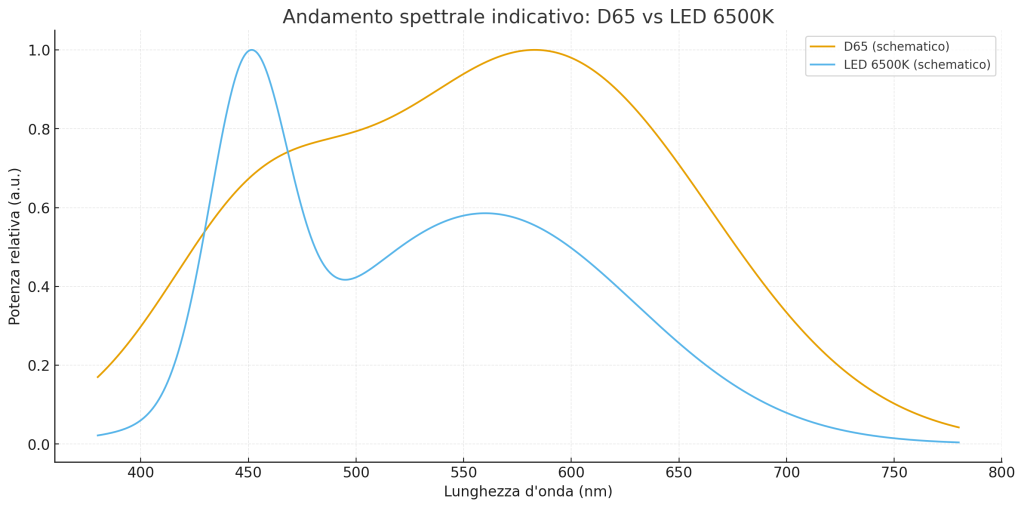
Figure 4 — Visible spectrum bar (380–780 nm)

11) How Daylight D65 ties into other ARNIA resources
- General Conditions of Sale (GCS): Contractual tolerance & measurement conditions → GCS.
- Fabric Sourcing: select materials with real‑world color stability → Fabric Sourcing.
- Cut & Sew Services: from approved lab dips to finished garments with fewer color surprises → Cut & Sew Services.
- Slow Fashion Fabrics: why stable color = fewer reworks = lower impact → Slow Fashion Fabrics.
- Transparency & ESG: how we align quality, legality and impact → Transparency.
If you want your next capsule’s colors to be consistent everywhere customers see them, ask us for a D65-ready sample approval and a photo-to-fabric alignment pack (grey card, monitor calibration, and SOP templates). Contact ARNIA.
Legal & compliance note
This article shares best practices. Contractual terms are governed by ARNIA’s General Conditions of Sale. Measurement uncertainty should be considered when interpreting ΔE values.


