
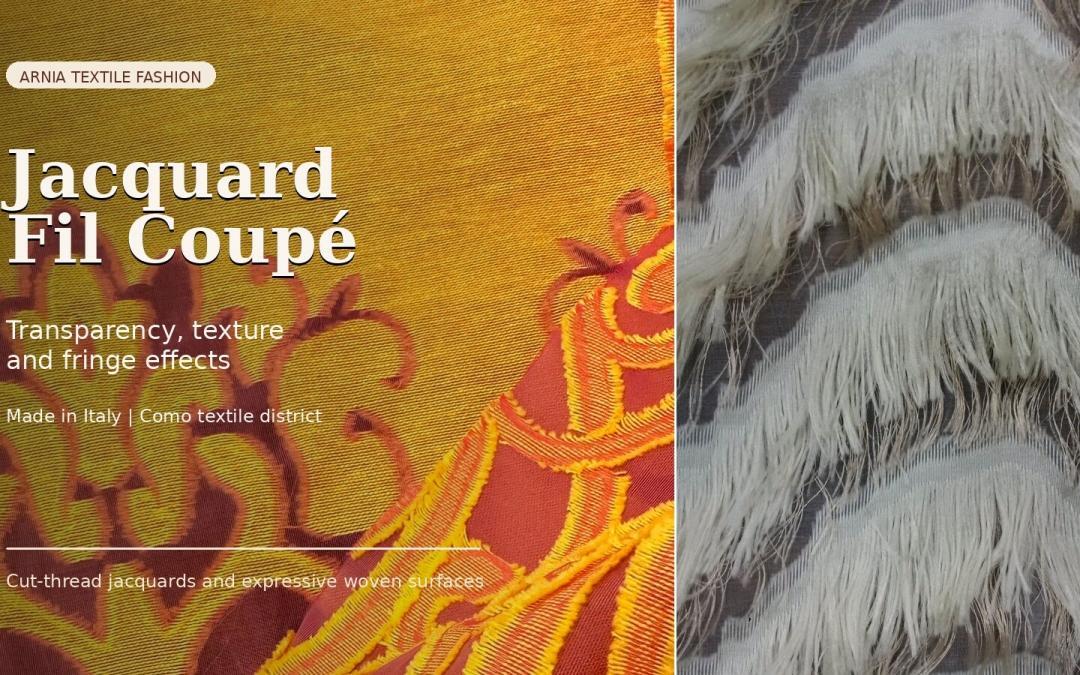
In luxury textiles, Jacquard fil coupe belongs to the category where enginering is directly in the weave. It is one of the most refined woven techniques because the decorative effect is built into the fabric structure itself and then revealed through a controlled cutting process. At ARNIA TEXTILE FASHION, this technique is closely tied to the Lombardy textile ecosystem and especially to Como, where jacquard weaving, dyeing, printing, and finishing have developed together as part of a highly specialized production culture.
First of all what is a jacquard?
Jacquard is a machine made fabric It is a luxurious, textured material featuring intricate patterns woven directly into the fabric, rather than printed or dyed on top. Invented by Joseph Marie Jacquard in 1804, it uses a specialized loom that controls individual warp yarns to create complex designs. It is known for its durability, richness, and variety.
What Is Jacquard Fil Coupe?
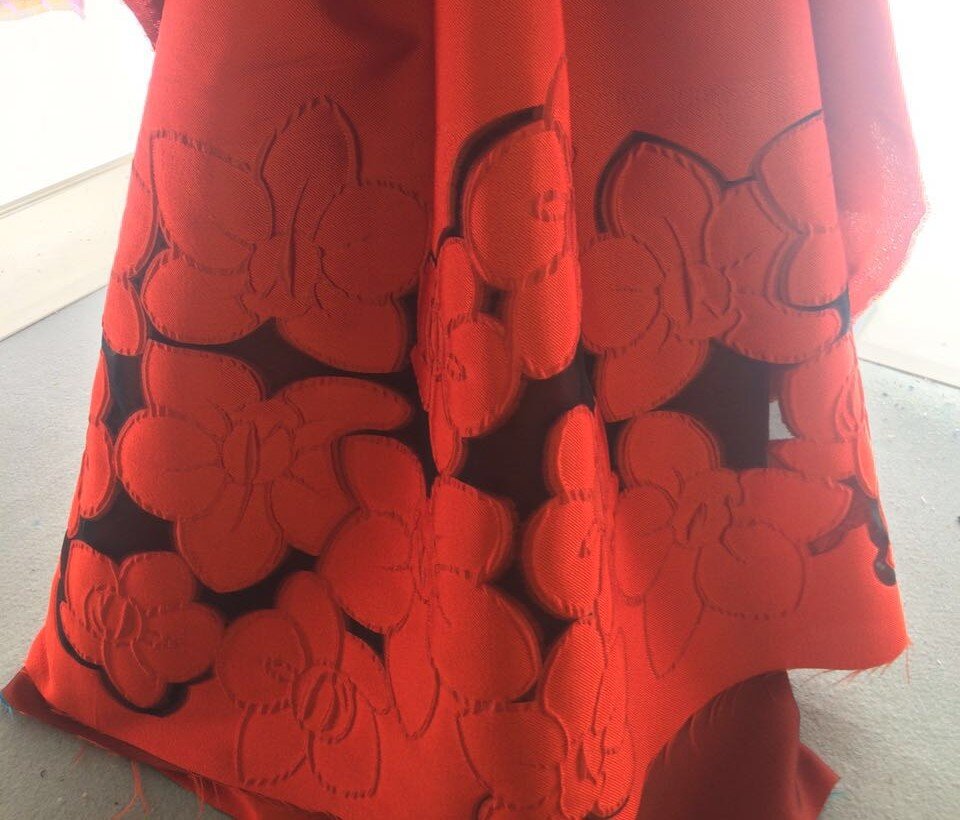
Jacquard fil coupe is a woven fabric made with supplementary yarns integrated into selected parts of the design and then cut after weaving. The term itself comes from French and literally means “cut thread.” ARNIA describes fil coupe as a technique in which supplementary weft yarns are woven into specific areas and then cut away on the reverse to create free-floating motifs, texture, color play, and visual depth; ARNIA’s furry jacquards are presented as a creative evolution of the same process.
Unlike a printed motif, the design is not placed on top of the surface. Unlike embroidery, it is not stitched afterward. In jacquard construction, the pattern is integrated directly into the weave, and in fil coupe that woven structure is later transformed through cutting. This is why the final effect has more depth than a print and more integration than an applied embellishment.
A woven effect, not a surface imitation
This is exactly what makes fil coupe so desirable in high-end fashion. Light moves differently across the surface, motifs can feel more dimensional, and the fabric often combines precision with an unexpected softness. When the technique is developed well, the result is both decorative and architectural.
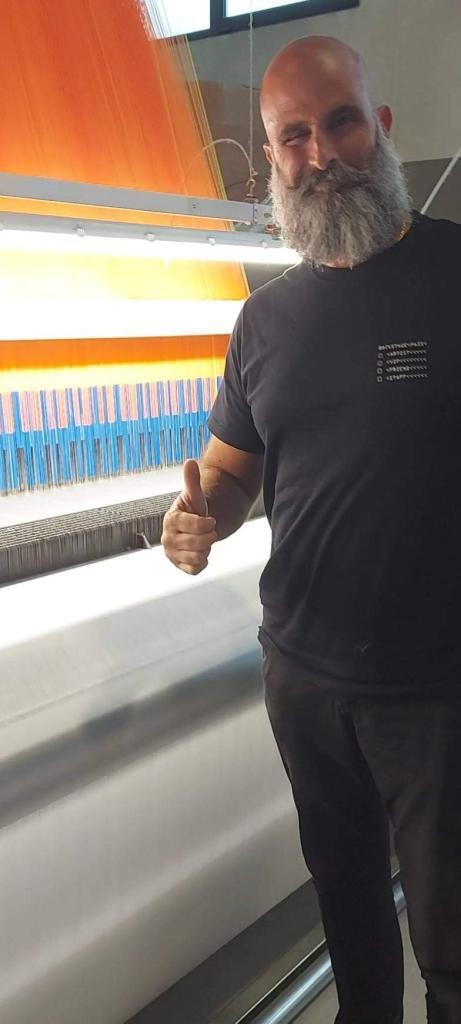
Made in Italy jacquard textile developed in the Como district
How the Technique Works
Supplementary yarns inside the jacquard structure
The technical basis of fil coupe lies in jacquard weaving. A jacquard loom allows complex motifs to be woven directly into the cloth rather than printed or embroidered later. In fil coupe, supplementary weft yarns are inserted into specific areas of the pattern, and after weaving these extra yarns are clipped, manually or mechanically, to reveal the final effect.
Why the cutting phase matters
Fil coupe is not simply “woven and cut.” The effect depends on how the motif has been designed in advance, how the extra yarns have been protected or anchored, and how the finishing stage is executed. Technical weaving sources note that cutting is the real test of the construction, and that shearing must be handled carefully because the extra yarn has to be removed without destabilizing the woven ground.
Design controls the final visual effect
This is where jacquard design becomes decisive. Technical weaving documentation shows that fil coupe can be controlled through protection areas, selective attachment, coupe length, and visible attachment points. In practical terms, that means the designer can decide where the supplementary yarn should disappear cleanly, where it should remain freer, and where it should create a more expressive surface effect.
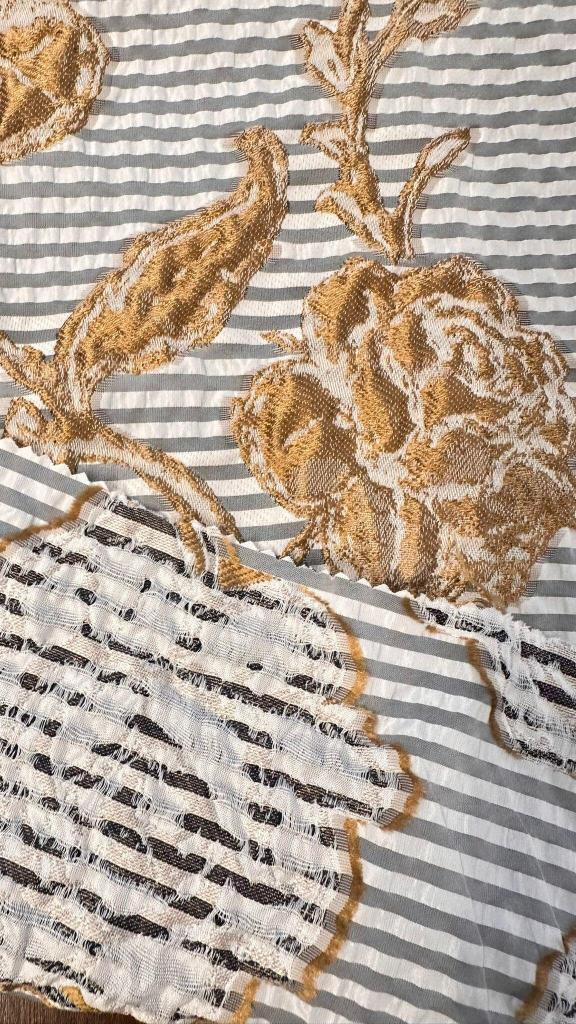
Close-up of fil coupe jacquard showing supplementary yarn texture
The Two Main Types of Fil Coupe
Type 1: yarns clipped on both faces
In practical textile development, one important family of jacquard fil coupe aims for a cleaner and lighter result on both faces of the cloth. This is the version most often associated with:
-
sheer or semi-sheer grounds
-
organza-like transparency
-
refined multi-color effects
-
delicate surface definition with a light handfeel
ARNIA’s own fil coupe page highlights exactly these values: color inserted into the jacquard structure, yarn cut away on the back, and sheer sections that enhance lightness and elegance.
Why brands choose this version
Because it can create sophistication without visual heaviness. It delivers pattern, color, and texture while preserving fluidity, transparency, and elegance. It is especially convincing when a collection needs a textile that looks rich but still feels airy.
Type 2: yarns clipped only on the reverse
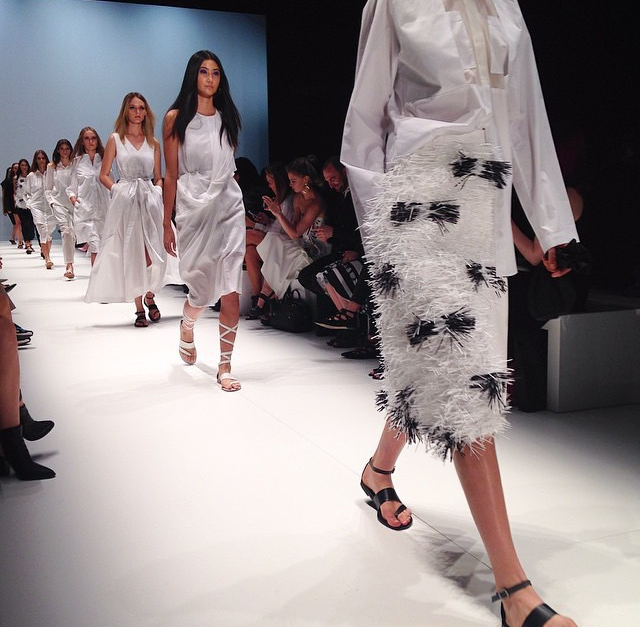
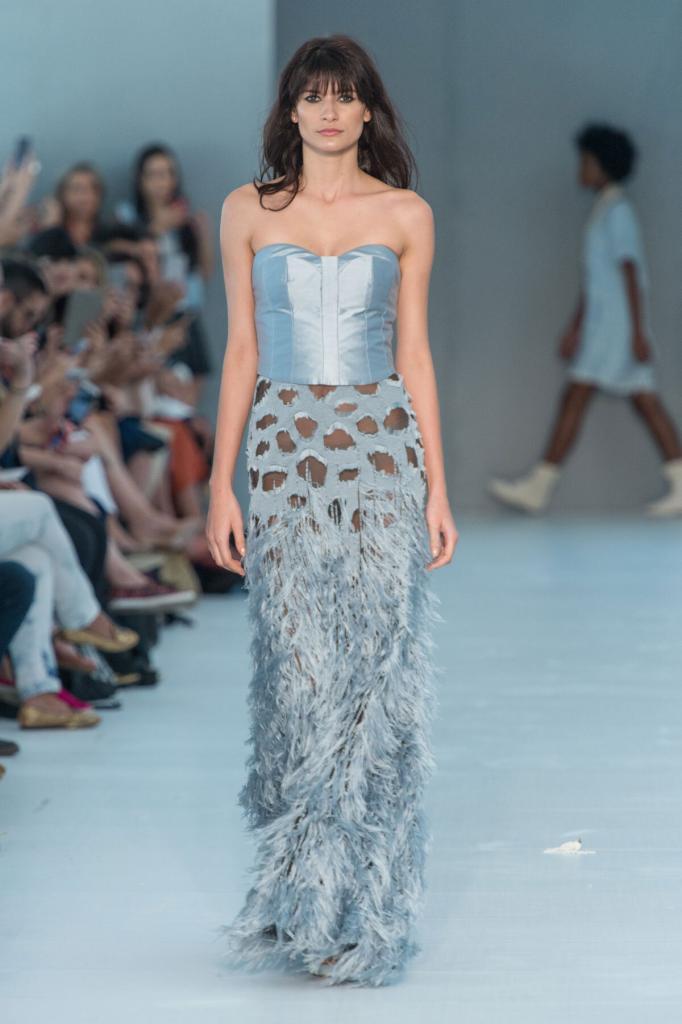
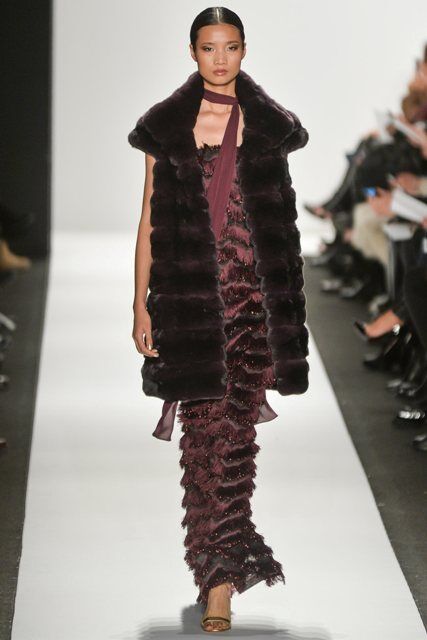
The second family is the more expressive and textural version. Here the yarn is cut only on the reverse side, while the front is designed so that the yarn remains visible and slightly pendulous. ARNIA describes this as the basis of its Jacquards Furry line: the same fil coupe weaving logic is used, but the yarn is cut on one side only, creating a controlled fringe or furry surface with more softness, depth, and tactile richness.
The key effect: a fringe attached at one point
This is one of the most fascinating aspects of the technique. Thanks to a specific jacquard drawing strategy, the yarns clipped on the reverse can open on the face side, creating a micro-fringe effect that remains attached only at a controlled point. Technical weaving sources explain that fil coupe can be engineered with selective attachment areas and visible attachment points, so the movement looks spontaneous but is actually governed by the weave. This is the logic behind a fringe-like effect attached at one point rather than fully detached.
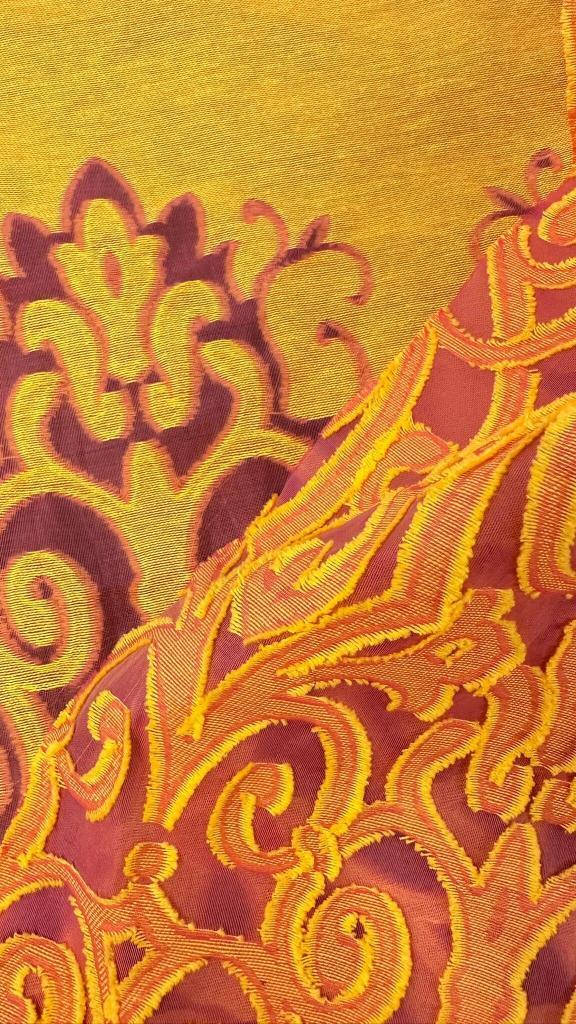
Jacquard fil coupe fabric with woven transparency and cut-thread motif
Fil Coupe vs. Jacquard Furry: What Changes?
Same technical origin, different aesthetic intention
Classic fil coupe and jacquard furry share the same technical foundation: jacquard weaving plus controlled cutting of supplementary yarns. What changes is the design intention. Classic fil coupe usually aims for lightness, definition, transparency, and refined detail. Jacquard furry pushes the same logic toward surface emotion: instead of removing the excess effect completely, the yarn is used to generate softness, volume, and fringe-like depth.
When to use one or the other
If a collection needs elegance, airiness, and woven transparency, classic fil coupe is often the right direction. If a collection needs tactile identity, editorial texture, and a stronger fashion statement, the furry variation becomes especially interesting. This distinction is useful for buyers, designers, and brand teams when matching fabric language to product strategy.
Why Como Matters for Fil Coupe
A district built on weaving and finishing knowledge
Fil coupe is a technique that depends on more than weaving alone. It requires design precision, jacquard know-how, finishing competence, and tight control over yarn behavior during clipping. Como is historically associated with silk, jacquard weaving, dyeing, and printing; ARNIA’s own district page describes Como as a tightly connected network for weaving, dyeing, and printing, while the Como Silk Museum presents the city through the full textile cycle from yarn to printed cloth.
The wider institutional and industrial ecosystem confirms this specialization. The Como-Lecco Chamber of Commerce identifies the Como Silk District as a recognized industrial district whose core activity includes silk weaving together with finishing and textile manufacturing. Independent local companies also reflect this structure: Tintseta presents itself as a dyeing and finishing company in the Como textile district, while BBC Jacquard presents jacquard weaving excellence rooted in the Como silk district.
Weaving plus finishing is the real advantage
For fil coupe, the beauty of the fabric is completed in finishing. A strong district is not just one that can weave beautiful motifs; it is one that can also manage delicate finishing operations with the consistency expected in luxury textiles. That combination is precisely what makes Como strategically valuable for jacquard fil coupe and related surface techniques.
ARNIA’s position inside this ecosystem
ARNIA’s fil coupe collection is presented as being developed and produced entirely within the Como textile district, supported by a zero-kilometer supply chain. At the same time, ARNIA’s sourcing page places Jacquard Fil-coupe, Jacquard Furry, and Jacquards Furry within a broader textile offer that connects techniques, embellishments, and product developments from the Lombardy district.
Made in Italy jacquard textile developed in the Como district
Why Luxury Brands Choose Fil Coupe
Because it creates value through construction
Fil coupe communicates quality immediately. Even before touching the fabric, the eye reads complexity, movement, and depth. This creates a stronger luxury perception because the effect is structural, not superficial.
Because it offers texture without heaviness
One of fil coupe’s great strengths is that it can add visual richness without the density of heavier decorative fabrics. That makes it especially versatile for contemporary collections where designers want impact but still need drape, lightness, or transparency.
Because it balances tradition and innovation
Fil coupe is deeply rooted in jacquard heritage, yet it remains highly contemporary. Depending on yarn choice, pattern scale, finishing, and color contrast, it can feel romantic, graphic, modern, soft, couture, or avant-garde.
Jacquard fil coupe fabric with woven transparency and cut-thread motif
Typical Applications in Fashion
Best suited categories
Jacquard fil coupe is especially effective for:
-
dresses and occasionwear
-
blouses and shirts
-
skirts and overlays
-
couture-inspired silhouettes
-
statement jackets in more textural constructions
-
editorial or runway-oriented capsule pieces
Particularly strong for designers who want
Light with texture
A fabric that feels refined and expressive without becoming visually rigid.
Surface design with movement
A motif that does not just sit on the fabric, but reacts to light, motion, and body shape.
Distinctive woven identity
A textile that can become part of the brand language rather than just a seasonal material.
Made in Italy jacquard textile developed in the Como district
Discover ARNIA TEXTILE’s Jacquard Fil Coupe and Furry Collections
To explore the two directions described above, discover:
-
Jacquard Fil Coupe Collection for woven transparency, refined cut-thread motifs, and lighter textural effects
-
Jacquards Furry for softer, fringe-like, feathery surface expressions derived from the fil coupe process
-
Fabric Sourcing & Textile Techniques for a broader overview of jacquards, embellishments, and textile developments
-
Lombardy Textile District of Excellence to understand the local production ecosystem behind weaving and finishing
-
Jacquards to explore ARNIA’s wider jacquard universe
Made in Italy jacquard textile developed in the Como district
Final Thoughts
Jacquard fil coupe is one of those rare textile techniques that combine engineering and emotion. It begins with jacquard construction, evolves through supplementary yarn design, and comes fully alive in the finishing phase. Depending on how the yarn is clipped and how the design is built, it can create transparency, color play, subtle raised texture, or a face-side fringe effect attached at a single point. Technical weaving sources and ARNIA’s own product pages support exactly this spectrum, from refined cut-thread transparency to one-side-cut furry jacquards.
This is why fil coupe remains so relevant for premium and luxury fashion. It offers a woven language of depth, precision, movement, and character. And this is also why it belongs so naturally to Como: because fil coupe needs a district that understands both jacquard weaving and the finishing intelligence that completes it. ARNIA TEXTILE places this capability inside a short, local, Made in Italy supply chain rooted in the Como textile district.


