
Luxury Pre-Collection Textile Sourcing fairs still matter because fashion begins before the garment exists
In fashion, the final garment is only the visible part of a much longer decision-making process where Luxury Pre-Collection Textile Sourcing fair ar at the beginning. Before a collection reaches a showroom, a runway, an e-commerce page or a retail buyer, someone has already made a series of technical and aesthetic choices: fiber, weight, drape, handfeel, construction, color direction, print technique, repeatability, compliance, timing and sourcing risk.
This is why textile fairs still play a strategic role in the fashion industry. They are not simply places where fabrics are displayed. They are temporary marketplaces where buyers, designers, sourcing teams and suppliers meet to compare materials, read future directions, test supplier reliability and transform creative ideas into realistic collection plans.
Historically, fairs were temporary markets where buyers and sellers gathered to transact business. Over time, especially from the twentieth century onward, many fairs became specialized around single industries, allowing professionals to concentrate knowledge, suppliers and commercial relationships in one place.
For textiles, this logic remains extremely relevant. A fabric cannot be fully understood from a digital image. Luxury textile sourcing still depends on touch, scale, transparency, movement, color perception, technical dialogue and trust.
A buyer needs to feel the hand.
A designer needs to see how the surface reacts to light.
A sourcing manager needs to understand whether a fabric can be repeated, customized, certified, delivered and industrialized.
A brand director needs to know whether the supplier can protect the brand’s reputation.
That is why attending a textile trade fair is not only about finding new materials. It is about reducing risk before development starts.
From historical trade fairs to modern textile sourcing
Trade fairs have always been connected to the movement of goods, ideas and trust. In Europe, cities such as Leipzig became historical trade fair centers because merchants needed protected places where they could meet, compare products and build commercial relationships. Leipzig’s trade fair tradition is documented over more than 850 years, with market rights formally recorded in the twelfth century.
One important step in the modernization of trade fairs was the transition from selling entire quantities of goods to presenting samples. Leipzig records the birth of the world’s first sample fair at the end of the nineteenth century, marking a new way of doing business: buyers no longer needed to see or purchase all the goods immediately; they could evaluate representative samples and place informed orders later.
This shift is still the foundation of textile sourcing today.
A fabric swatch is not just a small piece of cloth. It is a technical promise. It tells the buyer what a supplier may be able to repeat, develop, customize or industrialize. In luxury fashion, that promise must be supported by know-how, quality control, traceability, compliance and realistic production planning.
Modern textile fairs are therefore not only commercial events. They are research platforms. Première Vision describes its ecosystem as a place where fashion professionals find inspiration, creativity and sourcing opportunities, connecting industry players from yarns to fashion manufacturing.
Why BLOSSOM Paris has a specific role in luxury pre-collection
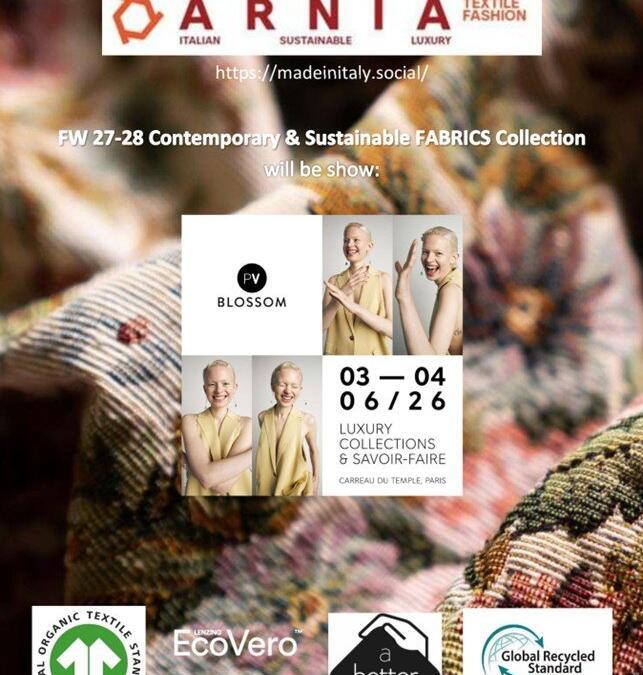
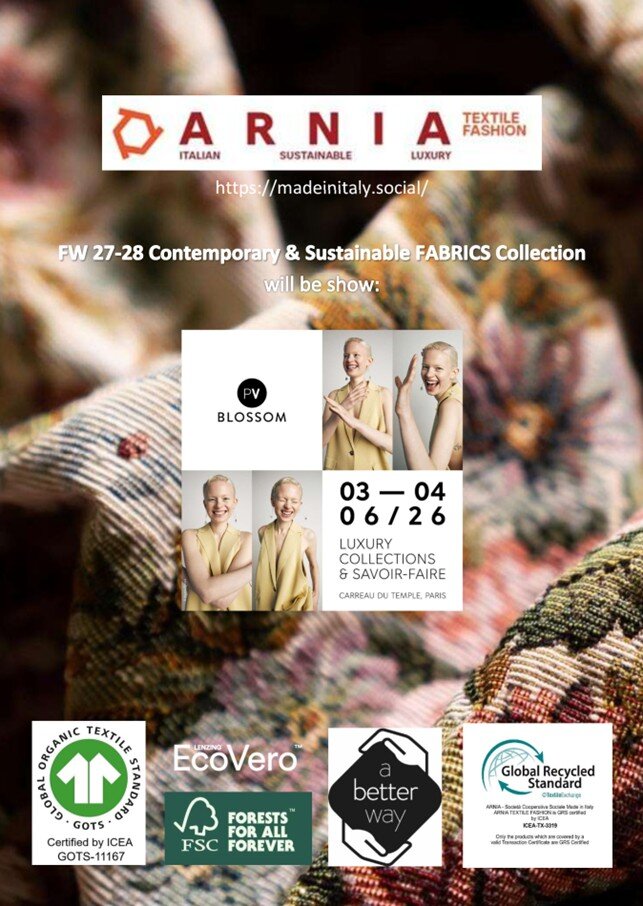
BLOSSOM Première Vision is not a generalist sourcing fair. It has a very specific positioning: it is an exclusive event dedicated to the launch of pre-collections for creative, luxury and high-end fashion brands. The next edition takes place on 3 & 4 June 2026 at the Carreau du Temple in Paris.
This matters because timing changes the quality of the conversation.
A pre-collection fair is where the first decisions are made. It is where luxury houses, premium brands and emerging designers begin to define the season’s material direction before the main collection calendar becomes too compressed.
At BLOSSOM Paris, buyers are not only looking for available fabrics. They are looking for early signals:
- Which surfaces feel new?
- Which textures can support a stronger seasonal story?
- Which suppliers are reliable enough for development?
- Which materials can be customized?
- Which options can support responsible sourcing and credible claims?
- Which partners can move from fabric research to sampling and production planning?
BLOSSOM is also different because it places craftsmanship, savoir-faire and creative dialogue at the center of the experience. Première Vision describes the show as a connector where luxury houses and premium brands can meet and imagine bespoke materials for future collections; it also highlights artisans’ gestures, technical demonstrations and the transformation of materials as part of the sourcing experience.
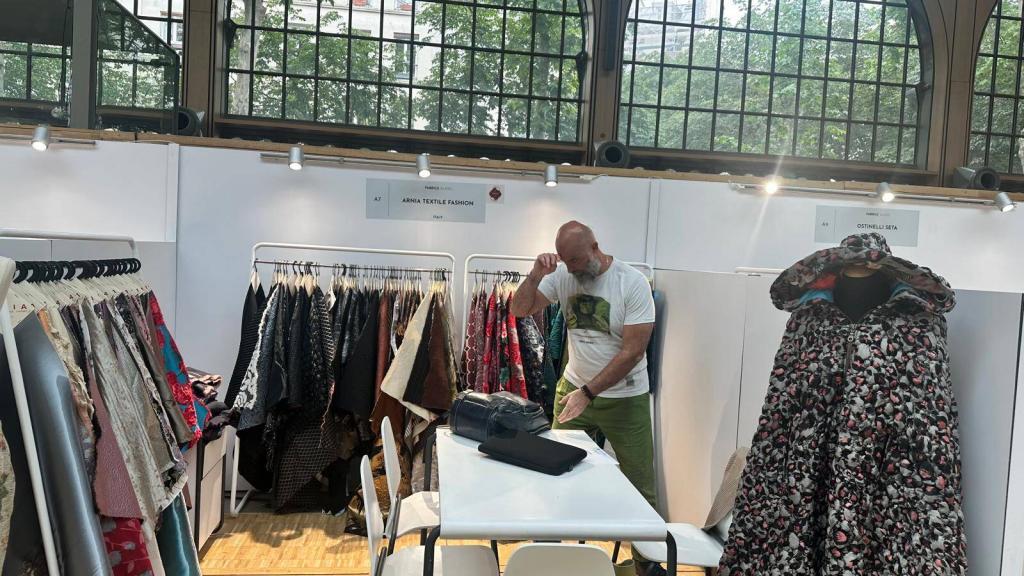
For ARNIA TEXTILE FASHION, this is exactly the right environment: a space where textile know-how, Italian material culture, responsible sourcing, traceability and social inclusion can be presented as part of the same value proposition.
BLOSSOM Paris compared with other textile fairs in Paris
Paris hosts several important fashion and textile events, but they do not all serve the same purpose.
BLOSSOM Première Vision: focused, early and luxury pre-collection oriented
BLOSSOM is designed for pre-collections and high-end creative brands. It is selective, concentrated and built around early-stage collection decisions. Its value is not scale; its value is the quality of the sourcing conversation.
For ARNIA, BLOSSOM is the right place to present:
- luxury jacquards;
- fil coupé;
- devoré and burnout effects;
- embroidery;
- plissé;
- prints;
- special surfaces;
- stock-supported textile bases;
- sustainable and certifiable pathways;
- fabric sourcing and capsule development support.
ARNIA’s dedicated BLOSSOM page already presents the fair as a place to discover pre-collections, jacquards, prints, plissé, fil coupé, embroidery, eco-certified fabrics and customizable stock-supported bases.
Première Vision Paris: broader and more global
Première Vision Paris is a much larger international sourcing platform. The September 2026 edition is scheduled for 1–3 September 2026 at Paris Nord Villepinte and presents itself with figures such as 20,000 professionals, 130 nationalities and 8 universes. It also emphasizes innovation, technology, AI, data, digitalization, circularity, smart materials and optimized production.
This makes Première Vision Paris a broader ecosystem event. BLOSSOM, by contrast, is more intimate and earlier in the creative calendar.
Texworld Apparel Sourcing Paris: wider sourcing scale
Texworld Apparel Sourcing Paris takes place from 31 August to 2 September 2026 at Paris-Le Bourget and describes itself as the largest event for fabrics and garment sourcing in Europe, with 1,300 manufacturers from about 35 countries.
This gives buyers a broad global sourcing overview. BLOSSOM has a different logic: it is not primarily about comparing the largest number of suppliers, but about finding refined, creative and high-end material partners at a pre-collection stage.
Why this distinction matters for buyers
A buying office may attend several fairs for different reasons:
- BLOSSOM Paris: early luxury pre-collection research and high-level material direction.
- Première Vision Paris: full international sourcing overview and innovation scouting.
- Texworld Apparel Sourcing Paris: broader supplier comparison and global sourcing alternatives.
For a luxury or premium brand, the most strategic question is not “which fair is bigger?” but “which fair corresponds to the decision we need to make now?”
If the decision is about early material direction, surface research, supplier trust and luxury textile development, BLOSSOM Paris is one of the most relevant moments in the calendar.
Why buying offices and design teams invest in fabric research
Fabric research is not a decorative phase. It is a strategic business function.
In a fashion company, the buying office, sourcing team and design studio often look at the same fabric from different perspectives.
The design office looks for identity
The design office wants materials that express the creative direction of the collection. It evaluates color, surface, emotion, drape, texture, transparency, structure and how the material supports the silhouette.
A jacquard, for example, is not just a pattern. It can define the entire attitude of a garment. A devoré surface can create depth and lightness. A fil coupé can introduce movement and fragility. A plissé can change the relationship between fabric and body. Embroidery can add rhythm, craft and visual hierarchy.
For the design team, textile sourcing is a way to transform abstract inspiration into physical language.
The buying office looks for reliability
The buying office has a different responsibility. It must understand whether the material can be purchased, repeated, delivered and controlled.
A fabric may be beautiful but unsuitable if:
- the minimum quantity is not aligned with the collection plan;
- the composition is not compatible with the target market;
- the lead time is unrealistic;
- the finishing is unstable;
- the supplier cannot document traceability;
- the fabric cannot be repeated;
- the claim cannot be supported;
- the cost structure does not fit the target margin.
This is why buyers do not only ask “how much does it cost?” They ask whether the supplier can reduce uncertainty.
The sourcing team connects creativity and feasibility
The sourcing function is the bridge between creative vision and industrial reality. It translates moodboards, sketches, reference swatches and target garments into textile options that can actually be developed and produced.
ARNIA’s Fabric Sourcing service is built around this logic: research, selection, verified sources, material library updates and alignment with luxury fashion trends and customer preferences. The service supports clients with fabric development from sketches, photos or creative briefs, and with sourcing of yarns, textures and weaves tailored to the project.
At BLOSSOM Paris, this conversation becomes much more productive when the buyer arrives prepared.
How to prepare a productive meeting with ARNIA at BLOSSOM Paris
A trade fair appointment is short. A productive meeting requires focus.
Before meeting ARNIA at BLOSSOM Paris, buyers and design teams should ideally prepare a concise brief. It does not need to be perfect, but it should help structure the conversation.
1. Define the product category
Is the fabric intended for dresses, tops, trousers, skirts, outerwear, eveningwear, loungewear, accessories or a capsule collection?
End use changes everything: weight, drape, resistance, transparency, lining, care, cost and production feasibility.
2. Bring moodboards or reference swatches
A moodboard helps communicate atmosphere. A reference swatch helps communicate technical expectations. The best sourcing conversations usually combine both.
A phrase such as “we need something fluid but structured” can be interpreted in many ways. A reference fabric makes the dialogue more precise.
3. Clarify the target handfeel and weight
Luxury textile development depends heavily on sensory details. Buyers should specify whether they are looking for:
- dry or soft handfeel;
- fluid or structured drape;
- compact or transparent base;
- matte or luminous surface;
- light, medium or heavy weight;
- smooth, grainy, raised or tactile texture.
4. Share the target quantity range
Quantity affects the route. A stock-supported base, a customized development, a print, a jacquard, a certified pathway and a garment production plan may each require different minimums and technical steps.
The earlier this is discussed, the better the supplier can propose realistic alternatives.
5. Identify sustainability and compliance needs
If a brand needs GOTS, GRS, FSC, ECOVERO™ or other responsible textile options, the conversation must include chain of custody, transaction documentation, lot traceability and admissible claims.
A certified fabric does not automatically make a finished garment certified. ARNIA’s Sustainability Practical Guide explains that certification applies to specific products and lots and must be supported by the correct transaction documentation; without the correct chain of custody, the final product cannot be claimed as certified.
This is essential for protecting the brand from greenwashing risk.
6. Be clear about the development calendar
The sourcing calendar should be connected to the brand’s commercial calendar. Important dates include:
- collection presentation;
- sales campaign;
- prototype deadline;
- photo shooting;
- production launch;
- delivery window.
When these dates are known, the textile partner can help define a realistic development path.
7. Explain whether the goal is fabric only or fabric-to-garment support
Some brands need only textile sourcing. Others need support from fabric selection to capsule development, prototype logic and small/medium production planning.
ARNIA can support both textile development and, when technically coherent, Cut & Sew services for capsule collections through its Lombardy network. ARNIA’s model is not based on generic manufacturing, but on textile know-how, local coordination, sampling logic, quality control and production oversight.
Why ARNIA attends BLOSSOM Paris – luxury pre-collection
ARNIA TEXTILE FASHION is an Italian textile converter and non-profit social cooperative based in the Lombardy Textile District, connecting the know-how of Como, Milan and Varese.
This district matters because it brings together complementary textile competences: silk and jacquard culture in Como, cotton and industrial know-how in Varese, embroidery and finishing around Gallarate and Busto Arsizio, and design, prototyping and garment development around Milan. ARNIA’s own Lombardy Textile District article describes this short-radius ecosystem as a way to connect concept, fabric and garment within a concentrated industrial area.
At BLOSSOM Paris, ARNIA presents itself not only as a supplier of Made in Italy fabrics, but as a strategic B2B partner for luxury and premium brands that need:
- innovative textile collections;
- fabric sourcing and custom development;
- sustainable and certifiable textile options;
- stock-supported bases for faster projects;
- cut & sew support for capsule collections;
- realistic guidance for emerging brands through Startup Lab logic.
The goal is to help buyers and design teams move from inspiration to a credible development roadmap.
What buyers can discover with ARNIA at BLOSSOM Paris – luxury pre-collection
Innovative textile collections – Luxury pre-collection
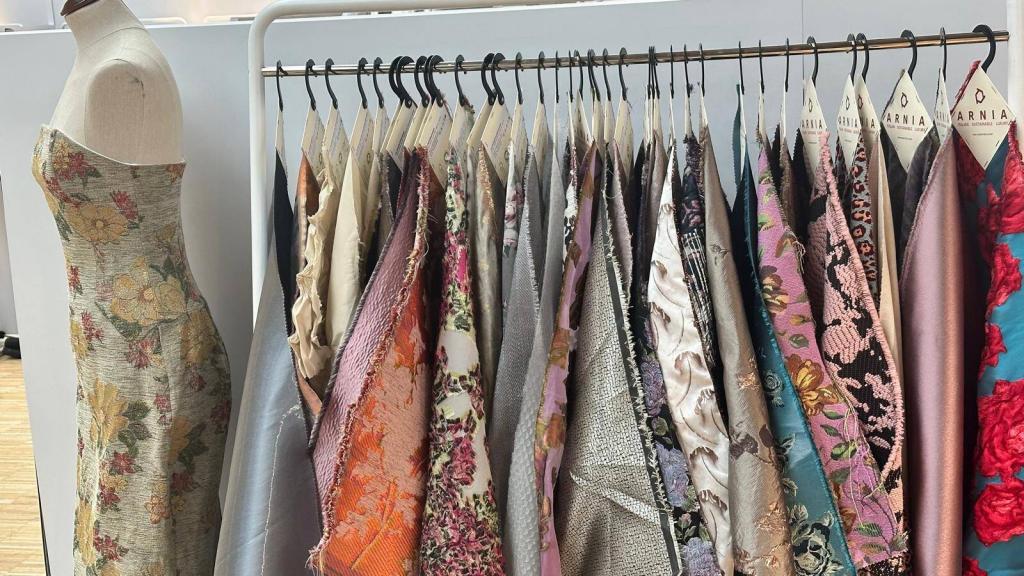
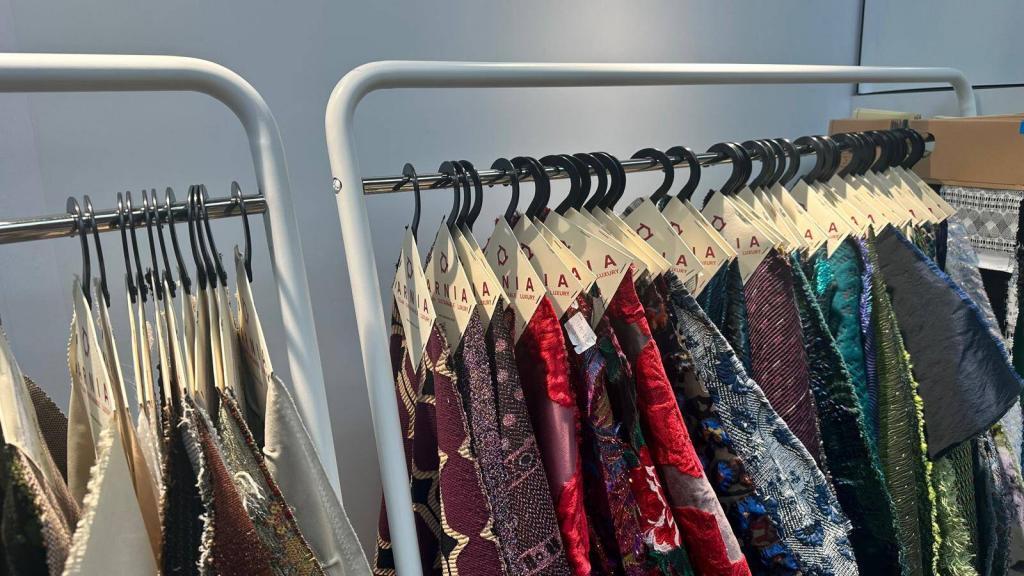
ARNIA presents creative surfaces and luxury textile proposals rooted in Italian know-how: jacquards, gobelins, fil coupé, devoré, embroidery, eyelet embroidery, embossed embroidery, plissé, prints, fancy surfaces and selected base cloths.
These materials are intended for brands looking for more than anonymous fabric sourcing. They support storytelling, product identity and collection differentiation.
Fabric sourcing and custom development
When a brand has a reference swatch, a sketch, a moodboard or a specific product challenge, ARNIA can help evaluate sourcing and development routes.
This includes analyzing composition, handfeel, weight, drape, finishing, repeatability, customization and compliance pathway.
Stock-supported fabrics
Speed is often important, especially for capsules, prototypes and early-stage collection validation. Stock-supported fabrics can help brands move faster without relying on random deadstock.
ARNIA’s 48Hour Fabric Shortlist workflow explains how a curated shortlist can reduce detours, avoid rework and create a cleaner path from swatch to shipment when supported by a complete brief and controlled process.
Sustainability and anti-greenwashing guidance
Responsible luxury requires evidence. ARNIA’s sustainability approach is based on traceability, documentation, third-party audits, responsible materials, governance and social inclusion.
This is particularly relevant for buyers who need to align creative sourcing with reputational protection.
Cut & Sew and capsule development
For brands that want to connect textile selection with garment development, ARNIA can assess Cut & Sew projects, capsule collections and small/medium production routes when technically coherent.
A fabric choice is already a product decision. It affects construction, fit, price, care, quality control and final communication.
What to discuss during the BLOSSOM appointment
A focused meeting with ARNIA can cover:
Material direction
Which surfaces, fibers, weights and textures fit the collection concept?
Technical feasibility
Can the selected fabric work for the intended garment, construction and use?
Sourcing route
Should the project start from a stock-supported base, a custom development, a print, a jacquard, an embroidery or a certified material pathway?
MOQ alignment
Are the quantities compatible with the selected textile technique and production route?
Sustainability claims
What can the brand truthfully say? What requires certification, transaction documentation or chain-of-custody control?
Capsule roadmap
If the project includes garments, what are the steps from fabric selection to prototype, fitting, validation and production planning?
BLOSSOM Paris as a better starting point for responsible luxury
Luxury sourcing is changing. Beauty is still essential, but it is no longer enough.
A modern luxury material must also answer practical questions:
- Where does it come from?
- Who made it?
- Can it be repeated?
- Can the claim be documented?
- Is the supplier reliable?
- Does the material fit the garment?
- Can the project scale without losing quality?
- Does the sourcing choice protect the brand’s reputation?
BLOSSOM Paris is valuable because it creates the right context for these questions before the collection is locked.
For ARNIA, the fair is a place to show that Made in Italy is not only an origin label. It is a system of know-how, responsibility, traceability, craftsmanship and human value.
Book a meeting with ARNIA at BLOSSOM Paris – luxury pre-collection
If you are attending BLOSSOM Paris and you are researching luxury pre-collection fabrics, responsible textile sourcing or capsule development routes, we would be pleased to meet you.
Bring your moodboard, reference swatches, target product category, quantity range, sustainability requirements and expected launch timing.
Together, we can review your material direction and identify the most realistic next step: textile collection selection, fabric sourcing, stock-supported base, sustainable pathway, custom development or capsule roadmap.
Book your meeting with ARNIA at BLOSSOM Paris:https://madeinitaly.social/fair/blossom/
FAQ — BLOSSOM Paris, textile sourcing and ARNIA
What is BLOSSOM Première Vision?
BLOSSOM Première Vision is an exclusive Paris trade show dedicated to the launch of pre-collections for creative, luxury and high-end fashion brands. It focuses on early material research, premium suppliers, craftsmanship and pre-collection sourcing.
Why is BLOSSOM important for luxury pre-collections?
Because pre-collections are developed before the main season reaches its most intense phase. BLOSSOM gives buyers and design teams an early opportunity to discover fabrics, surfaces, colors, textures and suppliers before collection decisions become urgent.
Who should attend BLOSSOM Paris?
BLOSSOM is reserved for industry professionals and is especially relevant for fashion buyers, sourcing managers, design offices, product developers, luxury maisons, premium brands and structured emerging designers. The official registration page states that the show is strictly reserved for industry professionals.
Why do buyers and design offices visit textile fairs?
They visit textile fairs to research materials, compare suppliers, touch fabrics, understand trends, assess technical feasibility, evaluate sourcing risk and build development relationships before committing to collection choices.
What should I prepare before a meeting with ARNIA?
Prepare a moodboard, reference swatches, product category, target quantity, expected launch timing, target handfeel, preferred composition, compliance needs and any sustainability or certification requirements.
Can ARNIA help with fabric sourcing?
Yes. ARNIA supports fabric sourcing and custom development for fashion brands, starting from creative briefs, sketches, photos, reference fabrics or specific textile needs. The process includes material research, supplier coordination and technical evaluation.
Can a certified fabric make my garment certified?
Not automatically. Certification depends on the applicable standard, transaction documentation, chain of custody and the certification status of the actors involved. ARNIA’s Sustainability Practical Guide explains why certification applies to specific products and lots and why unsupported claims can create risk.
Does ARNIA work with small capsule collections?
ARNIA can assess capsule projects and Cut & Sew routes when technically coherent. Cut & Sew projects are evaluated according to garment type, fabric, construction, quantities, prototype validation and production feasibility.
What makes ARNIA different from a generic fabric supplier?
ARNIA combines Made in Italy textile know-how, Lombardy district sourcing, sustainable and certifiable pathways, stock-supported fabrics, Cut & Sew coordination, traceability and social inclusion. ARNIA is a non-profit social cooperative and positions itself as a strategic B2B textile partner, not as a price-driven intermediary.
Where can I book a meeting with ARNIA at BLOSSOM Paris?
You can visit ARNIA’s BLOSSOM fair page and request a meeting through the dedicated contact path:https://madeinitaly.social/fair/blossom/


