
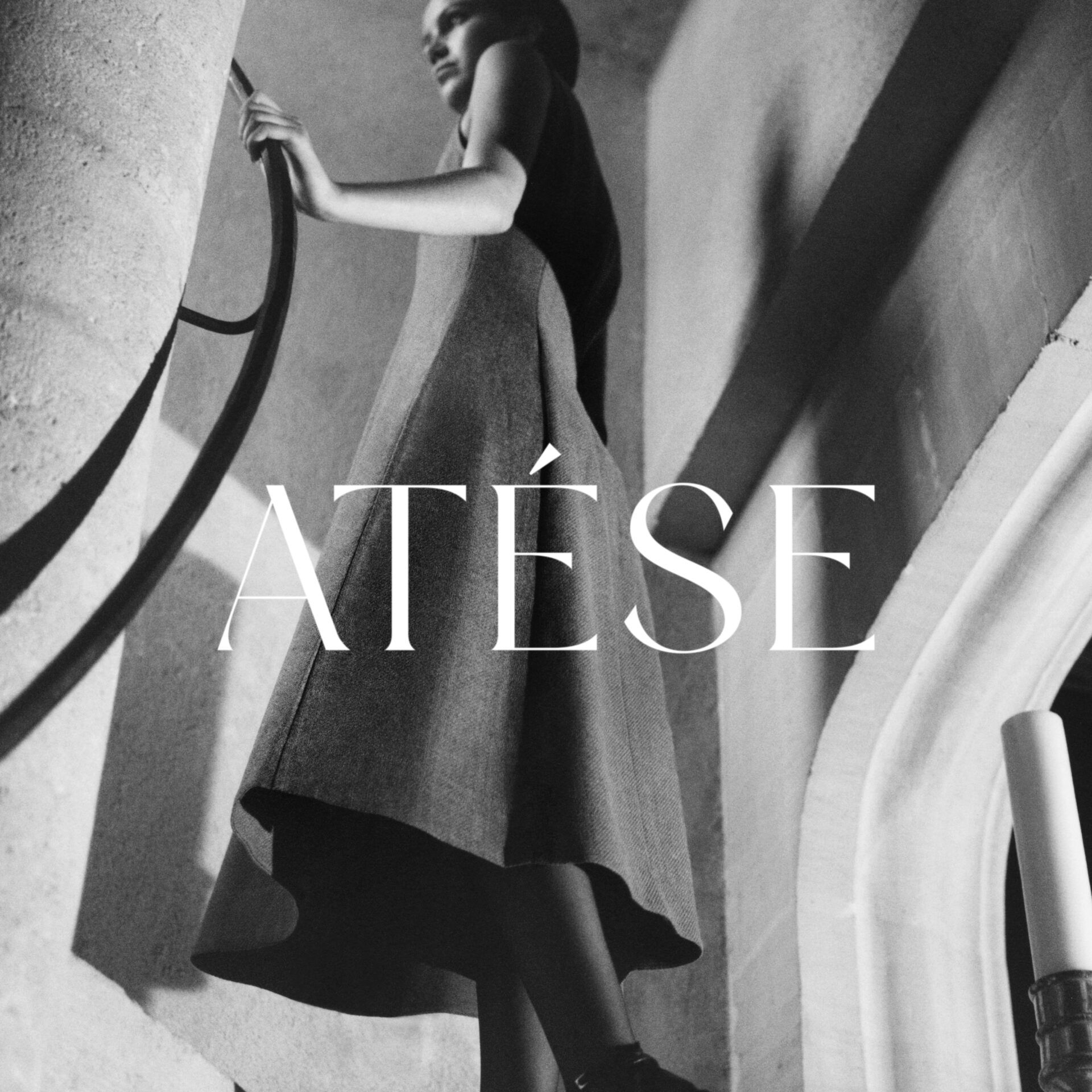
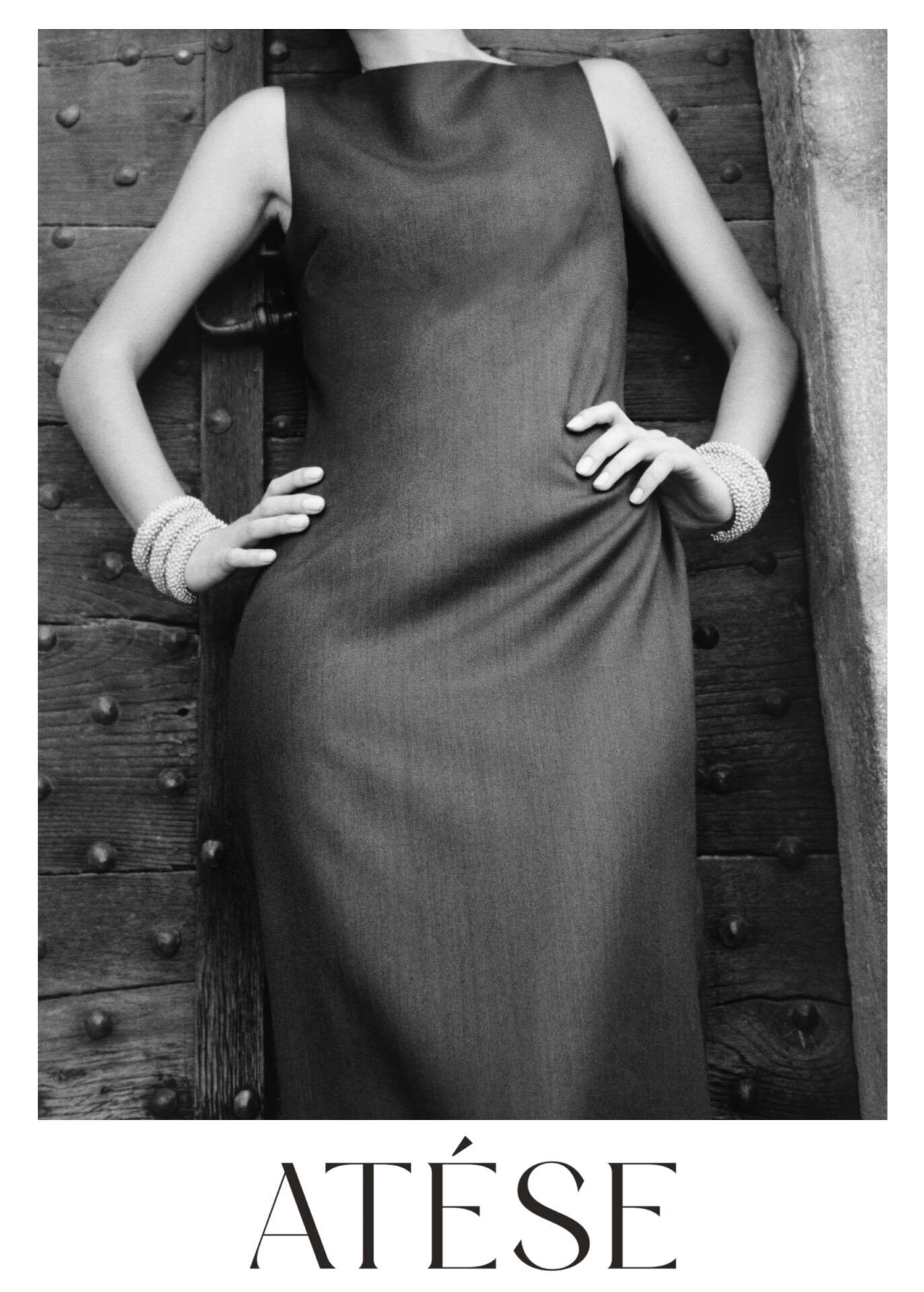
ATESE is the London-based womenswear brand founded by Marina Zoullas , with a vision centered on expressive silhouettes, natural fabrics and the care of making. For its first collection, ATESE worked with ARNIA TEXTILE FASHION on a development and production journey connecting creative direction, material choices, prototypes, fittings and the practical steps towards delivery.
The collaboration brings together two distinct contributions: Marina’s authorship of the brand and its aesthetic, and ARNIA’s textile expertise, project management and Made in Italy development and production capabilities.
Behind the finished garments is a less visible story: conversations about proportion, the feel of a fabric, the interpretation of a silhouette and the refinements that make an idea convincing on the body. This is where a collection acquires its character—and where a productive relationship between a founder and an industrial partner becomes essential.
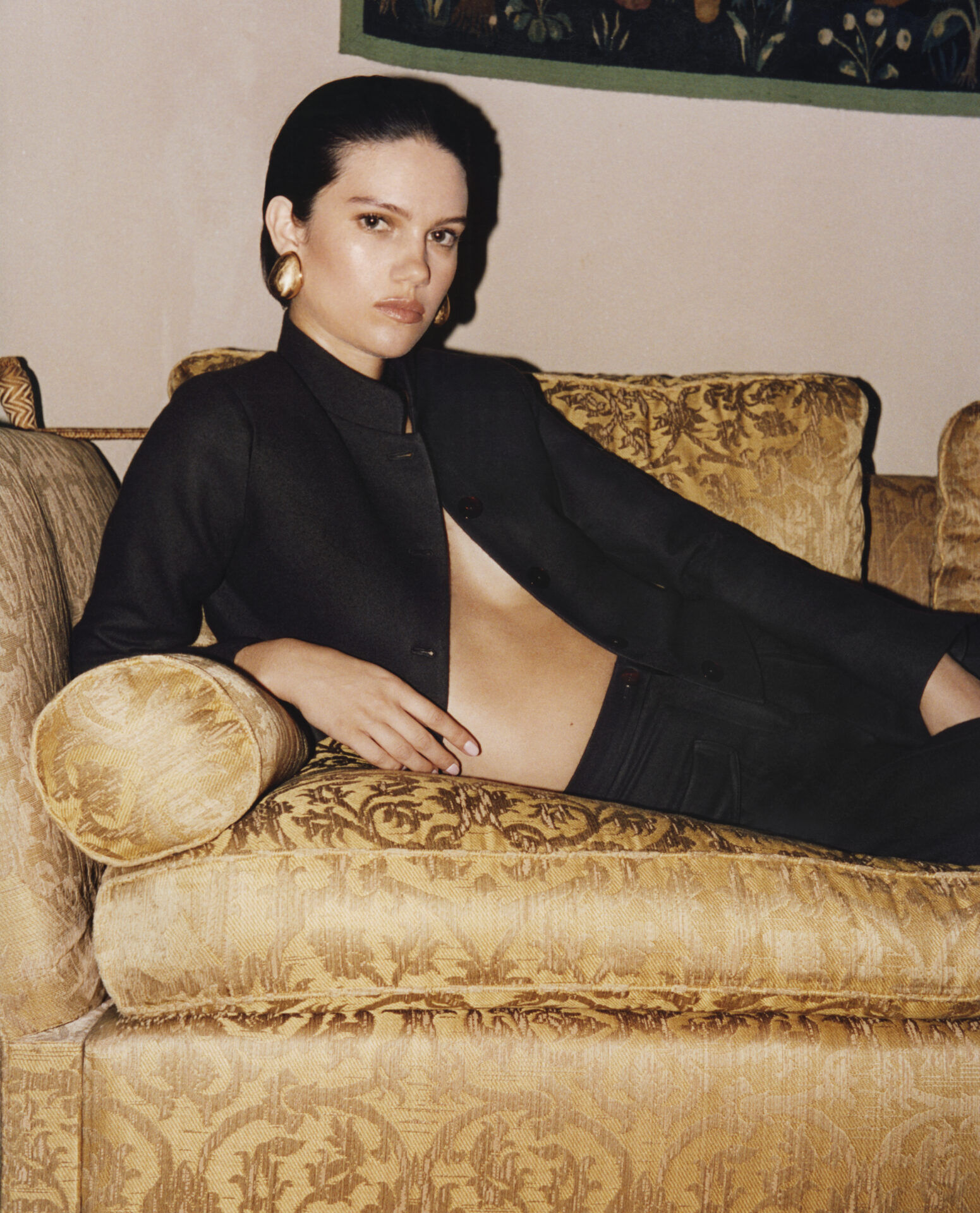
ATESE-luxury-womenswear-made-in-italy-ARNIA
Meet Marina Zoullas: a creative vision shaped by art and making
ATESE approaches clothing as something to inhabit, rather than simply something to display. Its identity connects cultural references with the intimate experience of wearing a garment: how it frames the body, creates movement and changes with the person who wears it.
A profile of Marina in The Purist traces her interest in design to a New York upbringing surrounded by art, an early enthusiasm for making things by hand and subsequent fashion studies in London. That background offers a useful way into ATESE: an interest in form grounded in curiosity about how things are constructed.
The brand’s story draws inspiration from Lucio Fontana’s Concetto spaziale, Attese. The Fondazione Lucio Fontana describes his Tagli as works in which cuts move beyond the surface of the canvas. In ATESE’s own narrative, this becomes a reference for the relationship between cloth, space and the body.
The connection is not about reproducing a work of art on clothing. It is about considering what a cut can reveal, how a surface becomes a volume and how structure can coexist with softness.
The Purist describes the collection through a meeting of shaped 1950s femininity and more fluid 1970s glamour, with silk separates, fitted knitwear and cleanly cut skirts and trousers. That combination helps explain why proportion and material behavior are so important to the brand’s expression.
For Marina, a collection should also remain open to the changing lives of its wearers. Pieces are conceived to move between settings and combinations, rather than depend on one occasion or a single season’s styling. Timelessness is therefore a design ambition: continued relevance, not visual anonymity.
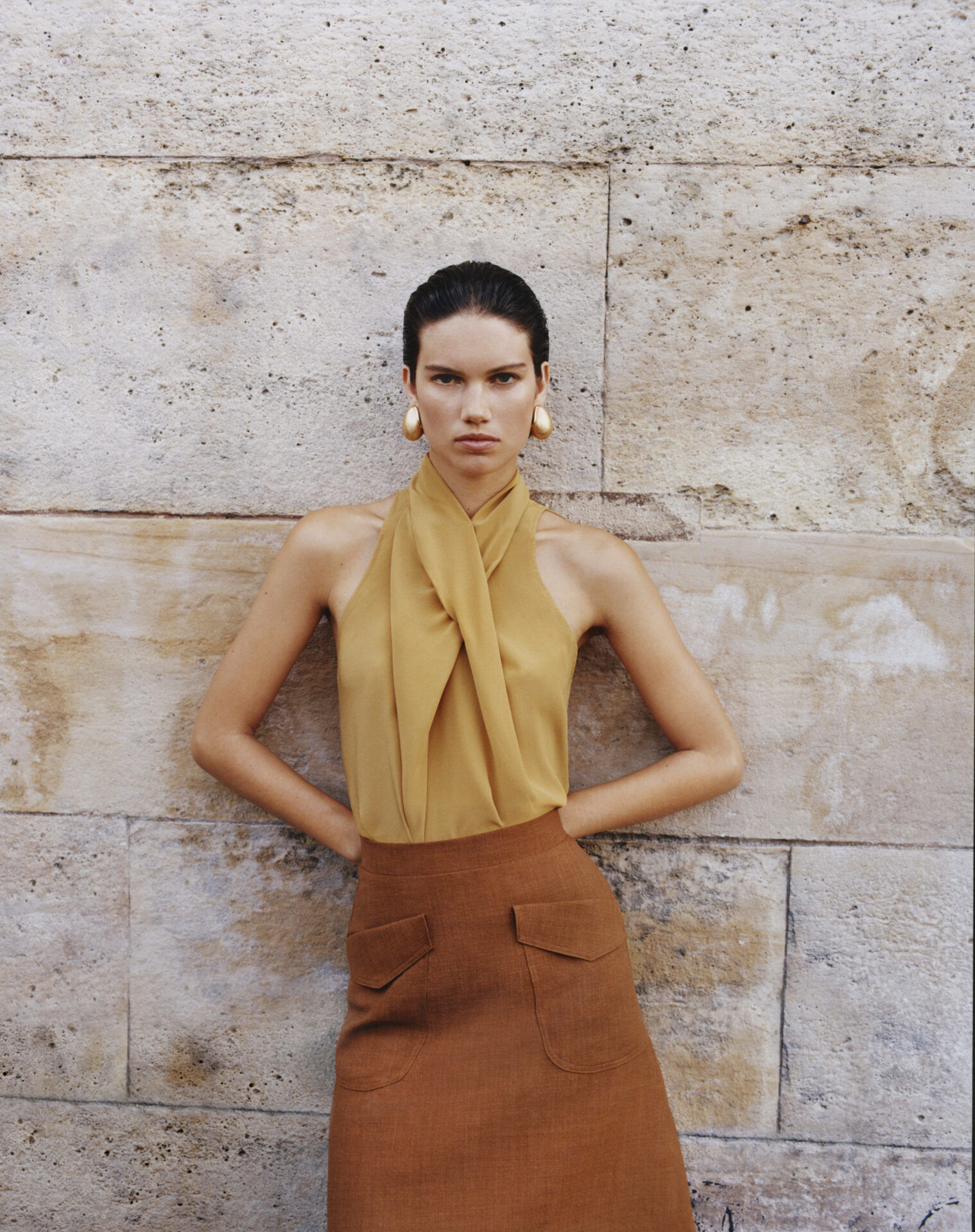
ATESE-luxury-womenswear-made-in-italy-ARNIA TEXTILE FASHION
The ambition: beautifully made pieces, considered from the inside out
Marina expresses the intention behind ATESE clearly:
“A central part of the brand is creating timeless, beautifully made pieces that are designed to last, while being thoughtful about production and minimising unnecessary waste.”
— Marina Zoullas, founder of ATESE
This brings craftsmanship, material quality and responsibility into the same conversation. It also gives the development team a demanding brief. A garment must do more than reproduce a drawing: the fabric, construction, proportions and finishing need to support one another.
Attention to detail is not simply a decorative preference. A restrained design may depend on the precise relationship between a neckline and the shoulder, the balance of a hem or the way a closure sits within the silhouette. The fewer distractions a garment offers, the more significant those relationships become.
For ATESE, the aim is not to add complexity for its own sake. It is to make each choice feel intentional. The development process needs to protect that intention while establishing how the garment can actually be made.
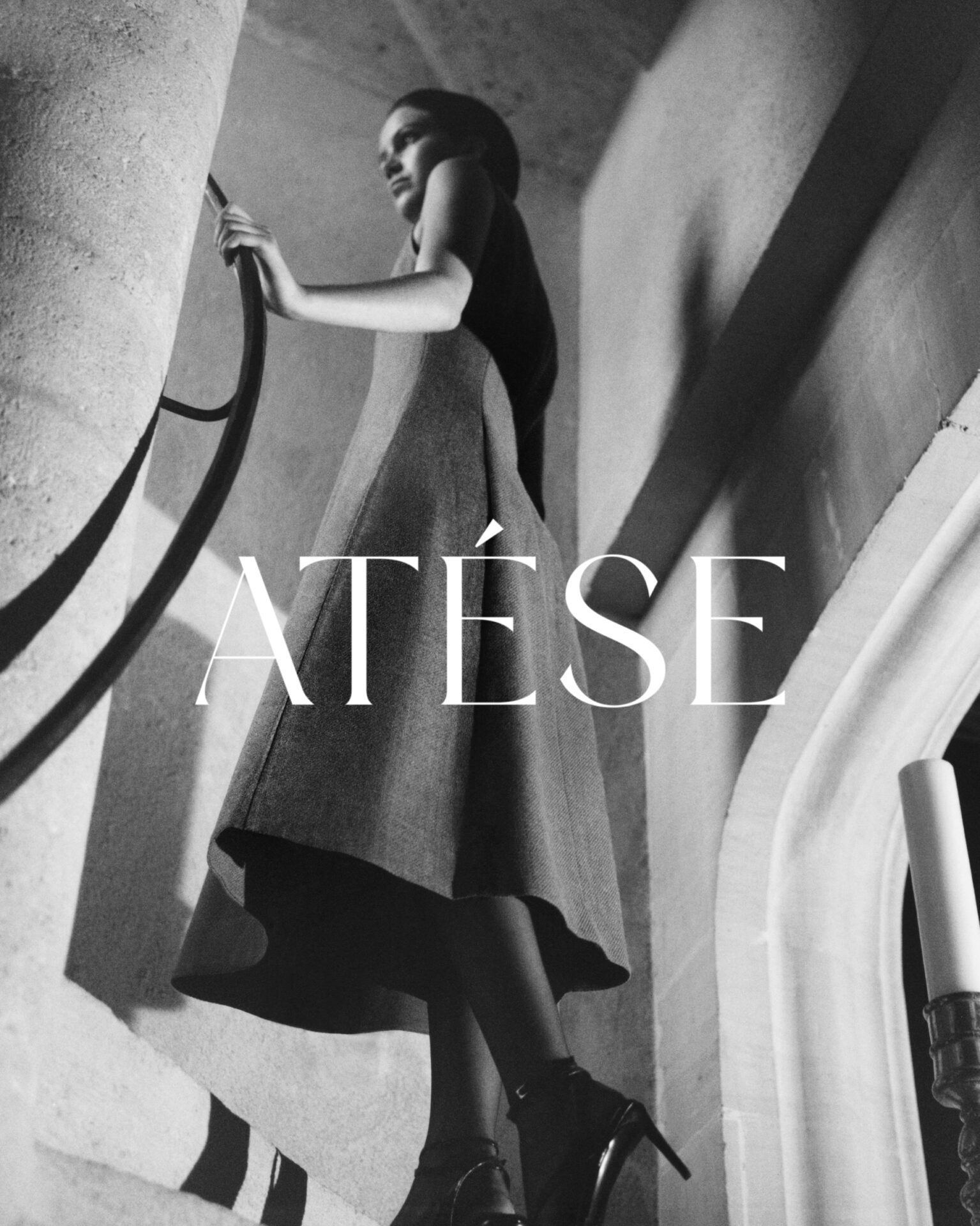
ATESE-luxury-womenswear-made-in-italy-ARNIA sustainable textile fashion
Before the first prototype: understanding the same creative language
The journey with ARNIA began with an initial conversation and continued through stylistic alignment with the project manager, online exchanges and meetings in person.
This early alignment matters because creative vocabulary is rarely self-explanatory. Words such as fluid, sculptural, feminine or relaxed can suggest different outcomes to different people. Before translating them into patterns and construction decisions, a designer and a production team need to understand what they mean for this particular collection.
For ATESE, the discussion centered on Marina’s creative direction and the relationship she wanted between materials, proportions and the finished garment. ARNIA’s role was to help connect that intention with a workable development route, not to replace it with a standard product formula.
Good alignment does not remove experimentation. It gives experimentation a purpose. A prototype can then be assessed against a shared intention, rather than against several different interpretations of the original idea.
This distinction is central to fashion product development: agreement on what to make comes before agreement that a sample is ready. The first meetings are therefore part of the product work, not merely an introduction to it.
From online meetings to the showroom: making design tangible
Online communication helped maintain continuity between Marina and the ARNIA team. In-person showroom meetings added something different: the opportunity to discuss physical materials and garments together.
A photograph can communicate a direction, but it cannot fully convey the experience of handling a fabric. Seeing how a material folds, hangs and responds to touch creates a more concrete basis for discussing the intended garment. The same applies to comparing a prototype with the idea behind it.
For a collection like ATESE’s, the showroom is valuable as a working setting. It brings the creative and technical discussion around the same object. Rather than relying only on descriptions exchanged across a screen, the people involved can examine the same proportion, handle the same cloth and clarify the same detail.
The value is not the visit itself. It is the understanding that the visit makes possible.
Online meetings and physical appointments serve complementary purposes: one sustains communication across distance; the other supports decisions that benefit from direct observation. Together, they helped frame the collaborative approach Marina wanted for the collection.
Natural fabrics: selecting for character and for the garment
Natural fabrics are central to Marina’s vision for ATESE. Her emphasis is on their quality and contribution to the finished piece: the surface, feel, movement and relationship with the body.
In development, choosing a beautiful fabric is only the beginning. The next question is whether that particular material supports the proposed design. A silhouette intended to hold a shape asks something different of a textile from one intended to fall softly. Construction choices must respond to those differences.
Consider a draped detail: its appearance depends not only on the drawn outline, but also on the amount of cloth, its weight and the way it settles. Changing the material can require the design to be reconsidered, even when the pattern initially appears unchanged.
ARNIA’s fabric sourcing and textile development work connects material research with these practical questions. For a founder, the benefit is a conversation that considers the desired aesthetic alongside the requirements of sampling and production.
The objective is not to collect attractive swatches. It is to make informed material choices that belong to the garment and the collection.
Prototypes and fittings: where the collection becomes three-dimensional
A prototype gives a design a physical form. A fitting asks whether that form expresses the intended idea when worn.
For ATESE, the process included prototypes, in-person fittings and refinement. Marina’s feedback remained central: the purpose was to bring materials, proportions and details together as she intended, rather than treat the first sample as an automatic production approval.
Reading the silhouette on the body
A fitting is more than checking whether a garment closes. It is an opportunity to consider its balance, the position of important lines and the relationship between shape and ease.
In practical terms, the development team can examine how the garment sits at rest and how its appearance changes with movement. Does a volume read as deliberate? Does a line sit where the design needs it? Is the intended softness still present when the piece is worn rather than displayed?
These are examples of the questions that make fitting useful. They connect the visible design with the experience of wearing it.
Turning observations into refinements
Feedback needs to become an actionable change. Pattern adjustments, construction decisions and material choices must be considered together, with an updated prototype or reference used to assess the result where necessary.
The practical principle is straightforward: the garment is assessed on the body, and the pattern is adapted to the findings. A change should then be checked in the next relevant development step, rather than assumed to work.
Within the ATESE collaboration, fittings and communication provided the setting for that refinement. Their value was not simply to identify what should change, but also to protect what should remain: the character of a silhouette or the way Marina wanted a detail to behave.
Knowing what is being approved
Approval is most useful when it refers to a defined garment, material and construction—not only a general visual impression.
In ARNIA’s Cut & Sew development process, sampling and technical validation precede production decisions. The aim is to establish a clear reference for making, so the work invested in a sample can inform the next stage.
A refined prototype is therefore both a creative milestone and a practical production reference.
The details that make a garment feel luxurious
Marina specifically wanted the story of ATESE to acknowledge the care taken with finishes, fit and construction. These are parts of the garment that a campaign image cannot fully explain.
One small detail from the development correspondence illustrates Marina’s approach: she considered the placement of a label in relation to a draped neckline, so it would remain discreet when the garment was worn. Even this internal detail had to respect the intended appearance of the piece.
A wearer experiences clothing at close range. She notices how an opening works, how a seam feels and whether the garment moves comfortably with her. The inside of a piece matters as well as the visible surface.
From a development perspective, this means reviewing details as part of a whole. For example, a finish that looks refined in isolation may add unwanted weight to a fluid edge. A visually discreet fastening still needs to be practical. A lining must serve the intended garment rather than simply complete a specification.
These examples illustrate the kind of judgment involved in turning an aesthetic brief into clothing. They are not arguments for making every garment elaborate; they are arguments for making its details appropriate.
ATESE’s emphasis on refinement gives those decisions a clear direction. Luxury, in this context, is the attention invested in the relationship between a piece’s appearance, construction and use.
Project management that protects creative intent
A founder should remain the author of the collection without having to carry every operational connection alone.
ARNIA’s project-management contribution brings continuity to the work between creative discussion, textile decisions, sampling and production. It helps keep questions, feedback and approvals connected as a project moves forward.
This matters because a collection is not a series of unrelated tasks. A change to a material can affect construction. A fitting decision can require pattern work. An adjustment to a detail may need to be reflected in the information used for production.
For ATESE, close collaboration was itself part of the desired process. Marina’s emphasis on communication recognizes that the quality of the relationship influences the clarity with which an idea reaches the people making it.
ARNIA’s broader Fashion Startup Lab and project-management services address this need for a connected development route. The purpose is not to add administration around creativity, but to help decisions remain intelligible, coordinated and useful from one stage to the next.
From an approved sample to production
Making a convincing sample and organizing production are related, but different, responsibilities.
Once a design is ready to move forward, the approved material, measurements, construction and details need to form a usable reference for the production team. Quality oversight then has something specific to assess, rather than an undefined expectation of luxury.
In ARNIA’s operating model, this transition brings together the internal team and selected specialist production partners. Product development, client communication, documentation and quality oversight remain coordinated through ARNIA.
For an emerging label, small-batch clothing production in Italy is valuable only when the production scale is matched to a technically workable project. A smaller run does not remove the need for development, clear instructions or approval.
ATESE’s journey illustrates why the making stage cannot be separated from the work that precedes it. The intention established in early conversations needs to remain recognizable in the decisions used to produce the garments.
A thoughtful approach to sustainability: choices before slogans
Marina connects ATESE’s design ambitions with considered production and a desire to minimize unnecessary waste. That is best understood through the choices behind the collection, rather than through a blanket promise of environmental perfection.
Her preference for natural fabrics is part of the brand’s material direction. The ambition to create enduring pieces is part of its design direction. Careful development and considered production planning give those intentions a practical setting.
Designing for lasting relevance is not the same as guaranteeing a garment’s lifetime. It means considering whether a piece can remain desirable and useful beyond its first appearance: through its shape, versatility, construction and care requirements.
The collaboration also included attention to how sustainability is communicated. Clear wording should distinguish the material in a garment, the practices of a production partner and any certification that applies to a particular product or production lot. The UK Competition and Markets Authority’s fashion guidance similarly emphasizes specific, substantiated environmental claims rather than vague assurances.
ARNIA’s sustainability and certification guidance explains these boundaries. A supplier’s credentials do not automatically certify a finished garment or an entire collection; applicability depends on the relevant material, production route and documentation.
For a young brand, this precision is part of building trust. The care invested in explaining a product should be consistent with the care invested in developing it.
The final part of making: shipment and logistics
The development story does not end when a garment leaves the sewing stage.
ARNIA’s support for ATESE also extended to the coordination of shipment and logistics. This is a less visible part of bringing a first collection to market, but it belongs to the same chain of responsibility as the earlier development work.
In practical production planning, the final steps include aligning shipment information, packing requirements and the handover to logistics providers. The exact arrangements depend on the project, destination and agreed responsibilities.
For a founder, the value lies in continuity: the people who understand the collection can help connect its physical completion with the practical requirements of delivery.
That continuity is an important distinction between ordering an isolated manufacturing operation and working with a partner involved across development, production coordination and the route to shipment.
ARNIA: an industrial partner rooted in Lombardy’s textile expertise
ARNIA TEXTILE FASHION combines textile development with garment project coordination through an experienced internal team and a selected production network in the Lombardy textile district.
As an ambassador for the district’s expertise, ARNIA connects complementary skills while retaining responsibility for the agreed project-management, quality and documentation processes. This is an industrial partnership model, not simply a supplier introduction service.
The company is also an Italian Type B non-profit social cooperative. Its model creates meaningful work opportunities by valuing people’s skills and providing responsibilities suited to their capabilities. Social inclusion sits within the operating business, alongside technical competence and production coordination.
Selected partners are expected to work in line with ARNIA’s ethical commitments. The cooperative’s public transparency and governance documents provide further context for this approach.
For a brand such as ATESE, the relevant connection is between care for the product and care in the way production is organised. Craftsmanship needs skilled people; a responsible production relationship needs clear roles, communication and oversight.
ARNIA’s role is to help bring those elements together without taking authorship away from the designer.
Discover ATESE: clothing with room to become personal
What gives ATESE its identity is Marina’s combination of cultural curiosity, material sensitivity and attention to the experience of wearing clothes.
The first collection is the expression of that direction. The work behind it—from early alignment to prototypes, fittings and production—shows how much consideration sits between a creative idea and a finished garment.
For ATESE, the ambition is clothing that earns a lasting place in a woman’s wardrobe. For ARNIA, the work is to help make that ambition achievable through textile knowledge, thoughtful development and coordinated Made in Italy production.
Discover ATESE and explore the collection.
For founders developing a similarly considered project, share your collection brief with ARNIA TEXTILE FASHION. Describe the creative direction, product categories, development stage, anticipated quantities and timing so that the appropriate route can be assessed.
ATESE-luxury-womenswear-made-in-italy-ARNIA TEXTILE
FAQ – ATESE: Luxury Womenswear Made in Italy | ARNIA
What is ATESE, and who founded it?
ATESE is a London-based womenswear brand founded by Marina Zoullas. Its creative direction connects art, expressive silhouettes, natural fabrics and attention to craftsmanship, with the ambition to create pieces that remain relevant beyond a single season.
What was ARNIA’s role in developing ATESE’s first collection?
ARNIA supported a coordinated development and production journey encompassing initial alignment, project management, material discussions, prototypes, fittings, production coordination and shipment logistics. Marina remained responsible for ATESE’s creative vision and the approval of the collection’s direction and details.
Why combine online communication with in-person fittings?
Online communication helps a project progress across distance. In-person meetings and fittings allow participants to handle materials and observe garments directly. The two formats support different decisions and help translate creative feedback into practical refinements.
Can ARNIA support other emerging luxury womenswear brands?
Yes. ARNIA works with emerging and established brands whose projects fit its technical scope and production model. Support can include fabric sourcing, garment development, Cut & Sew and project management. Feasibility, quantities, timing, pricing and certification requirements are assessed for each project rather than assumed from another client’s case.


