
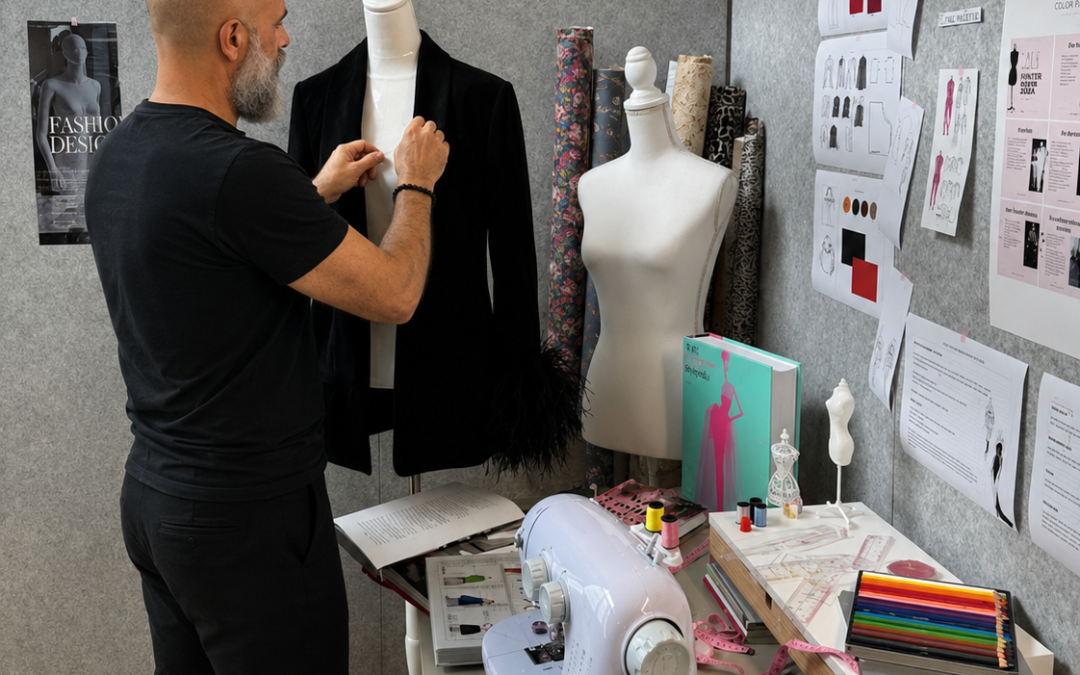
Sampling and start a fashion production are one of the most exciting moments for an emerging fashion brand.
It is the first time an idea becomes a real garment. A sketch becomes fabric. A moodboard becomes shape. A concept becomes something that can be touched, fitted, photographed and potentially sold.
But in Made in Italy fashion production, sampling should not be treated as the first step.
Sampling should be the result of a structured preparation process.
Before investing in prototypes, an emerging brand should already understand its buyer persona, target retail price, sales channel, product architecture, hero styles, fabric strategy, technical documentation, sustainability expectations, production quantities and future collection road-map.
Without this preparation, sampling can become expensive guesswork.
At ARNIA TEXTILE FASHION, we support emerging and premium brands with Cut & Sew Services, Fabric Sourcing, Fashion Startup Lab and project management inside the Lombardy Textile District.
Our position is clear:
A prototype is not the destination. It is the bridge to production.
This guide explains what must be ready before sampling — and why a Textile Project Manager can help emerging brands avoid avoidable mistakes before they become expensive.
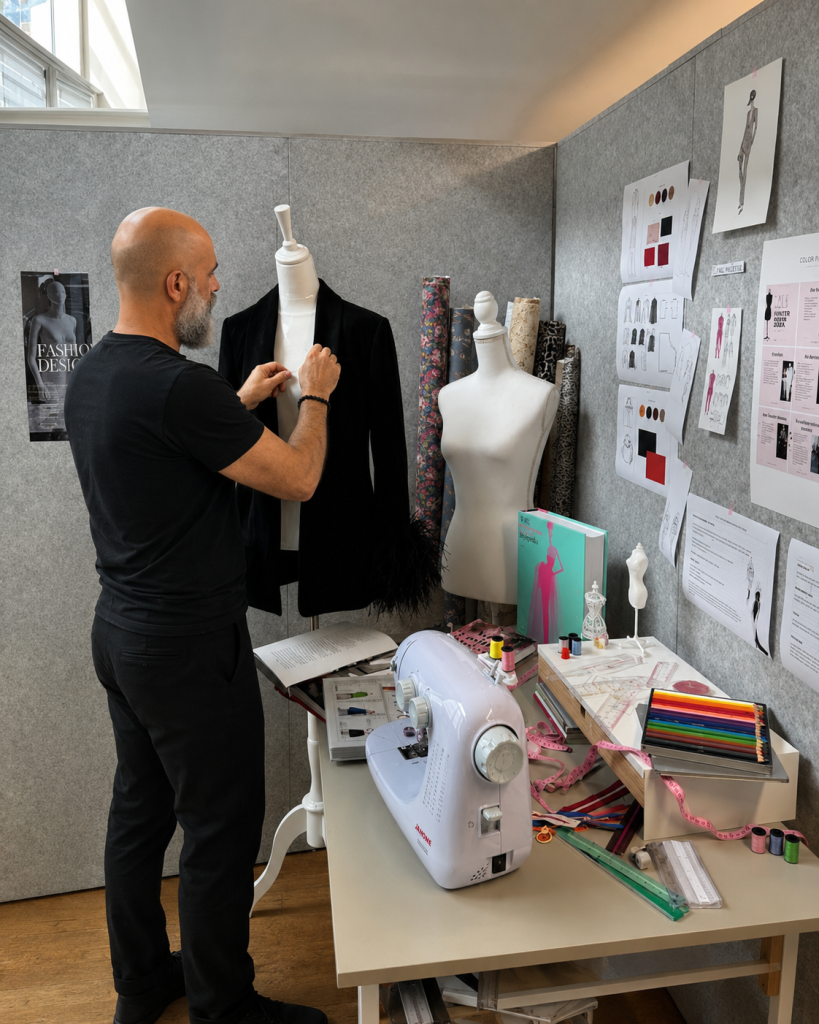
FASHION BRAND PRODUCTION IN ITALY cut sew
Quick Answer: What Must Be Ready Before Sampling or start a Fashion Production?
Before sampling in Italy – or consider a fashion production – an emerging fashion brand should prepare:
- clear buyer persona and target market;
- target retail price and channel strategy;
- product categories and number of styles;
- hero styles and future collection road-map;
- target quantity per style;
- tech pack or at least structured construction notes;
- patterns, size specs and grading direction where available;
- Bill of Materials, including fabric, trims, labels and packaging;
- fabric direction and availability check;
- sustainability and certification expectations;
- production timeline;
- commercial plan for Collection Zero and next releases;
- budget for development, sampling, production and communication;
- one project owner or Textile Project Manager.
If these elements are missing, the project may still be creative — but it is not yet production-ready.
FASHION BRAND PRODUCTION IN ITALY cut sew
1. Sampling Is Not the Beginning of Production
Many emerging brands start by asking:
“Can you make a sample?”
The question looks simple. But a serious sample is not only a garment sewn once.
A professional sample should test:
- whether the design can be produced;
- whether the fabric behaves correctly;
- whether construction is repeatable;
- whether the fit can be controlled;
- whether the cost structure makes sense;
- whether the product can match buyer expectations;
- whether the style can be produced in the desired quantity;
- whether the brand can move from prototype to production.
A sample made without these checks may look beautiful, but still fail as a business object.
It may be too expensive for the buyer persona.
It may require a fabric that cannot be reordered.
It may need construction details that are too slow for production.
It may not fit the intended channel.
It may not support the sustainability claims planned by the brand.
It may be impossible to scale without redesigning everything.
That is why the first step is not sampling.
The first step is alignment.
Related reading: Why “Just a Quote” is Not Enough.
2. The Most Common Mistake: Sampling Before Business Reality (Fashion Production)
Emerging brands usually do not fail because the idea is ugly.
They fail because the idea is not aligned with reality.
The product may be creatively strong, but commercially misaligned.
For example:
- the buyer persona cannot afford the required retail price;
- the sales channel does not leave enough margin for Made in Italy production;
- the collection has too many styles and too little depth;
- the fabrics are beautiful but not available for bulk production;
- the brand wants certified claims but has no Chain of Custody strategy;
- the target launch date ignores real lead times;
- the budget covers samples but not production;
- the collection has no continuity plan for the next drop.
Sampling without business alignment can create a dangerous illusion.
The founder sees a prototype and feels progress.
But the project may still be structurally impossible.
A sample is useful only if it brings the brand closer to a product that can be sold, repeated and delivered.
3. Start With the Buyer Persona, Not With the Fabric (or just the pattern)
Many founders begin with fabric.
This is natural. Fashion is emotional, tactile and visual.
But before selecting the final fabric, the brand must understand the person who is expected to buy the garment.
The buyer persona should not be a vague sentence like “women who love sustainable fashion”.
A useful buyer persona should answer practical questions:
- Who is the target customer?
- What brands does this person already buy?
- What price range feels normal, aspirational or excessive?
- Does the customer buy online, in boutiques, through wholesale, via showroom or through direct-to-consumer drops?
- What matters most: design, fit, exclusivity, material quality, traceability, sustainability, comfort or status?
- What is the real spending capacity?
- What problem does the garment solve emotionally, socially and functionally?
If the buyer persona has a realistic spending capacity of €180 for a dress, designing a Made in Italy product that requires a €320 retail price may create friction from the beginning.
The issue is not that Italian production is “too expensive”.
The issue is that the product architecture, customer expectation and price point are not aligned.
Related reading: Selling Price and Production Costs in Fashion.
4. Target Retail Price Must Be Defined Before Sampling (or consider any Fashion Production … also if in a small batch)
One of the most important questions before sampling is:
“At what price can this product be sold credibly, repeatedly and profitably?”
The target retail price defines the cost envelope.
It affects:
- fabric choice;
- construction complexity;
- trim quality;
- packaging;
- production quantity;
- development budget;
- channel strategy;
- margin structure;
- future reorder possibility.
A DTC brand selling directly online may retain more of the retail price, but it also carries marketing, returns, payment, fulfillment and customer service costs.
A wholesale brand may gain volume and retail exposure, but it sells to retailers at a lower wholesale price. This reduces the production budget available per unit.
The same garment can be viable in direct-to-consumer and unviable in wholesale.
This is why sampling before checking the price architecture is risky.
A prototype should not prove only that the garment can be made.
It should help prove that the product can exist inside a sustainable business model.
5. Use Backward Costing Before You Fall in Love With the Prototype
Backward costing means starting from the intended selling price and working backwards.
A simplified structure looks like this:
| Step | Question |
|---|---|
| Retail price | What will the customer pay? |
| Tax and channel deductions | What does the brand actually retain? |
| Marketing and operating margin | What must remain to run the company? |
| Development allocation | How much must be recovered over time? |
| Landed product budget | What is really available for fabric, trims and making? |
| Production feasibility | Can the garment be built inside that budget? |
This does not mean that creativity must be reduced to numbers.
It means that creativity must survive the business model.
Backward costing helps prevent one of the most painful founder experiences: producing a sample, loving it, showing it to buyers, and only later discovering that the product cannot be sold at a viable price.
A Textile Project Manager can support this step by translating target retail price into realistic product constraints before sampling starts.
6. Define the Sales Channel Before the Product Is Final
A garment designed for wholesale is not always the same garment as one designed for DTC.
The sales channel affects:
- margin structure;
- product price;
- size depth;
- delivery calendar;
- packaging;
- labeling;
- returns risk;
- buyer expectations;
- commercial storytelling;
- minimum order strategy.
A wholesale buyer may need delivery reliability, assortment coherence, size consistency, pricing discipline and clear reorder logic.
A DTC customer may respond more strongly to storytelling, limited drops, founder narrative, exclusive details and online presentation.
A showroom may need samples ready earlier than the founder expects.
A marketplace may impose product data, packaging, delivery and return requirements.
If the channel is unclear, the sample may be designed for no real market.
Before sampling, the brand should define whether the project is:
- DTC first;
- wholesale first;
- showroom-driven;
- boutique capsule;
- pre-order model;
- limited drop;
- hybrid model.
Sampling should reflect the sales route, not only the creative idea.
7. Build a Minimum Viable Collection, Not a Full Fantasy Collection
Many emerging brands try to launch too much too early.
They want 20, 30 or 40 styles because they think a brand must look “complete”.
But an early-stage brand does not need a large assortment.
It needs a focused product universe.
A strong first drop may include:
- 1 hero style;
- 1–2 supporting styles;
- 1 controlled fabric direction;
- 1 coherent color story;
- a manageable size range;
- a clear price architecture;
- a realistic production plan.
More styles do not automatically create more value.
They often create more sampling costs, more fitting problems, more trims, more labels, more packaging complexity, more photo-shoot costs, more unsold inventory and more operational risk.
A smaller range can create:
- faster sampling cycles;
- clearer storytelling;
- cleaner cash flow;
- better quality focus;
- more depth per style;
- stronger learning from the market.
Related reading: Fashion Production for Startups.
8. Hero Styles: The Asset Emerging Brands Often Ignore
A hero style is not simply the bestselling product.
For an emerging brand, a hero style is the product the brand wants to be remembered for.
It should be:
- recognizable;
- repeatable;
- commercially credible;
- aligned with the buyer persona;
- technically controllable;
- profitable over time;
- adaptable across seasons;
- strong enough to carry the brand identity.
Hero styles matter because pattern making, fitting and sampling are investments.
If a founder develops a dress block, trouser block, jacket block or shirt block that can return across multiple seasons, the development work becomes an asset.
If every season starts from zero, the brand keeps paying for learning without accumulating technical advantage.
A strong hero style can evolve through:
- fabric variation;
- new colorways;
- adjusted length;
- controlled trims;
- seasonal surface effect;
- limited edition version;
- different styling context;
- refined fit improvement.
This is how a small brand can build continuity without becoming repetitive.
The mistake is not launching with few products.
The mistake is launching without products that can become recognizable and repeatable.
9. Plan the Next Releases Before Sampling the First One
Sampling should not be isolated from the next season.
An emerging brand should ask:
- What is Collection Zero meant to prove?
- Which styles could return in Drop 2?
- Which fabric bases could be reused?
- Which pattern investments should become long-term assets?
- Which colors are seasonal and which are signature?
- Which product category should define the brand?
- What should be tested first: fit, price, material, customer response or channel?
- What can be reordered if the first drop sells out?
- What should not be sampled yet?
This forward-looking view prevents one of the most common startup mistakes: spending too much on isolated prototypes that do not create reusable knowledge.
A brand should not sample everything it dreams.
It should sample what supports its commercial learning and future road-map.
Related reading: Fashion Startup Budget.
10. Collection Zero: A Smarter Way to Start
A first collection should not try to prove everything.
It should prove the right things.
Collection Zero is a market-entry collection designed to test real demand with controlled risk.
It can help validate:
- target customer response;
- price acceptance;
- hero style potential;
- fabric performance;
- fit and size curve;
- sales channel;
- production feasibility;
- cash-flow assumptions;
- storytelling strength.
Collection Zero is not a smaller version of a big brand collection.
It is a disciplined first proof of product-market fit.
For emerging brands, this can be more valuable than a broad but fragile assortment.
A good Collection Zero should be:
- narrow enough to manage;
- strong enough to represent the brand;
- technically realistic;
- commercially testable;
- supported by a future road-map.
A Textile Project Manager can help decide what should enter Collection Zero and what should wait.
11. The Tech Pack: Your Product’s Operating System
Before sampling, the brand should prepare a tech pack whenever possible.
A tech pack is not bureaucracy.
It is the document that reduces misunderstanding between design, pattern, sourcing, production and quality control.
A useful tech pack may include:
- flat drawings;
- reference images;
- measurements;
- size specs;
- tolerances;
- stitching instructions;
- seam and finish details;
- fabric requirements;
- trims;
- labels;
- care label information;
- packaging;
- construction notes;
- BOM;
- colorways;
- size range;
- grading direction;
- quality requirements.
Without a tech pack, sampling becomes interpretation.
The sample maker must guess.
The supplier must assume.
The founder must explain repeatedly.
The project manager must reconstruct missing information.
Every missing detail can become a cost later.
If a brand does not have a complete tech pack yet, it can still begin — but it should begin with a structured technical review, not with blind sampling.
12. Patterns, Size Specs and Grading: Fit Must Be Planned
Fit is one of the most difficult parts of fashion production.
A garment can look strong in one size and fail when graded.
Before sampling, the brand should clarify:
- target body type;
- sample size;
- fit intention;
- size range;
- finished garment measurements;
- body measurements;
- grading logic;
- tolerance expectations;
- stretch or recovery needs;
- comfort requirements;
- market geography.
A European size range may not perfectly match expectations in the United States, Middle East or Asia.
A fitted dress, tailored blazer, stretch top or elasticated trouser may all require different fit logic.
Patterns and grading should not be left until after the creative sample.
If the brand wants a product that can be produced, the fit strategy must be part of the preparation.
13. BOM: The Bill of Materials Must Exist Before Real Costing
The Bill of Materials, or BOM, lists every component required to make the garment.
It includes:
- main fabric;
- lining;
- interlining;
- buttons;
- zippers;
- thread;
- tapes;
- elastics;
- labels;
- care labels;
- hangtags;
- packaging;
- special trims;
- finishing;
- washing or treatment;
- compliance documents where required.
Many emerging brands underestimate trims.
A beautiful garment can become delayed because of a zipper, a button, a label, a tape, a missing lining or an unavailable packaging component.
A BOM is also necessary for costing.
Without a BOM, production pricing is incomplete.
Before sampling, the brand should know whether components are:
- selected;
- available;
- custom;
- stock-supported;
- certified or certification-ready;
- subject to MOQ;
- compatible with the fabric;
- aligned with the price point.
Sampling without a BOM often creates a prototype that cannot be repeated.
14. Fabric Sourcing Is Product Engineering
Fabric is not only aesthetic.
Fabric affects:
- drape;
- shrinkage;
- cutting;
- sewing;
- pilling;
- color fastness;
- finishing;
- pressing;
- lining choice;
- fit;
- comfort;
- cost;
- MOQ;
- lead time;
- certification;
- continuity;
- product claims.
A founder may choose fabric because it looks beautiful on a table.
A production partner must check how it behaves as a garment.
Before sampling, the brand should clarify:
- desired fiber composition;
- weight;
- stretch;
- opacity;
- texture;
- performance requirements;
- color direction;
- print or dye needs;
- continuity;
- reorder possibility;
- certification expectations;
- documentation needs.
If the fabric is not defined, the sample cannot represent the final product.
If the fabric is not available for production, the sample may become a dead end.
ARNIA can support brands through Fabric Sourcing and Stock-Supported Fabrics to reduce risk and accelerate early development where appropriate.
15. Stock-Supported Fabrics Can Help, But They Are Not a Shortcut
Stock-supported fabrics can be extremely useful for emerging brands.
They may help with:
- faster sampling;
- shorter development time;
- first capsule collections;
- controlled small-batch production;
- reduced textile development risk;
- faster market testing.
But stock-supported does not mean “no planning”.
The brand still needs to check:
- available quantity;
- reorder possibility;
- color continuity;
- composition;
- care instructions;
- compliance documents;
- certification availability where applicable;
- suitability for the target garment;
- cost compatibility;
- production timeline.
A stock fabric can help a brand move faster.
But it does not replace tech pack, BOM, fitting, costing, prototype approval or commercial strategy.
16. Sustainability Claims Must Be Planned Before Sampling
If sustainability is part of the brand positioning, it must be considered before sampling.
Not after.
The brand should define whether it wants to communicate:
- certified fabric;
- certified garment;
- recycled content;
- organic fiber;
- FSC-based material;
- traceability;
- Made in Italy;
- social impact;
- responsible sourcing;
- lower-impact process;
- transparent supply chain.
Each claim requires evidence.
A certified fabric does not automatically make a certified garment.
A small test lot may not support Transaction Certificates.
A brand may not be allowed to use certain certification logos.
A fabric claim and a product claim are not the same thing.
If sustainability claims are not clarified before sampling, the brand may build marketing around claims that cannot be supported later.
This creates legal and reputational risk.
Related reading: Sustainability Practical Guide and Greenwashing in Fashion and Textile.
17. Time & Action Plan: Your Calendar Is a Business Tool
A sample is not just a creative milestone.
It belongs inside a Time & Action plan.
Before sampling, the brand should map:
- design finalization;
- tech pack completion;
- fabric sourcing;
- lab dips or strike-offs if required;
- trims selection;
- pattern development;
- first prototype;
- fitting;
- corrections;
- second sample if required;
- sales sample;
- pre-production sample;
- production slot;
- quality control;
- packing;
- shipping;
- launch date;
- buyer delivery window.
Emerging brands often underestimate lead times because they think only about making the garment.
But production includes decisions, approvals, waiting times, material availability and correction cycles.
A realistic calendar protects cash flow, communication and buyer trust.
Unrealistic urgency usually creates more cost, not more speed.
18. Why a Textile Project Manager Matters Before Sampling
Most early-stage fashion problems are not creativity problems.
They are coordination problems.
A Textile Project Manager helps connect:
- brand vision;
- buyer persona;
- price architecture;
- collection road-map;
- fabric sourcing;
- tech pack;
- BOM;
- sampling;
- fitting;
- industrialization;
- quality control;
- sustainability documentation;
- production timing;
- supplier communication.
A good Textile Project Manager does not replace designers, pattern makers, suppliers or manufacturers.
The PM coordinates them.
The PM helps everyone speak the same language.
This matters because fashion development is full of hidden dependencies.
A fabric decision affects sewing.
A trim decision affects cost.
A fit decision affects grading.
A channel decision affects margin.
A delivery date affects production sequence.
A sustainability claim affects documentation.
The Textile Project Manager helps make these dependencies visible before the brand pays for the wrong sample.
Related reading: Textile Project Manager.
19. What a Textile Project Manager Helps Prevent
A Textile Project Manager helps prevent basic but expensive mistakes.
Product not aligned with buyer persona
A product may be beautiful but too expensive for the real customer.
The PM helps test whether fabric, construction, price and channel are coherent.
Too many styles too early
The PM helps reduce unnecessary SKUs and focus on hero styles.
Sampling without future use
The PM helps ensure that pattern and fit investments can serve future releases.
Fabric chosen without production continuity
The PM checks whether the selected fabric can support bulk production or reorder.
Technical gaps
The PM identifies missing tech pack, BOM, pattern, grading or labeling information.
Unsustainable cost structure
The PM connects development cost, production cost, target retail price and channel margin.
Wrong sustainability claims
The PM checks whether the claim is compatible with documentation and certification boundaries.
Deadline illusion
The PM builds a realistic Time & Action plan and helps prevent late-stage panic.
The goal is not to slow down the founder.
The goal is to avoid moving fast in the wrong direction.
20. Before Sampling or small batch Fashion Production: The Readiness Checklist
Use this checklist before investing in samples.
| Area | What should be ready | Why it matters |
|---|---|---|
| Buyer persona | Target customer, price sensitivity, expectations | Prevents commercial misalignment |
| Sales channel | DTC, wholesale, showroom, hybrid | Defines margin and delivery logic |
| Target retail price | Price range by style | Sets the production budget envelope |
| Product categories | Garment type and number of styles | Defines complexity |
| Hero styles | 1–3 signature products | Builds recognizable brand assets |
| Future road-map | Next drops or seasons | Avoids isolated sampling waste |
| Quantity per style | Expected units and size split | Affects MOQ and costing |
| Tech pack | Construction, measurements, details | Reduces sampling ambiguity |
| Pattern status | Existing / new / to be corrected | Defines development path |
| BOM | Fabric, trims, labels, packaging | Enables real costing |
| Fabric route | Stock-supported, sourced, custom | Affects lead time and MOQ |
| Sustainability goals | Claims and documentation needed | Prevents greenwashing risk |
| Timeline | Launch, sampling, production dates | Protects calendar realism |
| Budget | Sampling, development, production, marketing | Protects cash flow |
| Project owner | Founder, internal team or PM | Prevents coordination gaps |
If more than five areas are unclear, the project is not yet sampling-ready.
It may be ready for an on-boarding call or feasibility review.
21. The Difference Between a Sample, a Prototype, a Sales Sample and a PPS
Emerging brands often use the word “sample” for everything.
In production, different samples have different roles.
Prototype
The prototype tests construction, fit and feasibility.
It may not be perfect. Its purpose is learning.
Fit sample
The fit sample focuses on measurements, comfort, movement and proportion.
Sales sample
The sales sample is used for selling, showroom presentation, look-book or buyer review.
It should be close enough to the final product to communicate correctly.
Pre-production sample
The pre-production sample, or PPS, confirms the approved version before bulk production.
It is the reference for production.
Confusing these stages creates unrealistic expectations.
A first prototype should not be treated as a final sales tool.
A sales sample should not be produced before technical logic is clear.
A PPS should not be approved before BOM, fit, fabric and construction are locked.
Sampling is a process, not a single event.
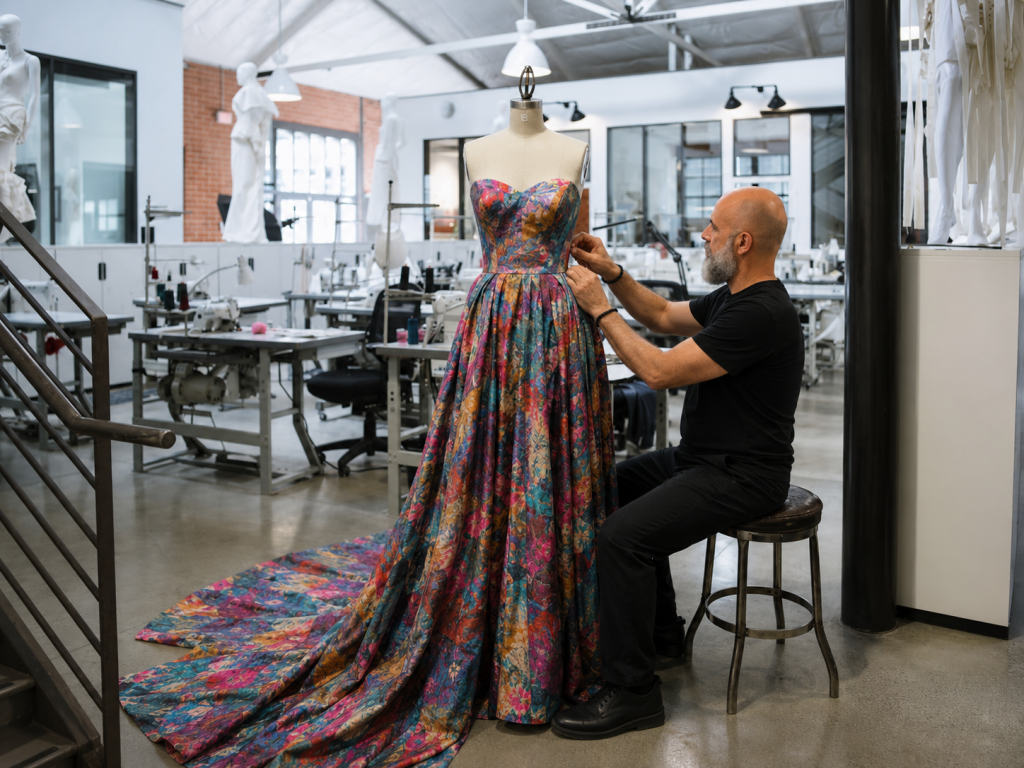
FASHION BRAND PRODUCTION IN ITALY cut sew
22. What ARNIA Usually Needs to Evaluate a Project
To evaluate a Made in Italy fashion production project, ARNIA typically needs:
- product category;
- number of styles;
- target quantity per style;
- target retail price;
- sales channel;
- timeline;
- sketches or reference images;
- tech pack if available;
- patterns if available;
- size specs or grading needs;
- fabric direction;
- BOM if available;
- packaging and labeling needs;
- sustainability or certification expectations;
- target market and buyer persona.
If these elements are not ready, ARNIA can still support the founder through a structured First Call Fashion Production Onboarding or through the Fashion Startup Lab.
But the brand should understand the difference between “I want a sample” and “I am ready to build a production path”.
23. How ARNIA Supports Emerging Brands
ARNIA TEXTILE FASHION is the trading name of ARNIA – Società Cooperativa Sociale Made in Italy, a Lombardy-based textile converter and social cooperative working with fashion brands through textile sourcing, sustainable fabrics, stock-supported materials and Cut & Sew development.
ARNIA supports emerging brands by helping them move from creative idea to production feasibility.
This may include:
- textile and fabric sourcing;
- stock-supported fabric options;
- technical readiness review;
- Cut & Sew development;
- prototype planning;
- BOM review;
- project management;
- supplier coordination;
- quality-control logic;
- sustainability and claim guidance;
- small-batch production evaluation.
ARNIA’s role is not to generate random prototypes.
ARNIA’s role is to help build products that can become repeatable, credible and commercially realistic.
Explore Cut & Sew Services, Guide for Textile Startup and Fashion Startup Lab.
24. When a Brand Is Not Yet Ready for Sampling
A brand may not be ready for sampling if:
- the target customer is vague;
- the target retail price is not defined;
- the sales channel is undecided;
- there are too many styles;
- there is no hero product strategy;
- the fabric direction changes every week;
- the tech pack is missing;
- the BOM is incomplete;
- there is no production quantity target;
- the timeline is unrealistic;
- the budget only covers the prototype;
- sustainability claims are unclear;
- the founder is comparing Made in Italy production with low-cost mass production;
- there is no plan for the next drop.
This does not mean the project should stop.
It means the project should be structured before sampling.
A first call, feasibility review or Textile Project Manager can save more money than another unplanned prototype.
25. Sampling Readiness Score
Before starting, a founder can score the project honestly.
| Question | Score 0 | Score 1 | Score 2 |
|---|---|---|---|
| Buyer persona | Unknown | General idea | Clearly defined |
| Target retail price | Unknown | Approximate | Confirmed by channel |
| Sales channel | Unknown | Mixed | Defined |
| Hero styles | None | Many ideas | 1–3 clear priorities |
| Future road-map | None | One drop | 2–4 releases planned |
| Tech pack | None | Partial | Complete |
| Pattern | None | Draft | Ready or reviewable |
| BOM | None | Partial | Complete or structured |
| Fabric route | Unclear | Aesthetic idea | Sourced / stock / custom route defined |
| Quantity | Unknown | Approximate | Per style and size direction |
| Timeline | Wish | Tentative | Realistic Time & Action |
| Sustainability claims | Generic | Interested | Specific and documentable |
Maximum score: 24.
- 0–8: not ready for sampling; start with strategic on-boarding.
- 9–16: partially ready; start with feasibility review and PM support.
- 17–24: sampling can be planned with a controlled scope.
This is not a pass/fail test.
It is a tool to avoid wasting budget.
26. The Real Goal: Build a Product System, Not a Prototype Museum
Many emerging brands accumulate prototypes.
They have beautiful samples, but no production system.
A prototype museum is expensive.
It contains garments that were made once, but cannot be repeated, priced, delivered or sold profitably.
A product system is different.
It includes:
- a clear buyer persona;
- defined price architecture;
- a focused hero style strategy;
- documented tech packs;
- validated fabrics;
- BOM discipline;
- repeatable patterns;
- realistic MOQ;
- approved samples;
- production timeline;
- quality standards;
- responsible claim wording;
- evidence archive;
- future release plan.
That is what makes Made in Italy production meaningful for an emerging brand.
Not just beauty.
Repeatable beauty.
Not just creativity.
Controlled creativity.
Not just a sample.
A product that can survive reality.
Final Takeaway
Made in Italy fashion production can be a powerful route for emerging brands.
But it requires preparation before sampling.
A brand should not begin with the question:
“Can you make this sample?”
It should begin with better questions:
- Who is the buyer persona?
- What price can this customer really pay?
- Which channel will sell the product?
- Which hero styles should define the brand?
- What must be repeated across future drops?
- Is the fabric available for production?
- Is the tech pack clear?
- Is the BOM complete?
- Can the sustainability claim be proven?
- Is the prototype a bridge to production?
A Textile Project Manager helps connect these questions before money is spent in the wrong direction.
At ARNIA TEXTILE FASHION, we believe sampling should not be guesswork.
It should be the first physical proof of a product strategy that is technically feasible, commercially coherent and ready to grow.
Start with First Call Fashion Production Onboarding or explore ARNIA’s Fashion Startup Lab to prepare your Made in Italy production path before sampling.
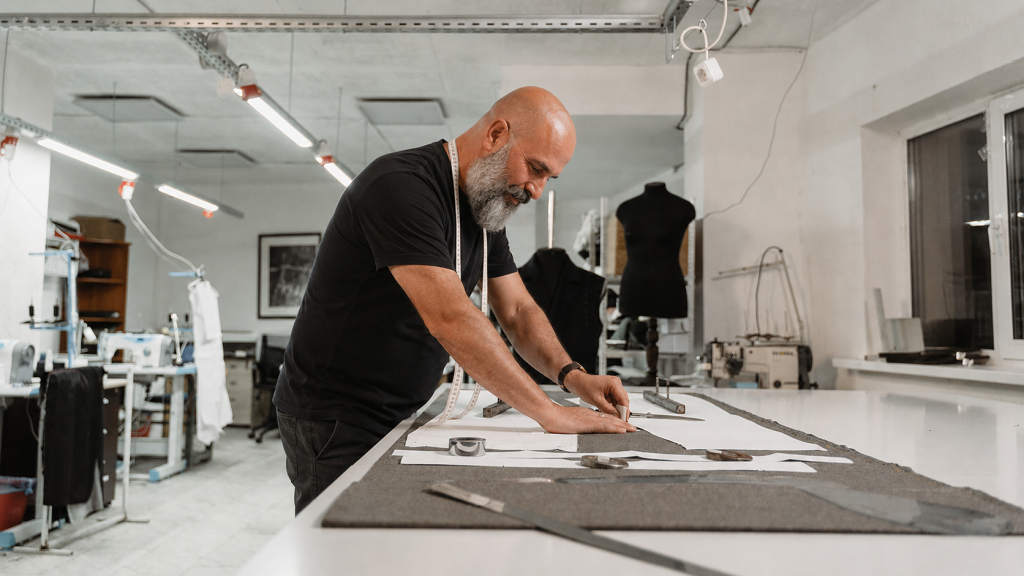
SMALL-BATCH CUT AND SEW ITALY
FAQ – Fashion Production for Emerging Brands: What Must Be Ready Before Sampling
What should an emerging fashion brand prepare before sampling in Italy?
An emerging fashion brand should prepare buyer persona, target retail price, sales channel, product categories, hero styles, target quantity per style, tech pack, patterns if available, BOM, fabric direction, timeline, sustainability expectations and future collection road-map before sampling in Italy.
Why is sampling not the first step in Made in Italy fashion production?
Sampling should not be the first step because a prototype without business, technical and production alignment can become expensive guesswork. The sample should validate a product strategy, not replace it.
What is a hero style in a fashion startup?
A hero style is a signature product that can define the brand, return across seasons and become a recognizable commercial asset. It should be aligned with buyer persona, target price, production feasibility and long-term brand identity.
Why should a fashion brand define buyer persona before fabric selection?
The buyer persona defines spending capacity, product expectations, channel behavior and perceived value. Without this, the brand may design a product that is beautiful but commercially misaligned with what the customer can actually buy.
Why is target retail price important before sampling?
Target retail price defines the production budget envelope. It influences fabric, trims, construction, packaging, margin, sales channel and quantity. Without a target price, sampling may lead to a product that cannot be sold profitably.
What is backward costing in fashion production?
Backward costing means starting from the intended retail price and working backwards to understand the maximum product cost the brand can afford after taxes, channel deductions, marketing, operations, margin, logistics and development allocation.
What is the role of a Textile Project Manager before sampling?
A Textile Project Manager aligns brand vision, buyer persona, target price, fabric sourcing, tech pack, BOM, sampling, industrialization, quality, timeline and sustainability documentation. The goal is to reduce errors before they become expensive.
Can I sample without a tech pack?
Yes, but the project should begin with a structured technical review or on-boarding call. Without a tech pack, sampling depends too much on interpretation and can create extra cost, delays and misunderstandings.
What is a BOM in fashion production?
A BOM, or Bill of Materials, is the list of all components required to make the garment, including fabric, lining, trims, buttons, zippers, labels, hangtags, packaging, finishing and compliance documents where required.
Why should emerging brands avoid too many styles in the first drop?
Too many styles increase sampling cost, production complexity, inventory risk, packaging needs, fitting workload and quality-control pressure. A focused first drop with fewer hero styles is usually more manageable and commercially stronger.
What is Collection Zero?
Collection Zero is a first market-entry collection designed to test product, price, channel, fit, buyer response and production feasibility with controlled risk. It is not a full seasonal collection; it is a proof of direction.
Can certified fabric be planned at the sampling stage?
Yes, but certification expectations must be clarified early. A certified fabric does not automatically make a certified garment, and small lots or prototypes may not support final certification claims or Transaction Certificates.
Why does ARNIA ask for target quantity before sampling?
Target quantity affects MOQ, fabric availability, production planning, cost structure, size split, trims and sourcing strategy. A sample made without quantity context may not represent a realistic production route.
When is a brand ready for sampling?
A brand is ready for sampling when the product direction, buyer persona, target price, channel, hero styles, tech pack, BOM, fabric route, quantities, timeline and sustainability claims are sufficiently clear to make the prototype meaningful.


