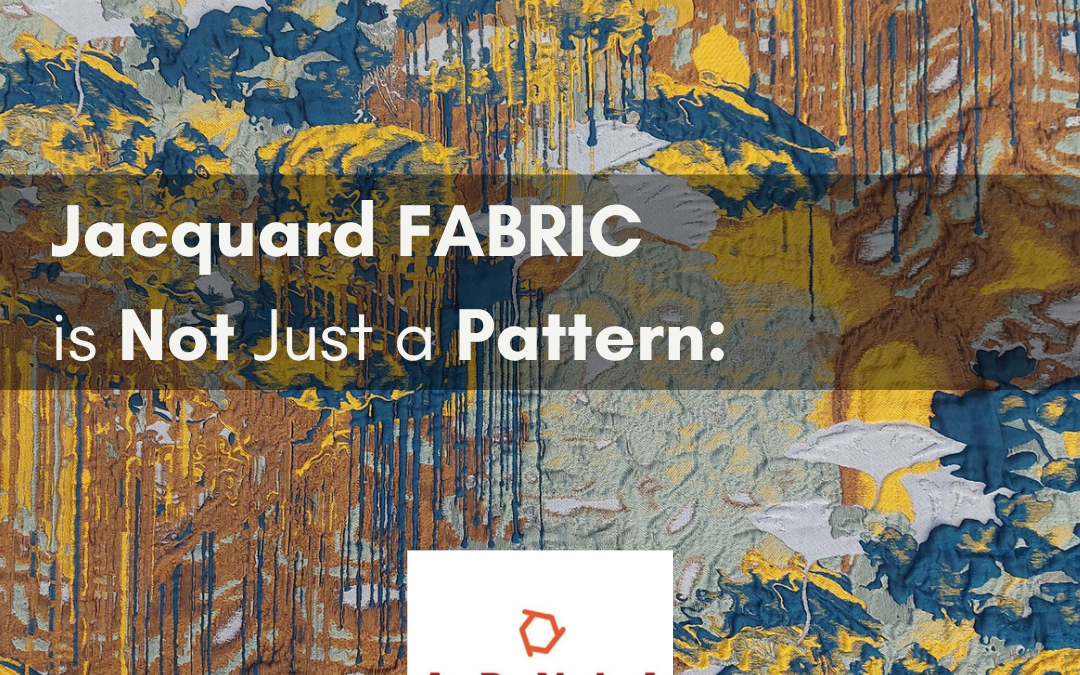
Jacquard fabric for luxury pre-collections is not just a decorative pattern. It is a technical textile structure that can define the identity of a garment, the rhythm of a capsule collection, the perception of quality and the feasibility of a sourcing project. For luxury brands, premium labels and fashion startups, understanding jacquard structure is essential before selecting fabrics for pre-collections, cruise collections or small capsule developments.
A jacquard is often perceived first through its motif: floral, geometric, organic, graphic, baroque, minimal or textured. But the motif is only the visible result of a much deeper textile decision. Behind every jacquard fabric there are yarns, interlacements, tension, density, weight, scale, relief, reverse side, finishing and garment behavior.
This is why, at ARNIA TEXTILE FASHION, we never look at a jacquard only as a design. We look at it as a product decision.
Discover ARNIA’s Jacquards
Meet ARNIA at BLOSSOM Paris
What Is a Jacquard Fabric?
A jacquard fabric is a woven textile – produced from a jacquard fabric machine – where the design is created directly through the structure of the fabric, not simply applied on the surface after weaving.
In a printed fabric, the design is placed onto an existing base cloth.
In a jacquard fabric, the design is built into the construction of the fabric itself.
This difference matters because structure affects everything:
- the visual depth of the surface;
- the handfeel;
- the weight;
- the drape;
- the reverse side;
- the way the fabric reflects light;
- the way the garment can be cut and sewn;
- the final perception of luxury.
A jacquard is therefore not only a decorative solution. It is a technical and aesthetic language.
For luxury pre-collections, this language can be extremely powerful. A single jacquard can become the anchor of a capsule collection, the signature surface of a cruise collection or the material story that gives identity to a new product direction.
Why Structure Matters More Than Pattern
When buyers or designers evaluate jacquard fabrics, the first reaction is often visual. Is the motif attractive? Is the color direction relevant? Does the fabric feel new?
These questions are important, but they are not enough.
A jacquard fabric must also be evaluated as a structure.
Structure Defines the Handfeel
Two jacquards with similar motifs can feel completely different.
One may be compact, dry and architectural.
Another may be soft, fluid and luminous.
Another may feel raised, textured or almost tapestry-like.
The handfeel depends on yarn selection, weave construction, density, finishing and the balance between ground and motif. In luxury textile sourcing, handfeel is never secondary. It influences how the customer perceives quality even before understanding the design.
Structure Defines the Drape
A jacquard can support a sculptural silhouette or soften into a more fluid garment, depending on its construction.
This is critical for pre-collections. A designer may fall in love with a surface, but if the fabric does not drape correctly for the intended garment, the result can fail at prototype stage.
A jacquard for a structured skirt is not necessarily suitable for a fluid dress.
A gobeline-inspired surface may be perfect for a statement piece, but too heavy for a light top.
A fil coupé may bring movement and transparency, but it requires careful handling during development.
This is why a fabric choice should always be connected to the product category.
Structure Defines the Reverse Side
The reverse side of a jacquard is often as important as the front.
It can influence:
- comfort on the skin;
- lining requirements;
- seam construction;
- cutting and sewing behavior;
- transparency;
- durability;
- finishing choices.
A luxury buyer should always look at both sides of a jacquard. The front tells the visual story. The reverse side reveals part of the technical story.
Structure Defines Repeatability
Luxury sourcing is not only about finding a beautiful sample. It is about understanding whether that beauty can be repeated with consistency.
A jacquard development must be evaluated for:
- yarn availability;
- color repeatability;
- weaving complexity;
- motif scale;
- production tolerance;
- finishing stability;
- quality control.
For established brands, repeatability protects delivery and reputation. For startups, repeatability protects budget, timing and first customer trust.
Collections vs Luxury Pre-Collections: What Is the Difference?
To understand why jacquard matters in this context, it is useful to distinguish between collections and pre-collections.
A main collection is usually the broader seasonal statement of a fashion brand. It may include the full creative direction, the strongest runway or showroom pieces, the complete seasonal color story and the main product categories.
A pre-collection, instead, comes earlier in the calendar. It often works as a bridge between seasons, a commercial preview, a first interpretation of the upcoming direction or a more wearable and market-oriented expression of the brand’s identity.
Pre-collections can include resort, cruise, early Fall, capsule drops or transitional seasonal proposals depending on the brand model.
In contemporary fashion, this distinction is increasingly important because the market no longer moves only through two rigid seasonal drops. Buyers, retailers and consumers often look for fresher, more frequent and more focused product stories.
This is where capsule collections and cruise collections become relevant.
Why Capsule Collections and Cruise Collections Are So Important Today
The contemporary fashion market favors freshness.
Retailers want newness.
E-commerce needs continuous storytelling.
Customers expect product drops that feel timely and desirable.
Brands need flexible capsules that can test ideas without overcommitting to a full seasonal structure.
A capsule collection allows a brand to focus on a tighter story: a limited group of styles, a precise mood, a material direction or a strategic product category.
A cruise collection often works as a bridge between seasonal needs and lifestyle appeal. It can be more fluid, more travel-oriented, more transitional, or simply more commercially immediate.
In both cases, textile selection becomes decisive.
A capsule collection cannot rely on too many disconnected fabrics. It needs coherence. It needs a recognizable material language. It needs surfaces that can create identity quickly.
Jacquard fabric is especially useful in this context because it can give a capsule collection immediate visual and tactile strength.
One strong jacquard can define a dress, a coat, a skirt, a robe, a kimono, a top, a trouser, a bag detail or a coordinated capsule story. It can create a premium perception without requiring an excessive number of styles.
This is why jacquard is not just a textile choice. It can be a collection strategy.
Why Luxury Pre-Collections Matter for Startups
For fashion startups, pre-collections can be even more important than full collections.
A young brand often does not need to launch too many styles. It needs to prove a point.
The first question is not: “How many products can we make?”
The better question is: “Which products can clearly express the brand identity and be realistically developed?”
A pre-collection or capsule collection helps startups avoid overextension. It allows founders to test:
- brand positioning;
- product-market fit;
- textile direction;
- target retail price;
- production feasibility;
- buyer interest;
- sustainability communication;
- supplier reliability.
For a startup, choosing the wrong fabric can be expensive. A beautiful but technically unsuitable jacquard can create sampling delays, cost surprises, construction problems or unrealistic production expectations.
A well-selected jacquard, on the other hand, can become a signature.
It can give a young brand the impression of depth, craft and textile culture from the very first capsule. But it must be chosen carefully: not only for image, but for weight, drape, scale, cost logic, minimum quantities, garment construction and repeatability.
This is why startups should not treat textile sourcing as a last step. Fabric sourcing should start early, before the design is locked and before the collection becomes too complex.
Related reading: Fashion Production for Startups
Related reading: Fashion Startup Budget
Why Jacquard Fabric Works So Well in Luxury Pre-Collections
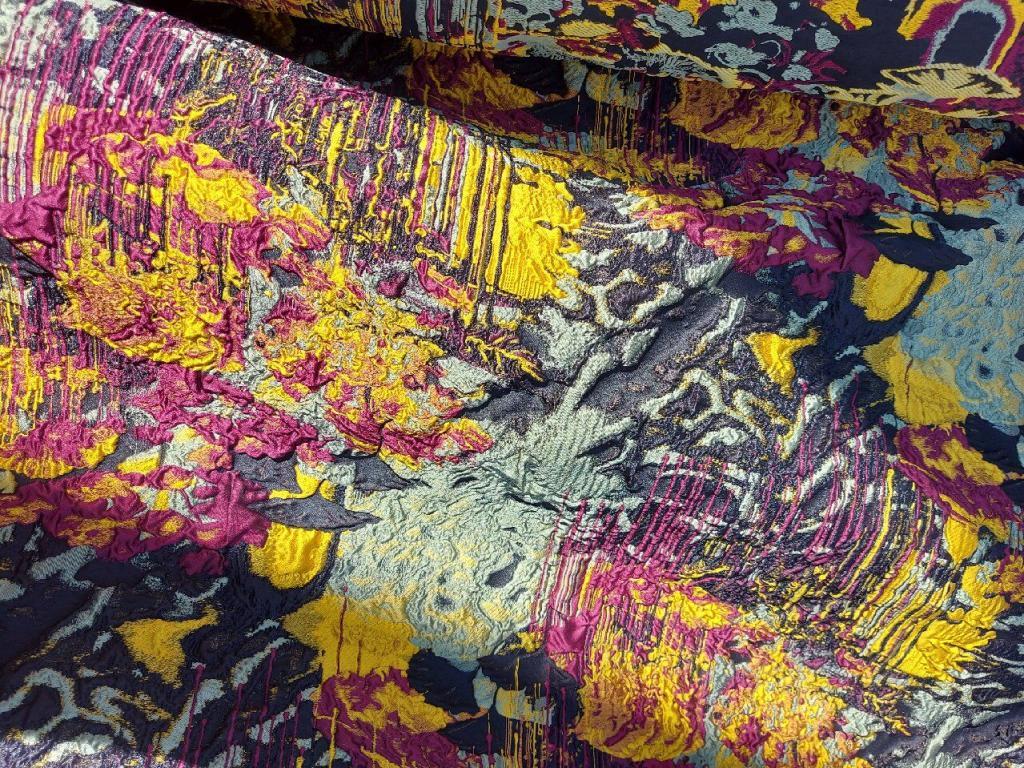
Jacquard fabrics are particularly relevant for luxury pre-collections because they combine visual identity with structural value.
Jacquard fabric Creates Immediate Recognition
In a pre-collection, brands often need to communicate quickly. Buyers see many materials, many suppliers and many proposals. A strong jacquard can stand out because it carries texture, motif and depth in one textile surface.
It can become memorable.
Jacquard fabric Supports Premium Positioning
Luxury is not only about decoration. It is about perceived construction, material richness and controlled complexity.
A jacquard fabric can show that complexity in a sophisticated way. It communicates that the fabric was not chosen casually. It was developed, engineered and selected.
Jacquard fabric can Anchor a Capsule
A capsule collection needs coherence. A jacquard can act as the main material story, while other fabrics support it: plain base cloths, solid velvets, viscose bases, cottons, prints or lighter surfaces.
The jacquard becomes the emotional center. The other materials build the commercial balance.
Jacquard fabric can Translate Nature, Architecture or Craft
A jacquard can translate many creative directions:
- botanical inspiration;
- mineral texture;
- vintage tapestry;
- modern geometry;
- artisanal craft;
- abstract movement;
- cultural references;
- brand heritage.
This makes jacquard especially useful when a brand wants to create a pre-collection with a strong story but a controlled number of styles.
#image_title
Jacquard fabric Families: From Classic Structure to Fil Coupé and Gobeline
Not all jacquards behave the same way. A buyer or designer should understand the difference between major jacquard families before selecting a fabric for a pre-collection.
Jacquards
General jacquard fabrics can range from light and elegant to structured and architectural. Their value lies in the fact that the design is woven into the fabric.
They can be used for dresses, skirts, coats, tops, trousers, accessories or decorative details depending on their weight, drape and construction.
Explore: Jacquards
Jacquard Fil Coupé
Jacquard fil coupé is a more expressive and delicate textile language. It often includes floating yarn effects that are cut to create texture, lightness, movement or transparency.
The result can be poetic, dynamic and highly sophisticated.
However, fil coupé also requires attention. It must be evaluated for intended use, seam handling, abrasion risk, reverse side, garment construction and care requirements.
This makes it ideal for luxury pre-collections where textile emotion matters, but it must be technically validated before development.
Explore: Jacquard Fil Coupé
Jacquard Gobeline
Jacquard gobeline has a richer, often tapestry-like feeling. It can create strong visual depth and a more structured, decorative surface.
Gobeline-inspired jacquards are useful when a brand wants a material with presence: something that feels narrative, crafted and visually dense.
They can be particularly effective for statement pieces, capsule hero garments, outerwear accents, skirts, structured silhouettes or accessories, depending on weight and behavior.
Explore: Jacquard Gobeline
The Buyer’s Checklist: How to Evaluate a Jacquard fabric for a Luxury Pre-Collection
A productive jacquard sourcing meeting should not stop at “I like this pattern.” It should include technical and strategic questions.
1. What Is the Intended Product?
Is the jacquard intended for a dress, skirt, jacket, robe, kimono, trouser, top, coat, accessory or capsule piece?
End use changes everything.
2. What Drape Is Required?
Should the fabric be fluid, structured, soft, compact, light or architectural?
A mismatch between drape and garment is one of the most common development problems.
3. What Is the Motif Scale?
A motif that looks beautiful on a swatch may behave differently on a full garment.
Design teams should evaluate scale in relation to pattern pieces, seams, body placement and cutting waste.
4. What Does the Reverse Side Look Like?
The reverse side can affect comfort, lining, finishing and construction. It should always be assessed before confirming a fabric.
5. How Does the Fabric React to Light?
Jacquards often change depending on light direction. Metallic yarns, satin effects, relief and contrast can shift strongly between showroom, daylight and photography.
6. Can the Fabric Be Repeated?
A buyer needs to know whether the fabric is a one-off proposal, a stock-supported option or a repeatable development route.
7. Is the Fabric Compatible With the Brand’s Sustainability Claims?
If sustainability or certification is part of the project, the fabric must be evaluated together with documentation, chain of custody, lot traceability and admissible communication.
A certified fabric does not automatically make a certified garment. Claims must be supported by the correct documentation and by the correct certification status of the actors involved.
Related reading: Sustainability Practical Guide
Why Jacquard fabric Sourcing Should Start Early
Pre-collections are valuable because they happen early.
They allow brands to review textile options before the main collection calendar becomes too compressed. This matters especially for jacquard fabrics, because structure may require more technical dialogue than a simple base cloth.
Early sourcing allows time to evaluate:
- textile direction;
- motif scale;
- yarn and color options;
- handfeel;
- drape;
- garment feasibility;
- sampling risk;
- repeatability;
- sustainability requirements;
- production roadmap.
For established luxury brands, early sourcing protects quality and timing.
For startups, early sourcing protects the whole business model. It helps avoid developing too many styles, choosing unsuitable materials or building a collection around fabrics that cannot be produced realistically.
From Fabric Surface to Garment Reality
A jacquard is not finished when it looks beautiful on a table.
It must become a garment.
This means the fabric must pass from textile emotion to product logic. The development team must understand how the jacquard behaves when it is cut, sewn, lined, pressed, finished and worn.
This is why ARNIA connects textile sourcing with product understanding.
As an Italian textile converter and B2B partner based in the Lombardy Textile District, ARNIA supports fashion brands with textile research, fabric sourcing, jacquard developments, stock-supported bases and, when technically coherent, capsule development support.
The goal is not to push a fabric at any cost.
The goal is to help the buyer or designer select the right textile route for the intended collection.
Related service: Fabric Sourcing
Related service: Innovative Textile Collections
Why BLOSSOM Paris Is the Right Context for This Conversation
BLOSSOM Première Vision Paris is dedicated to luxury and high-end pre-collections. This makes it a particularly relevant moment for jacquard sourcing, because buyers and design teams are still in the phase where textile decisions can shape the collection direction.
At this stage, a fabric can still influence:
- the silhouette;
- the color story;
- the capsule concept;
- the sustainability pathway;
- the sourcing route;
- the development calendar;
- the final brand narrative.
A BLOSSOM meeting should not be treated as a generic swatch review. It should be a focused material conversation.
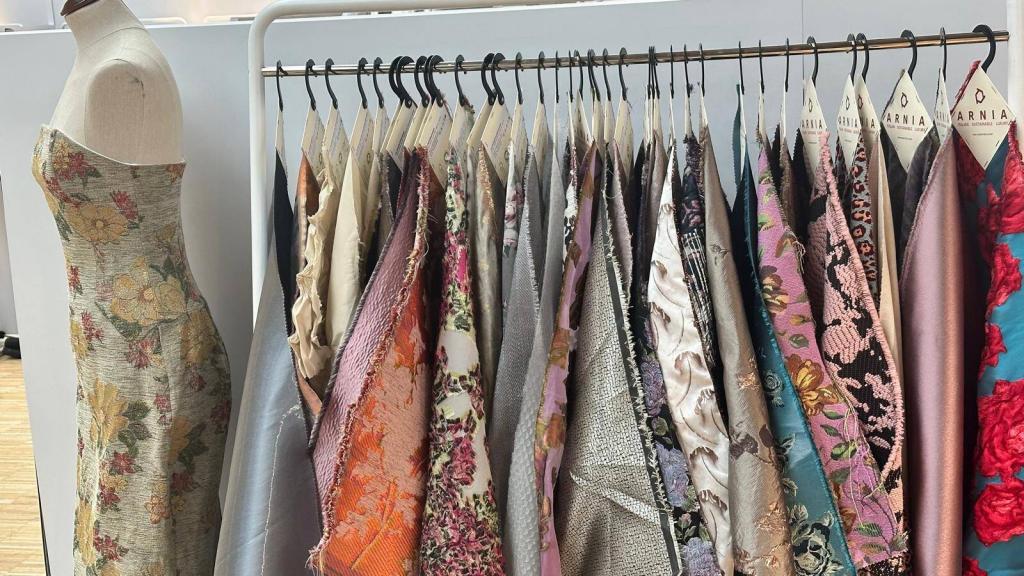
For ARNIA TEXTILE FASHION, BLOSSOM is the right place to present Made in Italy textile surfaces from the Lombardy Textile District: jacquards, jacquard fil coupé, jacquard gobeline, embroidery, devoré, plissé, prints, special surfaces and responsible sourcing pathways.
How to Prepare a Jacquard fabric Sourcing Meeting With ARNIA TEXTILE
To make a sourcing meeting productive, buyers, design teams and startup founders should prepare a concise but clear brief.
Useful elements include:
- moodboard;
- reference swatches;
- target product category;
- intended retail positioning;
- expected quantity range;
- preferred composition;
- target handfeel;
- desired drape;
- color direction;
- sustainability or certification requirements;
- launch timing;
- existing tech pack, if available.
The more precise the brief, the easier it is to identify whether the best route is an existing jacquard, a jacquard fil coupé, a gobeline-inspired fabric, a stock-supported base, a custom development or a more cautious material shortlist.
Related reading: 48Hour Fabric Shortlist
Related reading: Textile Project Manager
Jacquard as a Strategic Tool for Startups
Many startups try to differentiate through branding, styling or photography. These elements are important, but they cannot replace product substance.
A strong jacquard can help a young brand build a more credible product identity from the beginning.
It can create:
- a signature surface;
- a stronger capsule story;
- a more premium perception;
- a clearer retail positioning;
- a more memorable buyer presentation.
However, a startup should use jacquard with discipline.
The best approach is often not to build an entire first collection around multiple complex fabrics. A better strategy may be to select one or two strong jacquard directions and combine them with more controlled base cloths.
This creates balance: identity without unnecessary complexity.
For startups, the purpose of a pre-collection is not to prove that the brand can do everything. It is to prove that the brand can make coherent choices.
ARNIA TEXTILE BLOSSOM luxuty pre-collection sourcing
Final Thought: A Jacquard Is a Decision, Not a Decoration
A jacquard is never just a pattern.
It is structure.
It is yarn.
It is weight.
It is scale.
It is handfeel.
It is production logic.
It is brand perception.
It is risk management.
It is luxury when beauty and technical discipline work together.
For luxury pre-collections, capsule collections, cruise collections and startup launches, jacquard fabric can become a powerful tool. But only when it is selected with the right technical awareness.
This is why ARNIA approaches jacquard sourcing as part of a broader development conversation: fabric, garment, timing, sustainability, quantity and brand reputation must all be aligned.
If you are preparing your next luxury pre-collection and want to explore Made in Italy jacquards, jacquard fil coupé or jacquard gobeline developments, we would be pleased to meet you at BLOSSOM Paris.
Book a meeting with ARNIA at BLOSSOM Paris
FAQ
Is jacquard fabric the same as printed fabric?
No. In a printed fabric, the design is applied to the surface of a base cloth. In a jacquard fabric, the design is created directly through the woven structure of the fabric. This affects depth, texture, handfeel, reverse side and garment behavior.
Why is jacquard important for luxury pre-collections?
Jacquard can give a pre-collection immediate identity, texture and premium perception. It can act as a signature material for a capsule collection or cruise collection, helping the brand communicate a strong textile direction early in the season.
What is the difference between jacquard and jacquard fil coupé?
Jacquard fil coupé is a specific type of jacquard where floating yarns are cut to create texture, movement, lightness or transparency. It can be highly expressive, but it requires careful evaluation for garment construction, handling and care.
What is jacquard gobeline?
Jacquard gobeline is a richer, often tapestry-like jacquard structure. It is useful for more decorative, narrative or structured textile effects and can work well for statement pieces or capsule hero garments.
Can fashion startups use jacquard fabrics?
Yes, but startups should use jacquard strategically. A strong jacquard can help define brand identity, but it must be evaluated for budget, minimum quantities, garment feasibility, repeatability and development timing.
Why are luxury pre-collections useful for startups?
Pre-collections allow startups to test a focused product direction before building a full seasonal collection. They help validate textile choices, product categories, price positioning, buyer interest and production feasibility.
What should I bring to a jacquard sourcing meeting?
Bring a moodboard, reference swatches, target product category, quantity range, preferred handfeel, target drape, color direction, sustainability requirements and expected launch timing.
Where can I meet ARNIA to review jacquard fabrics?
You can meet ARNIA TEXTILE FASHION at BLOSSOM Paris and review Made in Italy jacquards, jacquard fil coupé, jacquard gobeline and other luxury textile surfaces for luxury pre-collections.