
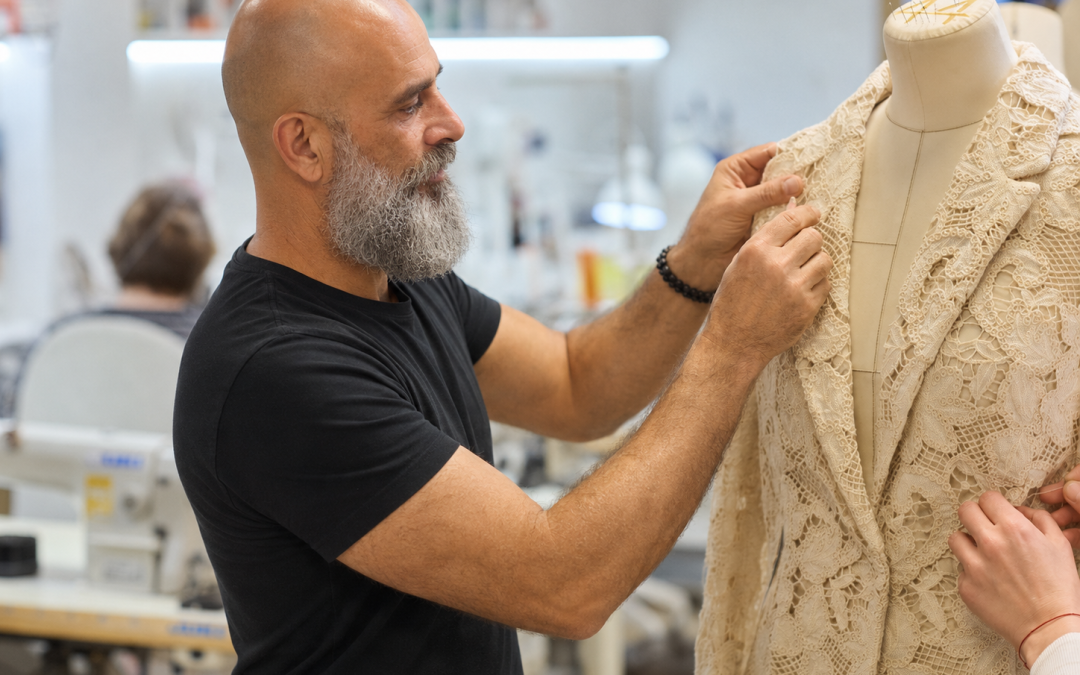
A Short Supply Chain in the Lombardy Textile Disctirct is not only a faster supply chain.
In fashion production, a short supply chain can be a safer, more transparent and more accountable way to work — if it is properly selected, monitored and governed.
The Lombardy Textile District offers a unique concentration of textile and garment expertise: weaving, jacquard, printing, dyeing, finishing, embroidery, prototyping and cut and sew production are often located within a limited geographical area between Milan, Varese, Busto Arsizio, Gallarate and Como.
For fashion brands, this proximity can reduce production risk. But proximity alone is not enough.
A short supply chain becomes truly valuable only when it is combined with:
- direct and daily control;
- supplier due diligence;
- clear documentation;
- quality monitoring;
- transparent responsibilities;
- safe working conditions;
- fair and inclusive work;
- Code of Ethics;
- Values Charter;
- anti-greenwashing discipline;
- traceability and responsible claim management.
At ARNIA TEXTILE FASHION, we work from the Lombardy Textile District as an Italian textile converter and social cooperative. Our role is not simply to connect a brand with a supplier. Our role is to coordinate, monitor and protect the production pathway — technically, ethically and reputationally.
Because in fashion, risk does not appear only at the end of production.
Risk is created every day, through small decisions that are not checked.
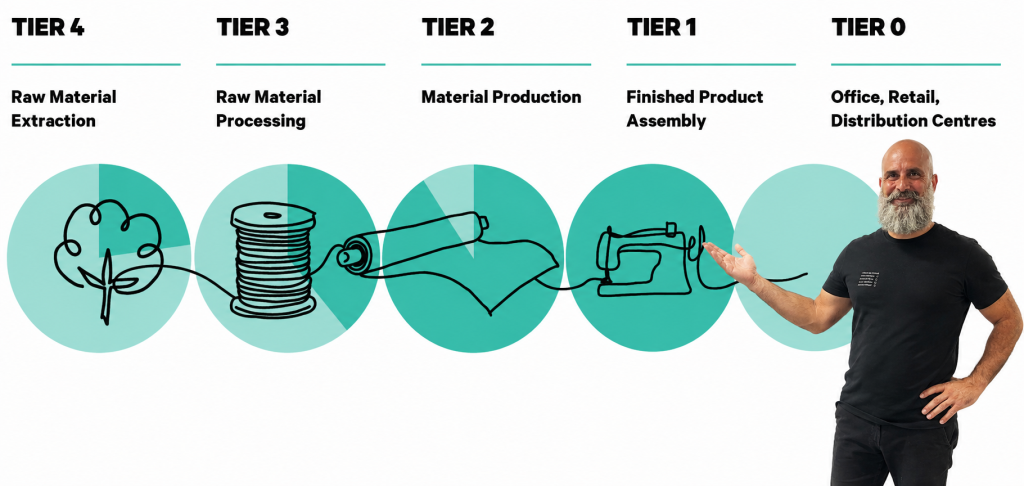
SHORT SUPPLY CHAIN
Quick Answer: Why Do Short Supply Chain Reduce Fashion Production Risk?
Short supply chains reduce fashion production risk because they make the supply chain easier to monitor, faster to correct and harder to hide behind.
When textile sourcing, fabric development, prototyping, finishing, cut and sew, quality control and documentation are managed within a close local network, brands can reduce:
- communication risk;
- sampling and development errors;
- quality defects;
- delivery delays;
- hidden subcontracting;
- unsafe labour practices;
- unclear certification claims;
- weak traceability;
- greenwashing risk;
- legal and reputational exposure.
However, a short supply chain does not automatically guarantee sustainability. It must be selected, documented and monitored.
The real advantage is not distance alone.
The real advantage is proximity plus daily responsibility.
1. The Lombardy Textile District supply Chain: More Than a Production Location
The Lombardy Textile District is not just a place on a map.
It is an industrial ecosystem made of specialised know-how, long-standing technical relationships, material culture and production competence.
Within the Milan–Varese–Como area, fashion brands can access:
- cotton weaving;
- silk and jacquard expertise;
- textile printing;
- dyeing and finishing;
- embroidery;
- surface effects;
- fabric development;
- prototyping;
- cut and sew production;
- quality control;
- project management.
For brands, this means that many critical steps can be coordinated through a local and specialised network instead of being dispersed across distant suppliers with limited visibility.
This is especially important for premium and luxury fashion projects, where the difference between a successful product and a failed production can depend on small technical details: fabric behaviour, shrinkage, colour consistency, print penetration, finishing, embroidery stability, sewing performance, fit, trims, labelling and quality tolerance.
A short supply chain makes these details easier to discuss, test and correct.

FROM LOCAL TO GLOBAL – milano-fashion-week
2. What “Short Supply Chain” Really Means in Fashion
A short supply chain is often described as a supply chain with fewer kilometres.
That definition is useful, but incomplete.
In fashion production, a short supply chain should mean:
- fewer blind spots;
- fewer uncontrolled handovers;
- clearer responsibilities;
- faster technical feedback;
- stronger supplier relationships;
- better traceability;
- easier quality control;
- direct project supervision;
- documented escalation when problems appear.
A supplier can be geographically close but still be opaque.
A production route can be local but still be poorly governed.
A short supply chain becomes valuable only when the brand or its production partner knows who is doing what, where, under which rules, with which documents, and with which accountability.
This is why ARNIA treats the Lombardy Textile District not only as a source of production capacity, but as a controlled network of relationships.
3. Fashion Production Risk: What Brands Often Underestimate about Supply Chain
Fashion brands often think production risk means only “late delivery” or “bad quality”.
In reality, production risk is broader.
It includes:
| Risk area | What can go wrong |
|---|---|
| Product risk | Fabric behaves differently in production than in sample stage |
| Quality risk | Defects appear too late to correct economically |
| Timing risk | Delays accumulate between suppliers |
| Communication risk | Technical instructions are misunderstood |
| Cost risk | Rework, transport and delays increase final cost |
| Compliance risk | Missing documents, wrong labels, unsupported claims |
| Labour risk | Unsafe, irregular or unfair working conditions |
| Subcontracting risk | Undeclared workshops enter the production chain |
| Certification risk | Chain of Custody is broken or misunderstood |
| Reputation risk | The brand is associated with opaque or unethical production |
In a long and fragmented supply chain, these risks often become visible only when the damage is already done.
In a short and monitored supply chain, problems can be detected earlier.
This does not eliminate risk.
It makes risk more visible and more manageable.
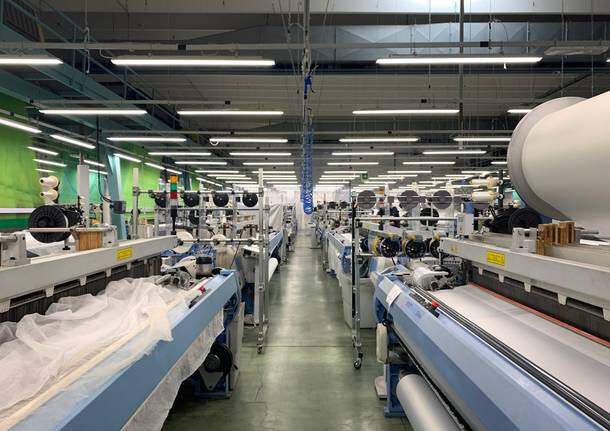
lombardy textile district
4. Why Distance Matters in Supply Chain: The Cost of Delayed Information
In fashion production, time is not only measured in calendar days.
It is measured in how quickly the right person sees the right problem.
When suppliers are scattered across distant regions or countries, information often travels slowly:
- a fabric issue is reported late;
- a colour deviation is discovered after cutting;
- a trim problem is noticed during sewing;
- a fitting issue becomes visible only after several samples;
- a production delay is hidden until delivery week;
- a subcontractor is introduced without proper approval.
Every delay in information creates cost.
A short supply chain can reduce this delay because communication becomes more direct and technical checks can happen closer to the work itself.
When the textile converter, fabric supplier, finisher, sample maker, workshop and project manager operate within a closer network, the production system becomes more responsive.
The value is not just speed.
The value is earlier visibility.
5. Daily Control of Quality and Supply Chain: Why the Audit Day Is Not Enough
Third-party audits are important. They provide independent checks, structured verification and documented evidence.
But an audit is not daily life.
On the day of an audit, documents may be ready, spaces may be organised, procedures may be shown and people may be prepared.
This does not mean that audits are useless. On the contrary, independent audits are an essential part of responsible governance.
But audits alone cannot replace daily control.
A supply chain must be coherent on ordinary working days, not only on inspection days.
The real question is:
Does the supplier behave consistently when nobody is formally auditing?
This is why direct and frequent monitoring matters.
Daily control helps verify whether:
- production is progressing as agreed;
- quality matches the approved reference;
- subcontracting is controlled;
- working conditions remain safe;
- documentation is updated;
- claims remain accurate;
- deadlines are realistic;
- changes are approved before execution;
- what was ordered, produced and declared corresponds to reality.
An audit can verify compliance at a defined moment.
Daily control verifies coherence over time.
For ARNIA, sustainability is not only a certificate. It is the daily alignment between what is promised, what is produced and what can be proven.
6. The Role of a Textile Converter in Reducing Risk
A textile converter can play a central role in risk reduction because it stands between creative intention and industrial execution.
A good textile converter does not only source fabric.
It helps the brand manage:
- fabric research;
- textile development;
- supplier selection;
- technical feasibility;
- MOQ and lead time;
- sampling;
- colour and finishing routes;
- cutting and sewing compatibility;
- documentation;
- quality checks;
- traceability;
- sustainability claims;
- communication between suppliers;
- escalation when problems appear.
In the Lombardy Textile District, this role becomes particularly powerful because specialised partners are close enough to be coordinated as part of a real production ecosystem.
ARNIA works as a textile converter and project coordinator, supporting brands through Fabric Sourcing, Sustainable Textiles, Cut & Sew Services and Textile Converter services.
The goal is to reduce uncertainty before it becomes a crisis.
7. Code of Ethics: More Than a Moral Obligation
For a supplier, adhering to ARNIA’s Code of Ethics is much more than a moral obligation.
It means accepting a concrete operating framework.
A Code of Ethics defines the minimum rules of conduct expected from suppliers, production partners, collaborators and stakeholders.
In a responsible textile supply chain, it should cover:
- respect for applicable laws and regulations;
- labour-law compliance;
- regular employment;
- health and safety at work;
- environmental responsibility;
- anti-corruption;
- anti-exploitation;
- no forced labour;
- no child labour;
- no harassment;
- no discrimination;
- respect for contractual obligations;
- confidentiality and know-how protection;
- transparent documentation;
- no misleading sustainability claims;
- corrective action when problems arise.
For ARNIA, supplier adherence to the Code of Ethics means that technical ability and price are not enough.
A supplier must also be aligned with legality, safety, human dignity and responsible production.
A supplier who can make a beautiful fabric but does not respect people, safety or transparency is not a responsible partner.
8. Values Charter: The Culture Behind the Rules
A Values Charter is different from a Code of Ethics.
The Code of Ethics defines rules.
The Values Charter defines direction.
A Values Charter explains the kind of supply chain the company wants to build.
For ARNIA, this means a supply chain based on:
- human dignity;
- respect;
- inclusion;
- transparency;
- kindness;
- responsibility;
- measurable sustainability;
- quality;
- long-term relationships;
- responsible Made in Italy;
- continuous improvement.
This matters because many supply-chain problems are not created by missing documents alone.
They are created by a culture that tolerates pressure, silence, rushed decisions, lack of respect, unrealistic prices and hidden shortcuts.
A Values Charter helps prevent this.
It tells stakeholders that the production environment must be not only legal, but also kind, ethical, respectful and inclusive.
In a premium fashion supply chain, kindness is not weakness.
Kindness means that people are not treated as disposable production units.
Respect means that work is planned realistically.
Inclusion means that different abilities and personal histories can become part of a serious industrial model.
Responsibility means that every stakeholder understands the consequences of their decisions.
This is where sustainability becomes practical.
9. Why Ethical Alignment Reduces Production Risk
Some brands still see ethics as separate from production performance.
This is a mistake.
Ethical alignment reduces production risk because it creates clearer behaviour under pressure.
When a supplier is aligned with a Code of Ethics and Values Charter, it is more likely to:
- communicate problems early;
- reject irregular subcontracting;
- respect safety rules;
- avoid hidden shortcuts;
- document changes correctly;
- preserve product consistency;
- protect workers;
- avoid unsupported claims;
- accept corrective actions;
- behave transparently when something goes wrong.
In fashion, many problems become serious because they are hidden.
Ethical alignment makes concealment less likely.
This is why a supplier’s values are not abstract.
They affect lead time, quality, trust, compliance and reputation.
10. Due Diligence: Turning Values Into Evidence
A Code of Ethics and a Values Charter are only useful if they are applied.
Due diligence is the process that turns values into evidence.
In a textile supply chain, due diligence should verify whether suppliers and production partners respect:
- workplace safety laws;
- labour laws and regulations;
- regular employment obligations;
- fair working conditions;
- working hours and remuneration expectations;
- non-discrimination principles;
- inclusive work practices;
- environmental requirements;
- chemical compliance;
- subcontracting controls;
- documentation requirements;
- traceability expectations;
- anti-greenwashing rules.
A realistic due diligence process should include:
1. Supplier identification
The brand or coordinator should know who is involved in each stage.
This includes fabric suppliers, dyeing partners, printers, finishers, embroidery partners, cutting rooms, sewing workshops and logistics partners.
2. Legal and operational verification
The supplier should be able to provide basic legal, administrative and operational information.
This does not mean exposing trade secrets without reason. It means proving that the supplier is real, professional and accountable.
3. Health and safety review
Workplace safety cannot be treated as an afterthought.
A responsible supply chain should check whether the supplier has appropriate safety procedures, training, risk assessment and working-environment controls.
4. Labour compliance
The supplier should operate with regular employment, fair treatment and compliance with labour law.
This includes attention to working hours, wages, contracts, social contributions and prevention of exploitation.
5. Subcontracting control
Subcontracting must be declared, approved and monitored.
Undeclared subcontracting is one of the main risks in fashion production because it can hide quality problems, safety problems and labour exploitation.
6. Code of Ethics and Values Charter acceptance
Suppliers should formally accept the ethical framework and understand that it is not symbolic.
It is a condition for collaboration.
7. Documentation and traceability
Documents should be connected to the product, lot, order and production stage.
Traceability cannot depend on memory.
8. Monitoring and corrective action
Due diligence must include follow-up.
If a problem appears, the answer should not be denial. The answer should be documented correction.
9. Claim control
No sustainability, certification or origin claim should be published before evidence is checked.
This protects the client’s brand reputation.
11. The Difference Between “Controlled” and “Uncontrolled” Outsourcing
Outsourcing is not automatically negative.
In fashion, many specialised processes are performed by expert partners: embroidery, printing, dyeing, finishing, quilting, pleating, special sewing, handmade details and quality-specific operations.
The issue is not whether external partners are used.
The issue is whether they are controlled.
Uncontrolled outsourcing creates risk
Uncontrolled outsourcing means:
- the brand does not know who is doing the work;
- subcontractors are introduced without approval;
- documentation is incomplete;
- quality instructions are not transferred correctly;
- safety and labour conditions are not checked;
- accountability is unclear.
Controlled outsourcing can create value
Controlled outsourcing means:
- partners are selected and qualified;
- responsibilities are clear;
- work is monitored;
- documents are collected;
- quality is checked;
- ethical rules are shared;
- corrective actions are possible;
- the client has one accountable project coordinator.
This is ARNIA’s model.
Specialised work can be entrusted to qualified partners of the district, while ARNIA maintains strategic functions: product development, documentation, quality control, traceability, sustainability oversight, client relationship, compliance and ethical supervision.
This is what transforms a network into a responsible supply chain.
12. Why Short Supply Chain Protect Brand Reputation
Brand reputation is one of the most important assets in fashion.
It can be damaged by a single weak point in the supply chain.
A brand may design a beautiful collection, use excellent fabrics and communicate strong values. But if the production route is opaque, unsafe, irregular or poorly documented, the brand becomes vulnerable.
A short and monitored supply chain helps protect reputation because it supports:
- faster issue detection;
- better evidence collection;
- clearer accountability;
- more realistic timelines;
- better supplier relationships;
- stronger quality control;
- reduced risk of hidden subcontracting;
- safer sustainability communication;
- better response if a buyer, auditor or customer asks for proof.
In today’s market, brands are increasingly expected to know more about where, how and by whom their products are made.
A responsible supplier does not only deliver fabric or garments.
It helps protect the brand from risks the brand may not see.
13. Greenwashing Risk: Why Local Control Matters
Greenwashing often starts from distance.
Not only geographical distance — but informational distance.
A brand may receive a certified fabric, a sustainability statement or a supplier declaration without fully understanding what it covers.
This can lead to claims such as:
- “sustainable collection”;
- “certified garment”;
- “ethical production”;
- “fully traceable”;
- “Made in Italy”;
- “responsible supply chain”.
These claims may be risky if the brand cannot prove them.
A short supply chain makes it easier to check:
- what material was used;
- which lot was delivered;
- which process was applied;
- where production happened;
- whether the claim applies to fabric or final product;
- whether Chain of Custody is preserved;
- whether documents match the specific order;
- whether the wording is accurate.
Local control does not automatically make every claim valid.
But it makes verification more practical.
This is why ARNIA’s anti-greenwashing approach is based on clear definitions, traceability, documentation and responsible communication.
Related reading: Greenwashing in Fashion and Textile and Sustainable Fashion Due Diligence and GOTS 8.0.
14. Certifications Are Important, But They Do Not Replace Daily Control
Certifications such as GOTS, GRS, FSC and ECOVERO™ can be valuable tools.
They provide structured rules, third-party verification and documentary support.
But certification does not replace management.
A certified route can still require:
- correct scope verification;
- Chain of Custody;
- Transaction Certificates where applicable;
- lot-level documents;
- segregation;
- correct claim wording;
- certified operators where required;
- realistic MOQ;
- supplier monitoring;
- quality checks;
- anti-greenwashing discipline.
This is particularly important for emerging brands and small-batch projects.
A certified fabric does not automatically make a certified garment.
A certificate does not automatically make every claim safe.
An audit does not automatically replace daily control.
Responsible sustainability is built by combining certification, due diligence, documentation, ethical rules and everyday supervision.
15. Why Small Batches Need Even More Control
Small-batch production can reduce inventory risk, but it does not reduce the need for control.
In some ways, small batches require more discipline.
Why?
Because there is less margin for error.
If a brand produces 30, 50 or 80 pieces per style, one fabric issue, one cutting mistake or one fitting problem can affect a significant percentage of the order.
Small batches are sensitive to:
- fabric availability;
- cutting efficiency;
- size split;
- trim availability;
- colour consistency;
- sewing operations;
- finishing details;
- packaging and labelling;
- production timing;
- cost absorption;
- reorder possibility.
This is why ARNIA’s Cut & Sew Services use a structured onboarding and feasibility-first approach.
A short supply chain helps because it allows faster alignment between fabric, prototype, workshop and quality control.
But the process still needs discipline.
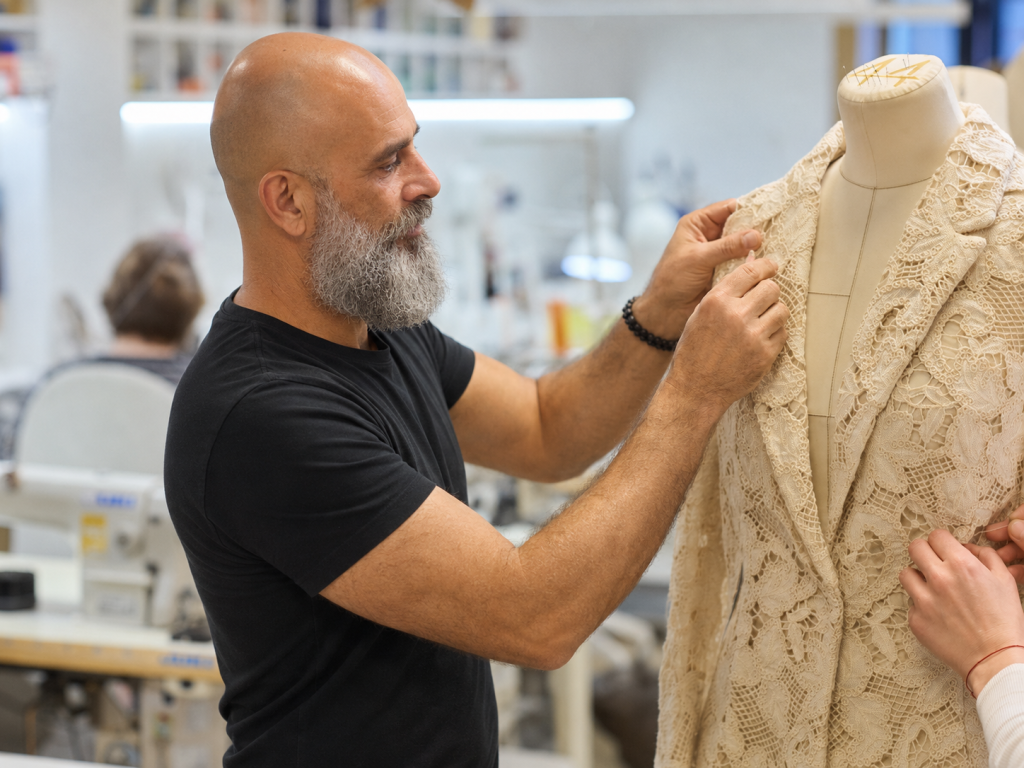
Lombardy textile fashion – controlled production
16. Stock-Supported Fabrics and Risk Reduction
Stock-supported fabrics can reduce certain risks in early-stage production.
They can help brands:
- sample faster;
- test colours;
- develop capsule collections;
- reduce waiting time;
- avoid overcomplicated custom development;
- move from idea to prototype more efficiently.
However, stock-supported does not mean claim-ready by default.
A stock fabric may be available quickly, but certification documents, Transaction Certificates or final product claims must still be checked for the specific lot and production route.
This is an important distinction.
Stock-supported fabrics reduce sourcing risk when used correctly.
They create claim risk when used carelessly.
ARNIA’s Stock-Supported Fabrics approach is therefore connected to technical validation, documentation and honest communication.
17. What Brands Should Ask Before Choosing a Short Supply Chain Partner
A fashion brand should not choose a supplier only because it is local.
It should ask whether the supplier can actually manage risk.
Here is a practical checklist.
| Question | Why it matters |
|---|---|
| Where are the key production stages located? | Confirms whether the supply chain is genuinely controllable |
| Who coordinates the process? | Prevents fragmented responsibility |
| Are suppliers selected only by price? | Reveals potential ethical and quality risk |
| Do suppliers accept a Code of Ethics? | Creates non-negotiable conduct rules |
| Do suppliers accept a Values Charter? | Aligns daily behaviour and long-term culture |
| Is there supplier due diligence? | Checks labour, safety, legality and subcontracting |
| How is quality monitored? | Prevents late-stage defects |
| How are changes approved? | Avoids confusion and uncontrolled deviations |
| Is documentation connected to lots and SKUs? | Supports traceability and buyer compliance |
| Can certification claims be verified? | Reduces greenwashing risk |
| Is subcontracting declared and controlled? | Prevents hidden labour and quality risk |
| Is there a corrective action process? | Turns problems into managed improvements |
If a supplier cannot answer these questions, geographical proximity alone is not enough.
18. What a Responsible Short Supply Chain Should Document
A short supply chain should be able to create a reliable evidence file.
Depending on the project, this may include:
- supplier identification;
- process map;
- material datasheets;
- composition data;
- lot references;
- colour or print references;
- technical approvals;
- sampling records;
- production approvals;
- quality-control reports;
- REACH declarations where applicable;
- RSL/MRSL alignment where required;
- test reports where needed;
- certification documents where applicable;
- Transaction Certificates where required and feasible;
- subcontracting declarations;
- Code of Ethics acceptance;
- Values Charter acceptance;
- corrective action records;
- final claim approval.
The goal is not bureaucracy.
The goal is to make the production reality defensible.
A claim is strong only when the evidence behind it is strong.
19. The Human Side of the Lombardy Textile District
The value of the Lombardy Textile District is not only technical.
It is human.
A district is made of people who know how to solve problems because they have seen materials, processes and production challenges for years.
This matters in luxury and premium fashion.
Machines are important. Certifications are important. Documents are important.
But people remain central.
A skilled technician can recognise a fabric risk before it becomes a defect.
A responsible workshop can warn about a construction problem before bulk production.
A trusted partner can communicate delays early instead of hiding them.
A project manager can connect creative intention with industrial reality.
This is why ARNIA’s model combines know-how, social inclusion, selected partners and responsible governance.
A supply chain is not sustainable if it forgets the people inside it.
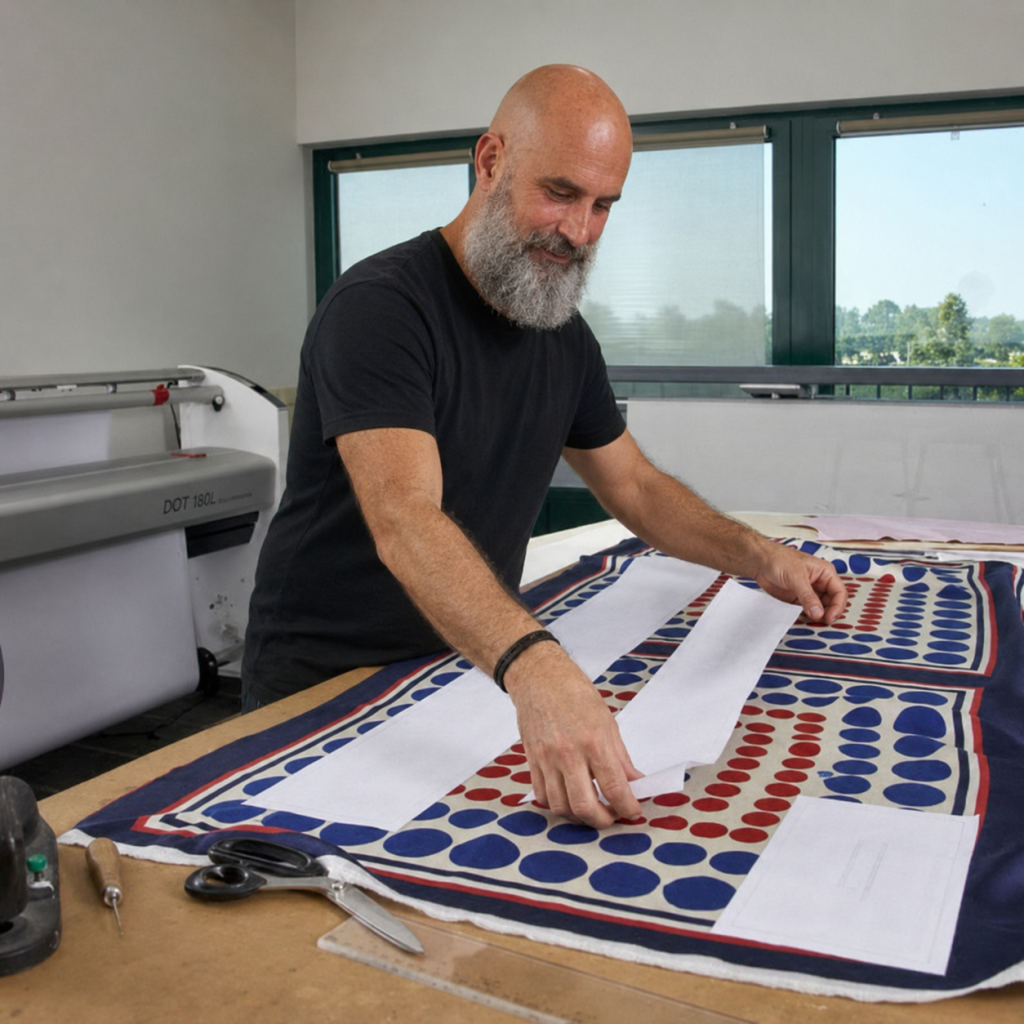
Lombardy textile fashion distric
20. Why a Kind, Ethical and Inclusive Working Environment Matters
A kind working environment is not a soft concept.
In a production chain, it has concrete effects.
A kind, ethical and inclusive working environment helps create:
- better communication;
- less fear of reporting problems;
- greater respect for safety;
- more stable relationships;
- lower conflict;
- stronger accountability;
- more careful work;
- better continuity;
- more realistic planning;
- healthier collaboration.
When workers and suppliers are treated only as cost centres, problems tend to be hidden.
When people are respected, they are more likely to speak early, correct issues and protect the quality of the project.
For ARNIA, supplier alignment with the Code of Ethics and Values Charter means building a production environment where legality, safety, respect and inclusion are not optional.
They are part of the product.
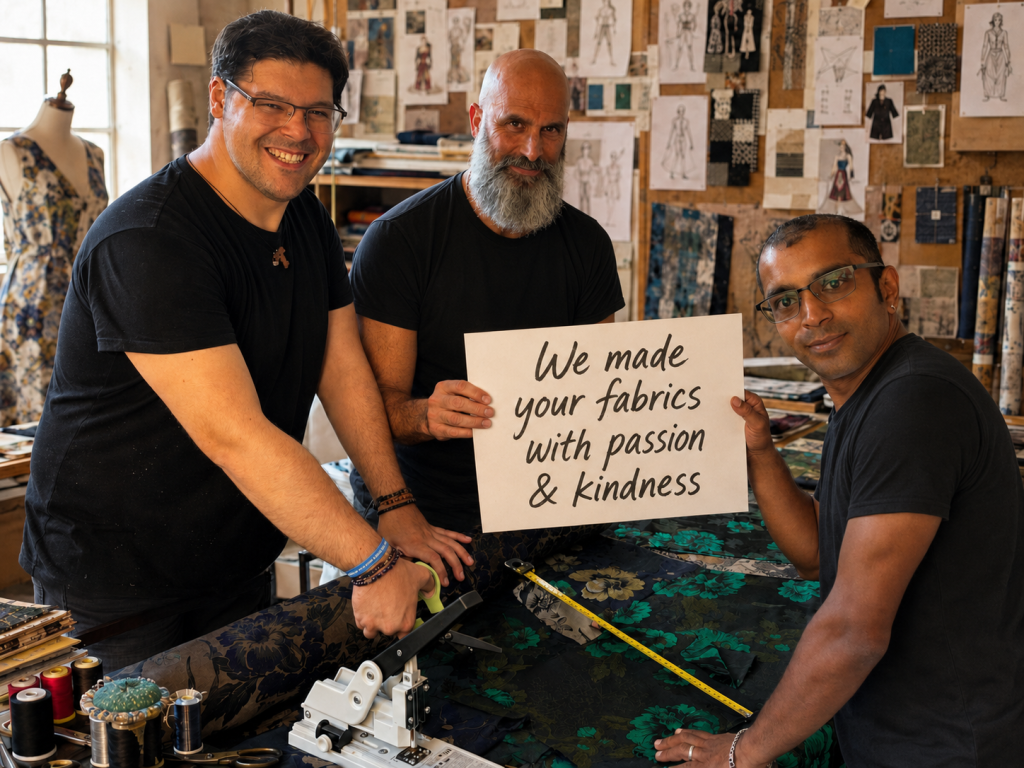
sustainable fashion made with passion and kindness
21. When Short Supply Chains Do Not Reduce Risk
A short supply chain does not reduce risk if it is poorly managed.
It may fail when:
- suppliers are selected only by price;
- production stages are not documented;
- subcontractors are hidden;
- ethics are formal but not applied;
- audits are treated as the only control;
- quality checks happen too late;
- sustainability claims are exaggerated;
- technical files are incomplete;
- deadlines are unrealistic;
- communication is informal and not recorded;
- supplier relationships are based on pressure rather than partnership.
This is why “short” must also mean “controlled”.
A short supply chain without governance is only a local supply chain.
A short supply chain with due diligence becomes a risk-management system.
22. How ARNIA TEXTILE’s Lombardy Model Supports Brands
ARNIA TEXTILE FASHION is the trading name of ARNIA – Società Cooperativa Sociale Made in Italy, a Type B non-profit social cooperative and B2B textile converter based in Lombardy, Italy.
ARNIA supports premium and luxury fashion brands through:
- Textile Converter services;
- Fabric Sourcing;
- Sustainable Textiles;
- Stock-Supported Fabrics;
- Cut & Sew Services;
- project management;
- traceability and documentation;
- supplier due diligence;
- Code of Ethics and Values Charter alignment;
- anti-greenwashing guidance;
- brand reputation protection.
The ARNIA model is based on a simple idea:
A supply chain should not only produce. It should protect.
It should protect the product.
It should protect people.
It should protect the client’s reputation.
It should protect the truth of what is declared.

FASHION FROM the LOMBARDY TEXTILE DISTRICT
23. A Practical Roadmap for Brands
Fashion brands that want to reduce production risk through a short supply chain should follow a structured roadmap.
Step 1 — Define the product
Clarify:
- category;
- fabric direction;
- target quantity;
- size range;
- target price;
- channel;
- timeline;
- required documentation;
- intended claims.
Step 2 — Select the right production partner
Choose a partner that can manage:
- technical feasibility;
- supplier coordination;
- documentation;
- quality control;
- due diligence;
- ethical alignment;
- traceability;
- brand-safe communication.
Step 3 — Map the supply chain
Understand where key stages happen:
- fiber or yarn;
- weaving or knitting;
- dyeing;
- printing;
- finishing;
- cutting;
- sewing;
- packing;
- logistics.
Step 4 — Apply Code of Ethics and Values Charter
Make sure suppliers understand and accept the ethical framework.
This should not be a symbolic signature. It should become part of how work is planned, monitored and corrected.
Step 5 — Perform due diligence
Check legality, labour, safety, subcontracting, environmental requirements and documentation.
Step 6 — Approve samples before scaling
Never treat a prototype as a formality.
The prototype is the first real test of material, construction, fit, feasibility and repeatability.
Step 7 — Monitor production daily
Do not wait until final inspection.
Control must happen during the process.
Step 8 — Archive evidence
Keep documents connected to the order, SKU, lot and claim.
Step 9 — Communicate responsibly
Only say what can be proven.
This is the safest path for long-term brand reputation.
24. Final Takeaway
The Lombardy Textile District reduces fashion production risk not only because it is close.
It reduces risk because proximity can make control more real.
But proximity must be managed.
A short supply chain becomes powerful when it is supported by daily monitoring, due diligence, Code of Ethics, Values Charter, traceability, quality control, safe working conditions, fair and inclusive work and responsible communication.
The day of a third-party audit matters.
But the real test of a supply chain is every ordinary working day.
At ARNIA TEXTILE FASHION, we believe that responsible Made in Italy is not only a matter of craftsmanship.
It is a matter of coherence.
What is designed must be feasible.
What is produced must be controlled.
What is declared must be proven.
And the people behind the product must be respected.
Explore ARNIA’s Textile Converter, Fabric Sourcing, Sustainability and Cut & Sew Services pages to build a more controlled and responsible fashion production pathway in Italy.
SHORT SUPPLY CHAIN
FAQ – Lombardy Textile District – Short Supply Chain
What is the Lombardy Textile District?
The Lombardy Textile District is a specialised textile and fashion production ecosystem in Northern Italy, including areas such as Milan, Varese, Busto Arsizio, Gallarate and Como. It includes expertise in weaving, jacquard, printing, dyeing, finishing, embroidery, prototyping and garment production.
What is a short supply chain in fashion production?
A short supply chain in fashion production is a production route where key suppliers and processes are geographically and operationally close enough to allow better coordination, faster communication, stronger quality control and clearer traceability.
Why do short supply chains reduce production risk?
Short supply chains reduce risk because they make problems more visible and easier to correct. They can reduce communication delays, quality defects, hidden subcontracting, weak documentation, late-stage surprises and unsupported sustainability claims.
Does a short supply chain automatically mean sustainable production?
No. A short supply chain is not automatically sustainable. It must be selected, monitored and documented. Sustainability requires due diligence, ethical alignment, traceability, safe working conditions, fair work, responsible sourcing and accurate claims.
Why is daily control more important than audit-day preparation?
Third-party audits are useful, but they verify compliance at a defined moment. Daily control checks whether the supplier’s normal working reality matches the expected standards over time. Responsible supply chains must be coherent every day, not only during inspections.
What is ARNIA’s Code of Ethics?
ARNIA’s Code of Ethics is a set of conduct rules for suppliers, partners and stakeholders. It requires alignment with legality, labour compliance, safety, dignity of work, contractual correctness, protection of people, transparency and rejection of exploitation, irregularity and greenwashing.
What is ARNIA’s Values Charter?
ARNIA’s Values Charter defines the principles that guide supplier relationships and business decisions, including human dignity, respect, inclusion, responsibility, transparency, measurable sustainability, responsible Made in Italy and continuous improvement.
Why does supplier adherence to the Code of Ethics matter?
Supplier adherence matters because it turns ethical expectations into operational rules. It means the supplier is not selected only for price or technical capacity, but also for legal compliance, workplace safety, respect for people, transparency and alignment with ARNIA’s values.
What does supply-chain due diligence mean in fashion?
Supply-chain due diligence means identifying, preventing, mitigating, monitoring and addressing risks related to labour, health and safety, subcontracting, environmental compliance, traceability, documentation, certification claims and brand reputation.
How does a short supply chain protect brand reputation?
A short and monitored supply chain protects brand reputation by improving evidence collection, quality control, traceability, supplier accountability, compliance checks and responsible claim wording. It helps brands prove what they communicate.
Is Made in Italy automatically ethical?
No. Made in Italy is a strong quality and heritage signal, but it is not automatically an ethical guarantee. Brands should still verify supplier selection, working conditions, subcontracting, documentation, due diligence and claim accuracy.
Can short supply chains support GOTS, GRS or FSC certification claims?
They can support certification pathways when the correct Chain of Custody, certified operators, documentation, Transaction Certificates and minimum technical quantities are available. A short supply chain does not automatically make a product certified.
Why is subcontracting a risk in fashion production?
Subcontracting becomes risky when it is undeclared or uncontrolled. It can hide quality issues, unsafe working conditions, labour irregularities and documentation gaps. Responsible subcontracting must be declared, approved and monitored.
How does ARNIA reduce fashion production risk?
ARNIA reduces risk by coordinating selected local partners, monitoring production, managing documentation, applying due diligence, aligning suppliers with its Code of Ethics and Values Charter, supporting traceability and helping brands avoid unsupported claims.


