
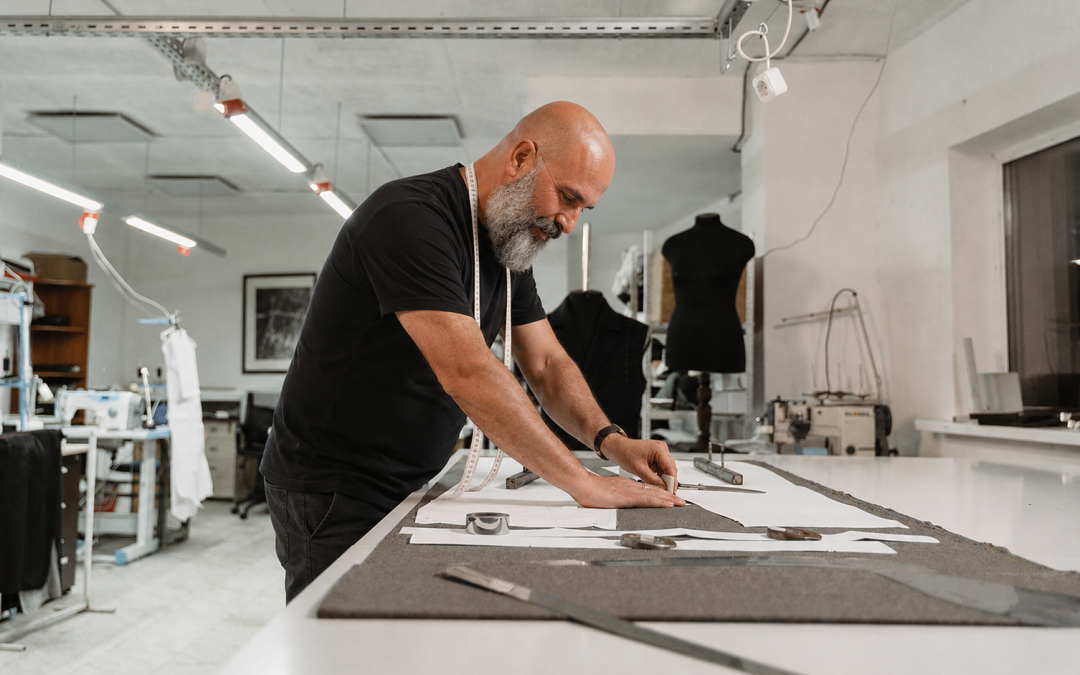
Small-batch cut and sew manufacturing in Italy can be an excellent route for emerging fashion brands, capsule collections, premium private label projects and limited-edition garments. But it only works when the brand understands one essential point from the beginning: small-batch production is not the same as “cheap production in small quantities”.
A realistic small-batch project needs clear technical information, a repeatable prototype, validated fabrics, a confirmed Bill of Materials, a feasible production calendar and a cost structure that matches the brand’s selling price and market positioning.
At ARNIA TEXTILE FASHION, our Cut & Sew Services are designed for brands that want Made in Italy garment production with a professional, traceable and feasibility-first approach. Our reference MOQ for Cut & Sew can start from 20 pieces per style, split across sizes, but final feasibility always depends on garment complexity, fabric availability, finishing, certification expectations and technical readiness.
This guide explains what small-batch cut and sew manufacturing in Italy really means, what MOQ brands should expect, what affects production costs, and how to prepare before requesting a quote.
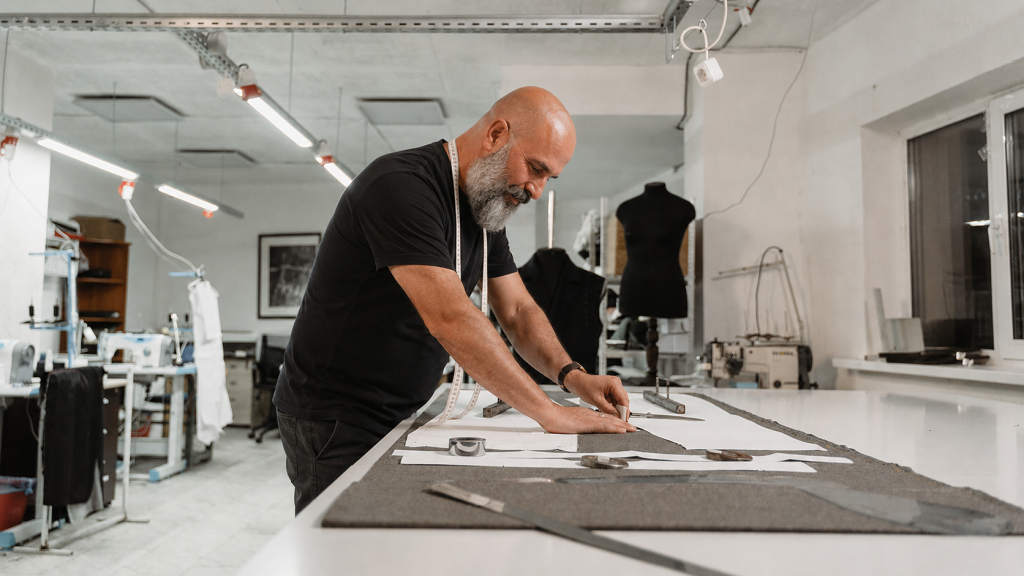
SMALL-BATCH CUT AND SEW ITALY
Quick Answer: What Is Small-Batch Cut and Sew Manufacturing in Italy?
Small-batch cut and sew manufacturing in Italy is a garment production model where a brand develops and produces limited quantities of finished garments through cutting, sewing, fitting, quality control and production oversight. It is often used for capsule collections, first commercial drops, premium startups, emerging designers and special projects.
At ARNIA, small-batch Cut & Sew projects can start from 20 pieces per style, but this is a starting point, not an automatic guarantee. The real MOQ depends on the style, material, construction, fabric MOQ, trims, size split, finishing, documentation and certification pathway.
Final production costs can only be confirmed after prototype approval, BOM validation and technical feasibility review.
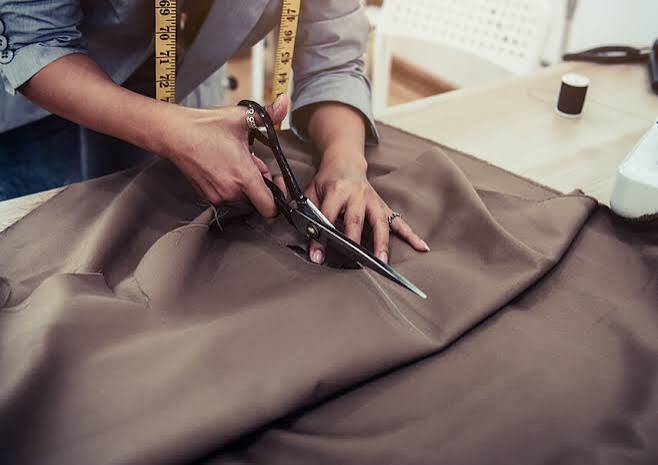
SMALL-BATCH CUT AND SEW ITALY
1. Why Small-Batch Manufacturing Is Attractive for Emerging Brands
For many emerging fashion brands, producing 500 or 1,000 pieces per style at launch is unrealistic. The brand may still be testing:
- buyer response;
- product-market fit;
- size curve;
- pricing;
- sales channel;
- fabric performance;
- repeatability;
- customer feedback.
Small-batch cut and sew manufacturing allows a brand to reduce inventory risk and avoid committing too much cash before the product has been validated. It is particularly useful for capsule collections, direct-to-consumer drops, limited editions, premium pre-orders and early wholesale tests.
However, there is a trade-off. Lower quantities usually mean higher unit costs, less purchasing power on fabrics and trims, more pressure on development costs, and less room for mistakes. A small production run must therefore be engineered carefully.
This is why ARNIA treats small-batch production as a technical and strategic process, not simply as a production request.
Related reading: Fashion Startup Budget: why your creativity needs a cash plan.
2. Realistic MOQ in Italy: Why 20 Pieces per Style Is a Starting Point
One of the most common questions is:
“What is the minimum order quantity for cut and sew manufacturing in Italy?”
At ARNIA, the reference MOQ for Cut & Sew can start from 20 pieces per style, split across sizes. This can work for capsule collections, limited editions and first market tests when the project is technically simple enough and supported by suitable fabrics.
But MOQ is never only a number. MOQ is the result of multiple constraints.
A style may technically start from 20 pieces if:
- the construction is not overly complex;
- the fabric is available or stock-supported;
- the size split is manageable;
- the trims are available in small quantity;
- the prototype is repeatable;
- the BOM is clear;
- no unrealistic certification claim is required;
- timing is aligned with real production capacity.
A different style may require a higher MOQ because of fabric setup, special finishing, custom trims, lining, interlining, print placement, grading complexity or production risk.
Practical MOQ Guide for Small-Batch Cut and Sew Projects
| Quantity per style | Typical use | Main opportunities | Main risks |
|---|---|---|---|
| 1–3 pieces | Prototype / sample | Fit, construction, creative validation | Not a production cost reference |
| 10–19 pieces | Micro test / special case | Possible for very limited internal use | Often inefficient for real production |
| 20–79 pieces | First capsule / launch drop | Low inventory risk, market testing | Higher unit cost, limited fabric flexibility |
| 80–149 pieces | Stronger first production | Better cost absorption, clearer size curve | Still sensitive to fabric and trim MOQ |
| 150–299 pieces | Structured small batch | More efficient production planning | Requires stronger sales plan |
| 300+ pieces | Scalable small/medium run | Better fabric planning and repeatability | Higher inventory and cash-flow commitment |
The key message is simple: 20 pieces per style can be possible, but it must be technically validated.
3. Why MOQ Changes from One Garment to Another
Two garments may look similar in a moodboard and have completely different industrial realities.
A simple unlined dress in an available fabric may be feasible in a small batch. A lined jacket with shoulder pads, interlining, multiple internal pockets, custom buttons, special pressing and several fit rounds may require more time, more cost and a different production logic.
MOQ changes because of these cost and process drivers:
Fabric availability
If the fabric is already available through Stock-Supported Fabrics, sampling and small-batch planning can be faster and more flexible. If the fabric must be custom woven, printed, dyed or finished, textile MOQ may become the real constraint.
Style complexity
The more complex the garment, the more production time, operations and quality-control checkpoints are required. Lining, special seams, pleats, embroidery, quilting, corsetry details, technical jersey, structured outerwear and pattern matching all affect feasibility.
Number of sizes
A 20-piece production split across five sizes is different from a 20-piece production split across two sizes. Size grading, cutting efficiency and fit risk all matter.
Number of colorways
A style produced in one color is easier to manage than the same style split into four colors. More colors can increase fabric, trim, labeling and production complexity.
Trims and accessories
Buttons, zippers, labels, elastics, interlinings, shoulder pads, tapes, hangtags, packaging and branded trims may have their own MOQ. A low garment MOQ does not always remove the MOQ of components.
Certification requirements
Certified production follows documentation, segregation and Chain of Custody rules. If a brand wants GOTS, GRS, FSC or other certification-related claims, feasibility must be checked before development.
Production calendar
A low MOQ does not mean immediate production. The project still needs technical review, prototype, fitting, corrections, pre-production approval, production scheduling and quality control.
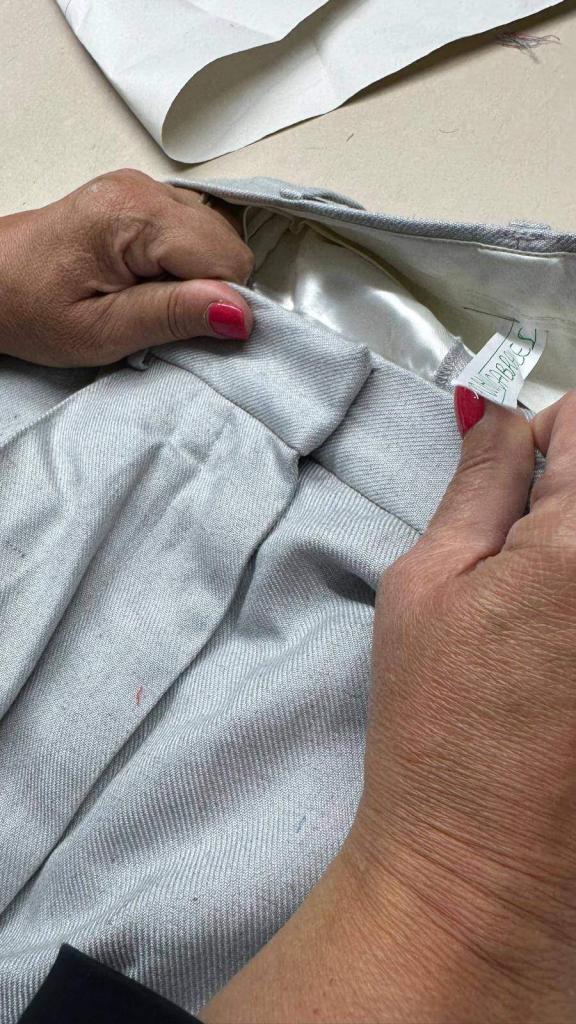
4. Why a Quote Without Technical Data Is Not Reliable
Many founders begin by asking:
“Can you send me a quote?”
But a quote without technical information is not a quote. It is a guess.
A professional cut and sew manufacturer cannot responsibly confirm pricing before understanding:
- the garment category;
- construction details;
- tech pack;
- pattern status;
- size specs;
- grading needs;
- fabric and trims;
- BOM;
- target quantity;
- production deadline;
- target retail price;
- sales channel;
- packaging and labeling requirements;
- certification or compliance expectations.
This is why ARNIA’s approach is built around feasibility first. Before moving to production, the project must become “quote-ready”.
Related reading: Why “Just a Quote” is Not Enough.
5. What Brands Should Prepare Before Contacting a Cut and Sew Manufacturer
A small-batch project becomes faster, clearer and more cost-efficient when the brand prepares the right information before the first technical conversation.
Essential information
Before requesting small-batch cut and sew manufacturing in Italy, prepare:
- Style list
For example: dress, blazer, trouser, blouse, skirt, hoodie, coat. - Quantity per style
Include total quantity and size split if available. - Development status
Clarify whether you have sketches, reference images, tech packs, patterns or approved prototypes. - Target retail price
This helps verify whether the garment can be produced within a sustainable cost architecture. - Sales channel
Direct-to-consumer, wholesale, marketplace, showroom or hybrid. - Fabric direction
Existing fabric, ARNIA fabric sourcing, stock-supported fabric, certified material or custom development. - Timeline
Target sampling date, production date and delivery window. - Certification expectations
For example: GOTS, GRS, FSC, ECOVERO™, traceability, chemical compliance, RSL/MRSL testing or brand-specific documentation. - Packaging and labeling
Brand labels, care labels, size labels, hangtags, packaging, barcodes and market requirements.
If these elements are missing, the first step should not be a production quote. The first step should be a technical readiness review.
At ARNIA, this is managed through the First Call Fashion Production Onboarding or the onboarding options described on the Cut & Sew Services page.
6. The Real Cost Structure of Small-Batch Cut and Sew Manufacturing
The cost of a small-batch garment is not only the sewing cost.
A realistic garment cost structure includes several layers:
| Cost area | What it includes |
|---|---|
| Development | Tech pack, pattern making, grading, prototypes, fittings, corrections |
| Fabric | Fabric price, consumption, shrinkage, cutting loss, continuity risk |
| Trims | Buttons, zippers, elastics, tapes, interlinings, labels, packaging |
| Cut and sew | Cutting, sewing, pressing, finishing, production handling |
| Quality control | Measurements, construction checks, visual inspection, packing checks |
| Compliance | Composition labels, care labels, chemical tests, RSL/MRSL checks if required |
| Project management | Coordination, supplier alignment, timelines, approvals, communication |
| Logistics | Packing, shipping preparation, transport and export documents where applicable |
| Contingency | Rework, replacements, tolerance management, unexpected issues |
A founder who only compares sewing prices is missing the real financial picture. The cost that matters is the complete landed product cost, aligned with the brand’s target selling price and channel strategy.
Related reading: Selling Price and Production Costs in Fashion.
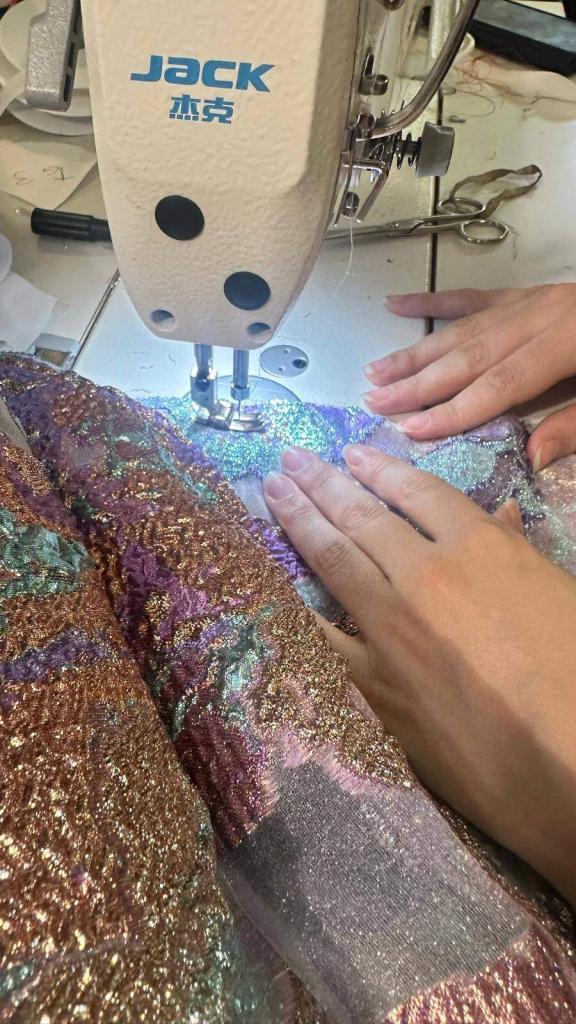
#CUT AND SEW
7. Why Small Quantities Usually Cost More per Unit
Small-batch production has many advantages, but it does not behave like mass production.
When quantities are low, fixed costs are spread across fewer garments. Pattern development, prototyping, production setup, communication, cutting preparation, size grading, BOM validation, quality control and project management still exist even if the order is small.
This is why small quantities usually increase unit cost.
A brand can reduce the impact by:
- developing fewer, stronger styles;
- avoiding too many colorways;
- using the same fabric across multiple styles;
- using stock-supported fabrics where suitable;
- simplifying unnecessary construction details;
- reducing custom trims at launch;
- planning reorders early;
- building hero products that can continue across seasons.
A small-batch collection should not try to look like a full department-store assortment. It should be focused, coherent and repeatable.
Related reading: Fashion Production for Startups: The Manufacturability Checklist.
8. The ARNIA Process: From First Call to Production
ARNIA’s small-batch Cut & Sew process is built around a stage-gate workflow. The goal is to protect the brand from premature sampling, unrealistic pricing, missing documents and production surprises.
Step 1 — Initial alignment
The first step is to understand the project: category, quantities, target retail price, sales channel, timeline, development status and sustainability expectations.
For early-stage projects, ARNIA offers a paid onboarding call. For more complex projects, a pre-feasibility or extended pre-feasibility review may be more appropriate.
Step 2 — Confidentiality and file review
If the brand needs to share sensitive information, an NDA can be signed before reviewing tech packs, patterns, cost sheets or supplier-sensitive details.
Related reading: Industrial Property & NDA in Fashion.
Step 3 — Technical readiness check
ARNIA checks whether the project is ready for quotation or needs development first. This includes:
- tech pack review;
- construction notes;
- pattern and grading status;
- fabric and trim requirements;
- BOM completeness;
- size and fit risks;
- packaging and labeling needs;
- target production quantity;
- timeline feasibility.
Step 4 — Fabric sourcing or stock-supported route
If fabrics are not defined, ARNIA can support Fabric Sourcing or evaluate Stock-Supported Fabrics for faster sampling and small-batch planning.
Fabric is not a decorative decision. It affects cutting, sewing, shrinkage, finishing, lead time, MOQ, compliance and cost.
Step 5 — Prototype development
The prototype is where the design becomes a real garment. It validates construction, fit, fabric behavior, sewing operations, finishing and potential risk points.
A prototype is not optional. It is the bridge between creative intention and repeatable production.
Step 6 — Fitting and corrections
After the first prototype, corrections may be needed. This can involve measurements, pattern adjustments, construction changes, trims, fabric behavior, comfort, proportion and finishing.
Step 7 — BOM validation
The Bill of Materials must be validated before production. The BOM defines all materials and components required to make the garment, including:
- main fabric;
- lining;
- interlining;
- trims;
- buttons;
- zippers;
- labels;
- packaging;
- special treatments;
- compliance documentation.
Without a validated BOM, cost and repeatability remain uncertain.
Step 8 — Pre-production sample
The pre-production sample confirms the final approved version before bulk production. This is the reference garment for the production run.
Step 9 — Production planning
Once the prototype and BOM are approved, ARNIA can confirm the production route, capacity, timing and final quotation. Production planning includes cutting, sewing, finishing, quality control and packing.
Step 10 — Quality control and delivery
Quality control checks help prevent mistakes from reaching the final customer. This includes visual inspection, measurements, construction review and packaging checks according to the agreed requirements.
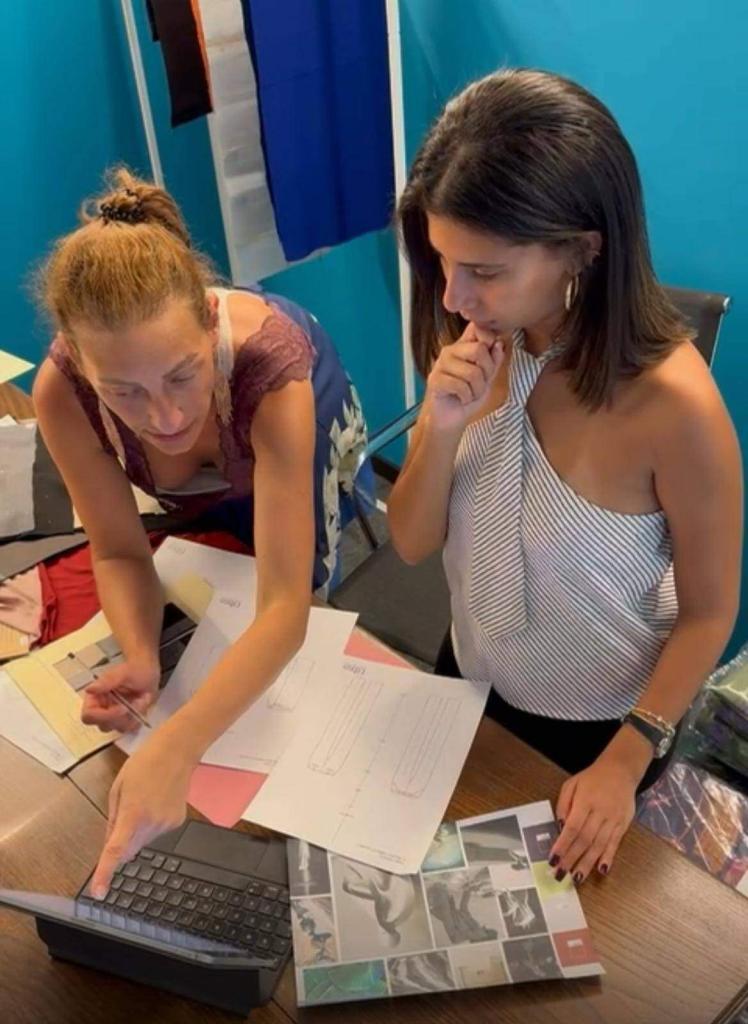
9. Certified Fabric Is Not Automatically a Certified Garment
This point is essential for any brand working with sustainable fashion claims.
A certified fabric does not automatically make the final garment certified.
Certification-related claims depend on the applicable standard, the Chain of Custody, documentation, the certified status of the companies involved, minimum technical quantities, segregation rules and the claim the brand wants to make.
For example, if a brand buys a certified fabric but the downstream process and final brand are not aligned with the required Chain of Custody, the brand may not be allowed to claim the final garment as certified.
At ARNIA, certified or certification-ready options can be evaluated project by project. Indicative technical minimums may apply for certified production planning, such as:
| Certification pathway | Indicative technical minimum planning reference |
|---|---|
| GRS | around 300 meters |
| FSC | around 500 meters |
| ECOVERO™ | around 800 meters |
| GOTS | around 1,000 meters |
These figures are not automatic guarantees. Final feasibility depends on the selected material, production pathway, certification scope, documentation, segregation and the brand’s own claim strategy.
For small test lots, prototypes and sample-only projects, it is generally not realistic to promise Transaction Certificates or final certified-garment claims.
This is not a limitation of communication. It is a protection against greenwashing.
Related reading: Greenwashing in Fashion and Textile: Sustainable Claims Need Proof and Sustainability Practical Guide.
10. Why Fabric Continuity Matters More Than Many Founders Think
A beautiful prototype is not enough if the fabric cannot be secured for production.
This is one of the most frequent risks in emerging fashion brands. A founder finds a beautiful available fabric, builds a sample, shoots the campaign, launches the product and then discovers that the fabric is not available anymore.
This creates delays, substitutions, customer disappointment and possible quality inconsistency.
Small-batch brands should ask early:
- Is this fabric available for production?
- Can it be reordered?
- Is the color repeatable?
- Is the composition documented?
- Are compliance documents available?
- What is the fabric MOQ?
- What happens if the first drop sells out?
Deadstock can be attractive, but unverified deadstock can create serious traceability, continuity and compliance risks. For professional collections, ARNIA generally prefers documented sourcing routes or stock-supported materials that can better support continuity.
Related reading: Textile Deadstock vs Just-in-Time.
11. How to Reduce Cost Without Destroying Quality
The goal of premium small-batch manufacturing is not to make the cheapest garment possible. The goal is to make the right garment, at the right quality level, with a cost structure that the brand can sustain.
Here are practical ways to reduce cost intelligently.
Reduce the number of styles
A focused capsule of 2–5 strong styles is often more realistic than a broad collection with shallow quantities.
Share fabrics across multiple styles
Using the same fabric across different garments can improve consumption planning and reduce fabric risk.
Limit colorways at launch
Too many colors split quantities and increase complexity.
Use stock-supported fabrics where appropriate
Stock-supported fabrics can reduce textile development time and help small-batch projects move faster.
Simplify unnecessary construction details
Not every internal seam, trim, pocket or finish adds value for the customer. Some details only add cost and risk.
Plan hero products
A hero product can return across seasons with controlled updates. This helps amortize development work and protect margins.
Use a Textile Project Manager
A Textile Project Manager helps align design, sourcing, sampling, production, quality control, timing and documentation. In small-batch production, coordination is often the difference between a beautiful idea and a deliverable collection.
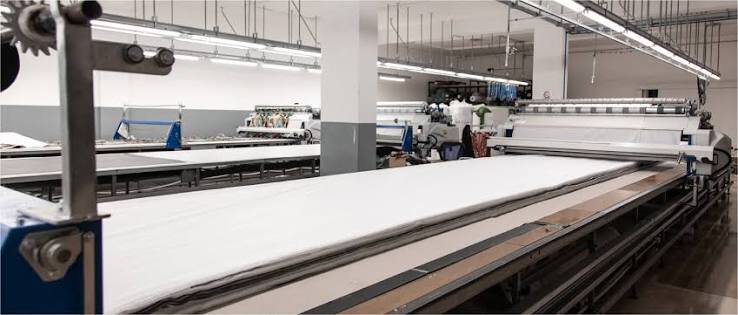
SMALL-BATCH CUT AND SEW ITALY
12. When Small-Batch Cut and Sew Manufacturing in Italy Is the Right Choice
Small-batch Made in Italy production is a strong choice when the brand values:
- premium positioning;
- controlled quality;
- traceable production;
- flexible capsule collections;
- reliable communication;
- responsible sourcing;
- design-to-production support;
- long-term supplier relationships;
- reputation protection.
It is especially suitable for:
- emerging premium brands;
- capsule collections;
- limited editions;
- luxury pre-collections;
- DTC brands testing their first hero products;
- established brands developing special projects;
- designers who need one accountable production partner.
Small-batch production is not the best choice for brands looking only for the lowest possible price, one-off garments, unrealistic deadlines, unclear technical files or unsupported sustainability claims.
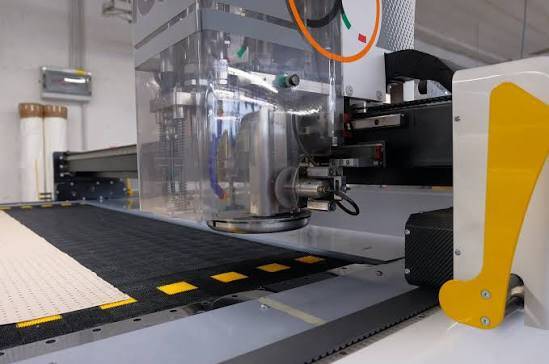
SMALL-BATCH CUT AND SEW ITALY – automatic cut table
13. What Makes ARNIA Different
ARNIA TEXTILE FASHION is the trading name of ARNIA – Società Cooperativa Sociale Made in Italy, an Italian social cooperative and textile converter based in the Lombardy Textile District, between Milan, Como and Varese.
ARNIA works as one accountable project-management framework connecting textile development, fabric sourcing, prototyping, Cut & Sew production oversight, quality control and sustainability-aware documentation.
The model is built around:
- Made in Italy textile and garment expertise;
- short and controlled supply chains;
- fabric and garment development;
- stock-supported and custom sourcing options;
- project management from idea to production;
- traceability and compliance awareness;
- social inclusion and ethical work as part of the industrial model.
ARNIA is not a generic quote desk. The objective is not to produce isolated prototypes that lead nowhere. The objective is to help fashion brands build realistic, scalable and responsible production pathways.
Explore ARNIA’s Cut & Sew Services or read more in the Textile Insights section.
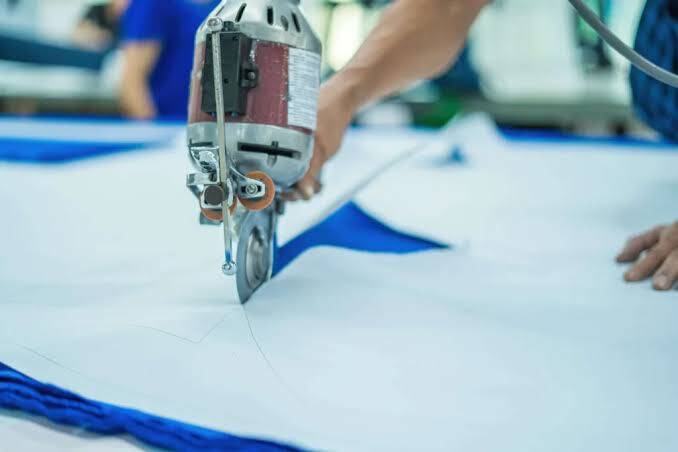
SMALL-BATCH CUT AND SEW ITALY – manual hand cut
14. Final Checklist Before You Request a Small-Batch Production Quote
Before asking for a small-batch cut and sew quote in Italy, check whether you can answer these questions:
| Question | Why it matters |
|---|---|
| What garment categories do you want to produce? | Defines production route and complexity |
| How many styles are included? | Affects sampling, costing and planning |
| What quantity per style do you need? | Defines MOQ feasibility |
| Do you have a tech pack? | Reduces ambiguity and quoting risk |
| Do you have patterns? | Impacts development time |
| Is the prototype approved? | Required for reliable costing |
| What is your target retail price? | Defines the cost architecture |
| Are you DTC, wholesale or hybrid? | Changes margin logic |
| What fabric route do you need? | Impacts cost, timing, MOQ and compliance |
| Do you need certification claims? | Requires early Chain of Custody review |
| What is your delivery deadline? | Must match real sampling and production steps |
If several answers are missing, the right first step is not a quote. The right first step is a structured onboarding call or feasibility review.
Start with ARNIA’s First Call Fashion Production Onboarding or visit Cut & Sew Services.
FAQ
What is the minimum order quantity for small-batch cut and sew manufacturing in Italy?
At ARNIA, Cut & Sew projects can typically start from 20 pieces per style, split across sizes. However, final MOQ depends on garment complexity, fabric availability, trims, finishing, size split, production pathway and certification expectations.
Can I get a final production quote before making a prototype?
A reliable final production quote is only possible after technical validation, prototype approval and BOM confirmation. Before that stage, any unit price is only indicative and may change once construction, fabric consumption, trims and production time are confirmed.
Why are small-batch garments more expensive per unit?
Small-batch garments are more expensive per unit because fixed development and setup costs are spread across fewer pieces. Pattern making, prototyping, grading, cutting setup, BOM validation, project management and quality control still exist even when the quantity is low.
Can small-batch production be Made in Italy?
Yes, small-batch production can be Made in Italy when the real manufacturing steps, production pathway and applicable origin requirements support the claim. Any Made in Italy claim should be assessed carefully style by style.
Can I produce only 20 pieces per style?
In many cases, 20 pieces per style can be a possible starting point for ARNIA Cut & Sew projects. Feasibility depends on the garment category, construction, fabric, finishing, trims, size split and production calendar.
Can a small batch be GOTS, GRS or FSC certified?
Certified production depends on the applicable standard, Chain of Custody, minimum technical quantities, documentation and the certification status of the companies involved. Small test lots, prototypes and samples are generally not suitable for final certified-garment claims or Transaction Certificates.
Is a certified fabric enough to call the garment certified?
No. A certified fabric does not automatically make the final garment certified. Certification claims depend on Chain of Custody, scope, documentation, production pathway and brand certification status.
What documents should I prepare before contacting ARNIA?
Prepare your style list, quantities per style, target retail price, sales channel, timeline, tech pack, patterns if available, BOM, fabric direction, packaging requirements and any certification or compliance expectations.
Can ARNIA help if I do not have a tech pack yet?
Yes, ARNIA can support early-stage brands, but a project without a tech pack usually needs a structured onboarding or pre-feasibility review before quotation. Technical development may be required before sampling or production.
What is the best way to reduce cost in small-batch production?
The best way is to reduce unnecessary complexity: fewer styles, fewer colorways, shared fabrics, stock-supported materials, simpler construction, realistic timelines and a clear product budget based on your target selling price.
Ready to understand whether your small-batch Cut & Sew project is feasible in Italy?
Start with ARNIA’s Cut & Sew Services or book a structured First Call Fashion Production Onboarding.
For project-specific requests, contact ARNIA through the official Contact page.


