
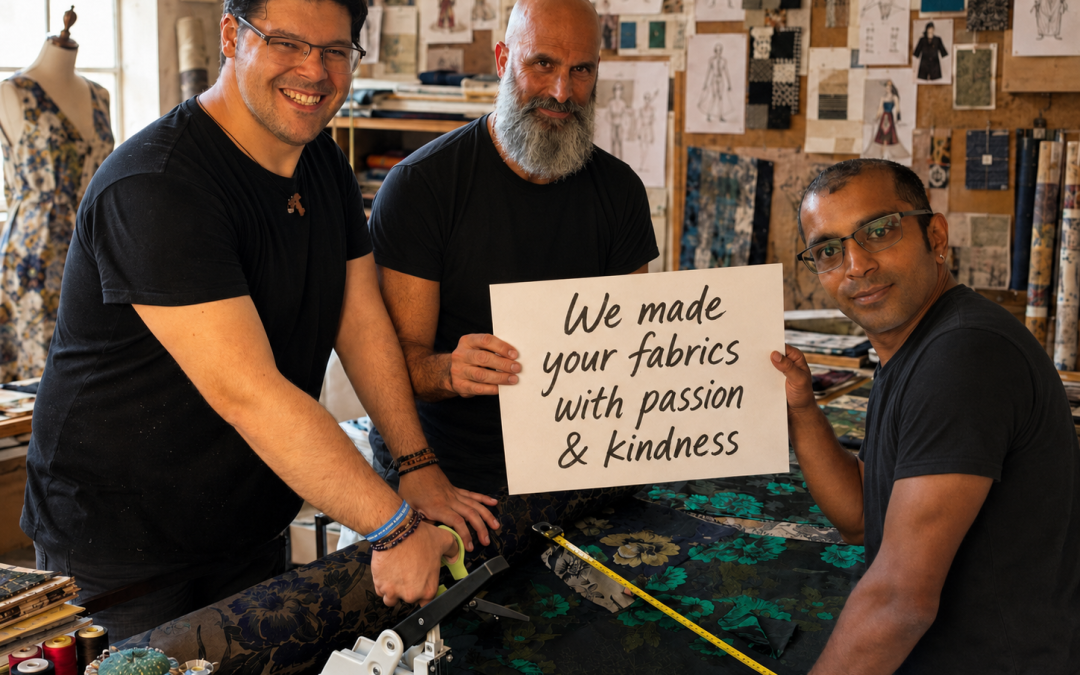
Sustainable Fashion Needs a Social Supply Chain: Certified Fabrics, Real MOQ and the Kindness of Truth
“E quell’orror che primo
Contra l’empia natura
Strinse i mortali in social catena,
Fia ricondotto in parte
Da verace saper, l’onesto e il retto
Conversar cittadino”
— Giacomo Leopardi, La Ginestra
In La Ginestra, Giacomo Leopardi gives us one of the most powerful images of human responsibility: the social catena, the social chain.
In simple words, Leopardi reminds us that human beings do not become stronger by isolating themselves, pretending they are invulnerable, or competing blindly against one another. They become stronger when they recognize a shared condition, use true knowledge, and build an honest civic conversation based on mutual help.
That idea may seem far from fashion. It is not.
In today’s textile and fashion industry, many emerging designers want to build collections that are beautiful, responsible, organic, certified, traceable and ethically made. They do not want to create another disposable product. They want to build a brand with meaning.
But very often, when they enter the real world of sustainable textile sourcing, they discover a difficult contradiction.
The system asks them to be responsible — but sometimes the same system makes responsibility technically, economically or operationally difficult.
At ARNIA TEXTILE FASHION, we see this every day.
Designers ask for certified organic fabrics, GOTS routes, GRS recycled fabrics, FSC-related cellulosics, ECOVERO™ options, certified materials and transparent supply chains. Their intention is sincere. The challenge is that sustainability is not only a material choice. It is a system of quantities, documents, certification rules, production processes, claims, and relationships.
And when the system is designed mainly around industrial scale, emerging brands risk being pushed into a paradox: producing much more than they actually need in order to access certification, or using sustainability language that they cannot legally and technically support.
This is where the fashion industry needs a new form of social chain.
Not against certification. Certification matters.
But against the loneliness of small brands facing industrial rules alone.
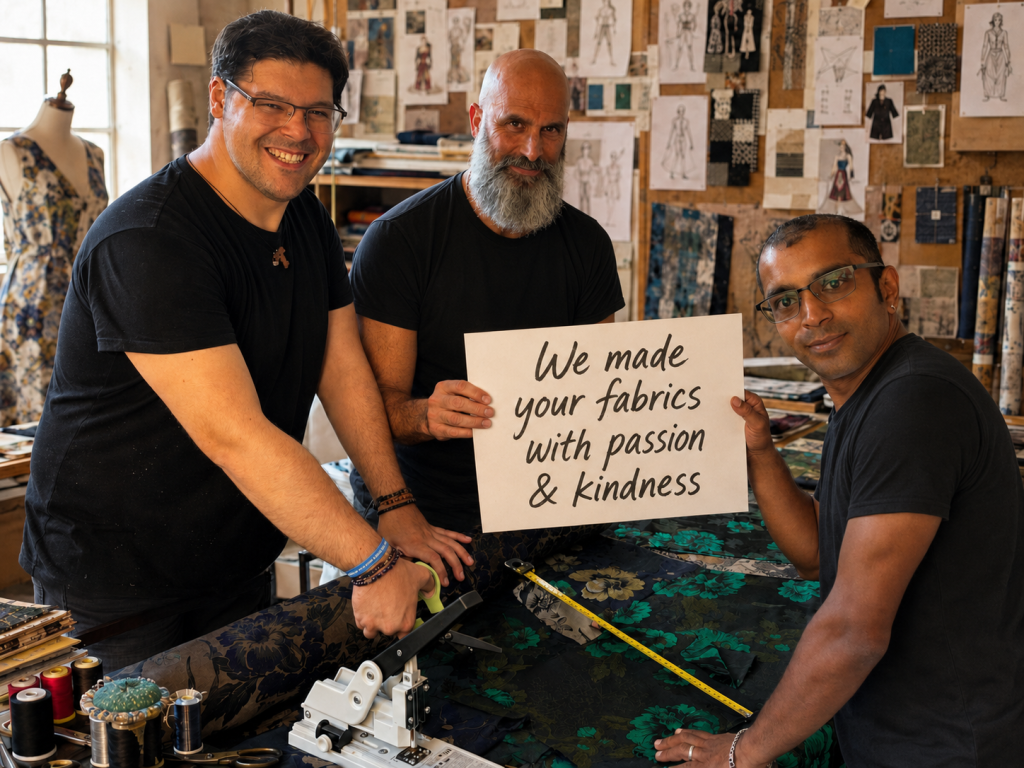
sustainable fashion made with passion and kindness
The first paradox: sustainable fashion intentions can lead to overproduction
Many designers begin with a simple and honest request:
“I want my collection to be sustainable.”
Usually, this means they want organic fabrics, recycled materials, certified supply chains, responsible production, and truthful communication. These are positive ambitions.
But the first real obstacle is often minimum order quantity.
For certified productions with Transaction Certificate and reliable Chain of Custody, technical minimums may apply because factories must manage segregation, dedicated handling, documentation, process control and traceability. ARNIA explains these operational thresholds in its Sustainability Practical Guide for Emerging Brands, where the small-lot reality is addressed clearly.
For example, ARNIA indicates operational minimums such as:
- GRS Printed: 500 metres
- GRS Woven Jacquard Yarn Dyed: 300 metres
- GRS Plain Piece Dyed: 500 metres
- FSC®: 500 metres
- ECOVERO™ Plain Piece Dyed: 800 metres
- ECOVERO™ Printed: 500 metres
- GOTS: 1,000 metres
These are not “punishments”. They are the consequence of traceability, documentation and industrial segregation. Standards must protect credibility; otherwise, certification becomes meaningless.
But for an emerging designer who needs 50, 100 or 150 metres for a capsule collection, this can create a serious sustainability contradiction.
If a brand produces 500 or 1,000 metres only to obtain a certified claim, while its actual market need is much smaller, is that truly sustainable?
The answer is not automatic.
Sometimes the most responsible decision is not to force a certified production. Sometimes it is better to produce less, document honestly, communicate precisely, and build a step-by-step sustainability roadmap.
At ARNIA, we believe that overproduction cannot become the price of sustainability.
sustainable fashion
The second paradox: certified fabric does not automatically mean certified garment, nor sustainable fashion
The second issue is even more misunderstood.
A brand may buy certified fabric and believe that the finished garment can be marketed as “certified”. In many cases, that is not correct.
A certified fabric is not the same as a certified final product.
A supplier may be certified. A fabric lot may be certified. A Transaction Certificate may exist for a specific production. But product-level claims depend on Chain of Custody: the documented and certified flow of material through the relevant stages of the supply chain, up to the party making the claim.
If the brand itself is not certified under the relevant standard, it may not be able to claim that the finished garment is GOTS, GRS or FSC® certified, even if the upstream fabric is certified.
This is one of the most important points in ARNIA’s anti-greenwashing approach, also explained in the article Greenwashing in Fashion and Textile: Sustainable Claims Need Proof.
For an emerging brand, this can be frustrating. The designer may have acted in good faith. The material may be better controlled. The supplier may be reliable. But the claim must still match the evidence.
A more responsible wording may be:
“This garment is made with certified fabric.”
or:
“The main fabric was sourced through a certified route, subject to lot documentation.”
or:
“Garment not certified; fabric documentation available for the production lot.”
This may sound less dramatic than “100% sustainable” or “certified garment”.
But it is stronger.
Because it is true.
Why this is not only a technical issue, but a question of fairness – and of a REAL sustainable fashion
Leopardi’s social chain was born from the awareness that human beings need solidarity against forces larger than the individual.
In fashion, the force is not “nature”, and it is not always a villain. Sometimes the force is simply the structure of the industry: certification schemes, industrial minimums, production calendars, audit requirements, documentation costs, supply-chain complexity, and commercial pressure.
These systems often exist for good reasons. They protect traceability. They reduce fraud. They create a common language.
But when they are accessible mainly to large-volume players, they can unintentionally make responsible fashion harder for emerging designers.
This is where we must be honest.
A small brand should not be forced to choose between two bad options:
- overproduce only to access a certification route;
- or communicate nothing, even when it is making serious responsible choices.
A better path is possible.
It begins with transparency. It continues with measurable improvement. And it requires a network of partners who are willing to explain the rules instead of using them as barriers.
In this sense, “making a chain” means helping designers understand what can be certified, what cannot be certified yet, what can be claimed safely, and what should be communicated only as a future objective.
This is not a weaker sustainability culture.
It is a more mature one.
Sustainability as a process of continuous improvement
At ARNIA, sustainability is not treated as a sticker on a hangtag.
It is a process of continuous improvement.
This means that a brand does not need to become perfect before starting. But it must start honestly.
For many emerging designers, the first step should not be an exaggerated claim. It should be a clear internal commitment.
A practical first step is to adopt an ethical code and share it with the supply chain.
A Code of Ethics is not just a document. It is a way to define how the brand wants to work: with people, suppliers, materials, information, deadlines, payments, quality problems, and communication.
It helps a brand move from intention to governance.
The first version can be simple. It can include principles such as:
- respect for workers and safe working conditions;
- preference for documented materials;
- avoidance of misleading sustainability claims;
- supplier selection based on reliability, legality and transparency;
- commitment to gradual improvement;
- responsible use of certified claims;
- protection of know-how and confidential information;
- willingness to measure progress over time.
This is where a small brand can begin.
Not by pretending to be already perfect.
But by creating a structure that makes improvement possible.
ARNIA’s article Sustainable Relationships: Where ESG Really Takes Shape in Textile Supply Chains explains this well: sustainability is not only environmental data. It is also the quality of the relationships behind a product.
Who made it? Under which rules? With which controls? With which responsibilities? With which evidence? And how does the brand behave when something goes wrong?
A responsible fashion brand is built not only with fabrics, but with agreements.
ARNIA’s daily practice: from certified materials to governed relationships
ARNIA TEXTILE FASHION is based in the Lombardy Textile District, between Varese, Como and Milan — a territory where textile knowledge, weaving, dyeing, printing, embroidery, finishing and garment development are concentrated within a short industrial radius.
This matters.
A short supply chain does not automatically make a product sustainable. But it can make control, communication and accountability more realistic.
ARNIA works as a textile converter and industrial-strategic partner for fashion brands. This means that our role is not only to “sell fabric”. Our work is to coordinate material development, sourcing, sampling, production oversight, quality control, compliance documentation and responsible communication.
Our daily practice is based on a few simple but demanding principles:
First, we try to clarify the claim before the product is communicated.
A material may be certified, certifiable, traceable, responsible, organic, recycled, lower-impact, locally produced or simply better documented. These words are not interchangeable.
Second, we support brands in identifying a realistic route.
For some projects, a certified production with Transaction Certificate may be possible. For smaller runs, it may be more correct to use component-level claims and a transparent sustainability roadmap.
Third, we work with a selected and monitored production network.
Our partners are not chosen only by price. Technical reliability, proximity, compliance, quality culture, respect for people and alignment with ARNIA’s values are part of the evaluation.
Fourth, we protect transparency and know-how together.
Transparency does not mean exposing every supplier name, process detail or client project without safeguards. Serious transparency means controlled disclosure of documentation, certificates, traceability datasets and compliance evidence under the right conditions. This topic is also connected to the article Protecting Know-How and Fashion Legality.
Fifth, we prefer truth to easy marketing.
If a project cannot support a certified garment claim, we say so. If a deadstock option creates traceability, composition, compliance or continuity risks, we say so. ARNIA has addressed this clearly in Deadstock No Thank You and in Textile Deadstock vs Just-in-Time.
This is not negativity.
It is brand reputation protection.
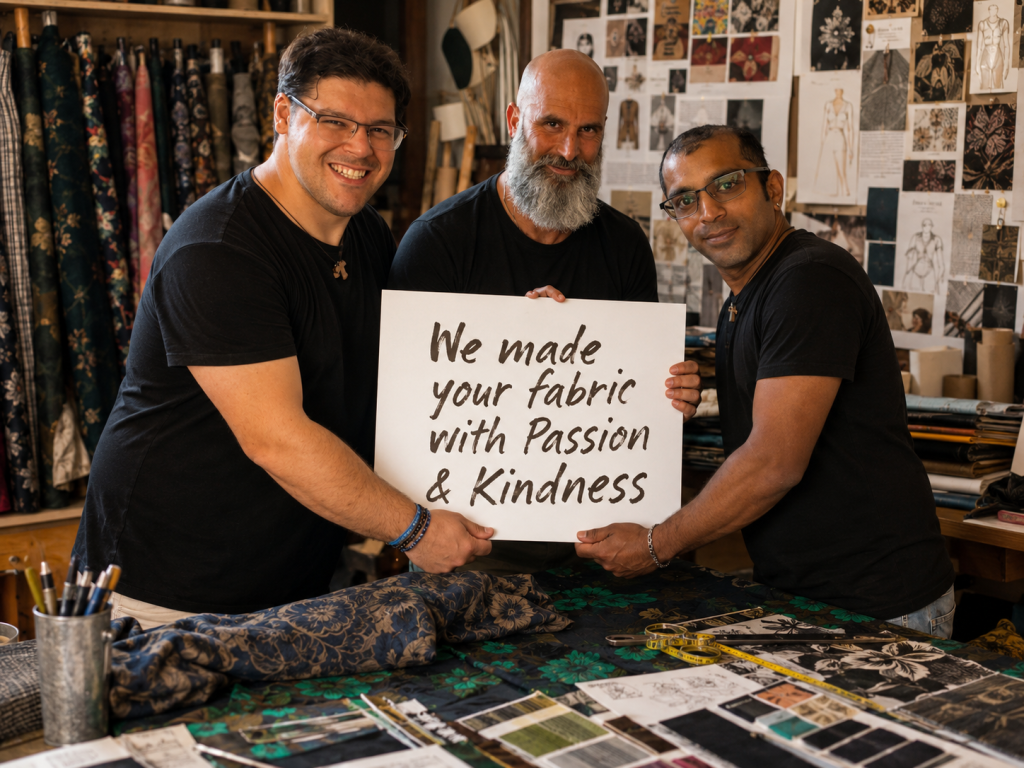
Certified fabrics, MOQ, Chain of Custody and truthful claims: ARNIA explains why sustainability is a process of continuous improvement and kindness-led supply chain governance.
Kindness as an operational style in the suplly chain
ARNIA wants to go beyond ethics.
Ethics is necessary. But ethics can become cold if it remains only a code, a clause, a policy, or a compliance checklist.
This is why ARNIA is working to bring kindness into the way business is done.
Kindness does not mean saying yes to everything.
It does not mean lowering standards.
It does not mean avoiding difficult conversations.
In a professional supply chain, kindness means saying the truth early enough for the client to make better decisions.
Kindness is telling a designer that a certification claim is not admissible before the hangtag is printed.
Kindness is explaining why producing 1,000 metres for a small capsule may create more risk than value.
Kindness is helping a founder understand that a “sustainable collection” is not built only from a moodboard, but from quantities, costing, fabric continuity, product testing, compliance, margins and realistic production planning.
Kindness is also how we negotiate with suppliers: with clarity, respect, mutual accountability and a shared understanding that quality cannot be built on pressure alone.
This is why kindness can become a business architecture.
It shapes emails, meetings, technical feedback, supplier onboarding, project feasibility, claims review, quality control, and the way difficult messages are delivered.
It transforms sustainability from a statement into a daily discipline.
Why emerging brands should begin before the prototype
Many startup founders discover the complexity of sustainability too late.
They design the product. They select the fabric. They make the prototype. They prepare the launch copy. And only then they ask:
Can we say this is organic?
Can we use this logo?
Can we call the garment certified?
Can we reorder this fabric?
Can we prove the composition?
Can we support this sustainability claim?
This is too late.
Sustainability must be designed before the first prototype.
The article Sustainable Fashion Due Diligence, GOTS 8.0 and Emerging Brands explains why due diligence is now part of product development strategy. A responsible sourcing roadmap should clarify material suitability, certification boundaries, claim language, documentation, production quantities and risks before sampling begins.
This is also why ARNIA encourages structured preliminary work through its First Call Fashion Production Onboarding. For a founder, the first strategic decision is not only “which fabric do I like?” It is:
What can this product realistically become?
Which quantity makes sense?
Which material route is coherent?
Which claims are safe?
Which budget structure can survive production?
Which supplier path protects the brand?
This approach is especially important for capsule collections and small-batch production. As explained in Why “Just a Quote” Is Not Enough, a price without technical context can become misleading. Production cost depends on construction, fabric, trims, finishing, complexity, quantities, quality requirements, sampling, and market positioning.
A sustainable brand does not begin with a claim.
It begins with a method.
The Lombardy Textile District as a living social supply chain
The Lombardy Textile District is not only a geographic advantage. It is a culture of proximity.
Como, Varese, Busto Arsizio, Gallarate and Milan represent different textile competences: silk, jacquard, printing, dyeing, cotton, viscose, embroidery, prototyping, cutting and sewing. ARNIA’s article on the Lombardy Textile District of Excellence explains why this concentration of skills matters for fashion brands seeking Made in Italy textile development.
For ARNIA, this district is also a social chain.
It is made of people, laboratories, technical experts, suppliers, pattern makers, textile converters, finishers, quality controllers and clients. When this chain works well, each link protects the next one.
The designer protects the product by defining a realistic brief.
The textile partner protects the designer by identifying risks before production.
The supplier protects the chain by documenting what is done.
The brand protects the customer by communicating only what can be proved.
The cooperative protects the human dimension by putting dignity, inclusion and responsibility inside the industrial model.
This is how Made in Italy can become more than origin.
It becomes a way of working.
Against overproduction, for responsible truth
Sustainable fashion does not need louder words.
It needs better systems.
It needs brands that do not overproduce in order to appear sustainable.
It needs suppliers that do not sell impossible promises.
It needs certification routes that remain credible without becoming inaccessible walls.
It needs designers who understand that a responsible capsule can be honest even when it is not fully certified.
It needs a language that distinguishes between ambition, evidence and claim.
Above all, it needs a social chain.
A chain of knowledge, suppliers, documents, ethics, transparency and kindness.
At ARNIA TEXTILE FASHION, this is how we try to work every day: helping brands create beautiful products without losing sight of the people, the documents, the limits and the truth behind them.
Because sustainability is not perfection.
It is the courage to improve without pretending.
It is the discipline to say only what can be proved.
It is the humility to build step by step.
And, perhaps, it is also a form of kindness: the decision to keep the chain open, so that emerging designers are not left alone in front of systems designed for those already powerful enough to absorb them.
This is the social chain that fashion needs now.
Suggested next step for a REAL sustainable fashion
If you are developing a capsule collection and want to understand which sustainable textile route is realistic for your product, explore ARNIA’s:
- Sustainability Practical Guide
- Fabric Sourcing service
- Cut & Sew Services
- Transparency approach
- Contact page
A responsible collection does not start from a claim.
It starts from the right questions.
Certified textile production often requires technical minimum order quantities because certified materials must be handled with segregation, traceability, documentation and dedicated process control. These requirements protect the credibility of the certification, but they can create a challenge for emerging brands and small capsule collections. At ARNIA TEXTILE FASHION, we believe that overproduction should not become the price of sustainability. For this reason, we help brands evaluate whether a certified production route is realistic, or whether a more responsible first step is to use documented materials, transparent wording and a gradual sustainability roadmap. Not always. A small capsule collection can be responsible, carefully sourced and developed with sustainability in mind, but full certification may depend on the material, the production process, the quantity, the applicable standard and the Chain of Custody. Very small lots, prototypes and sampling runs may not be technically suitable for certified production if the required segregation, documentation and minimum quantities cannot be maintained. This does not mean the project has no sustainability value. It means that claims must be precise, proportionate and supported by evidence. No. A certified fabric does not automatically make the finished garment certified. The final claim depends on the relevant certification standard, the Transaction Certificate when applicable, the production chain and the certification status of the brand or actors making the final product claim. If the brand is not certified within the required Chain of Custody, it may be more accurate to communicate that the garment is made with a certified fabric, or that the fabric lot was sourced through a certified route, rather than claiming that the finished garment itself is certified. This distinction is essential to avoid misleading sustainability communication and to protect the brand’s reputation. A Transaction Certificate, often called TC, is a document connected to a specific certified material transaction or production lot. It helps demonstrate that a certified material has moved through the supply chain under the conditions required by the relevant standard. A TC is not a generic marketing document. It must be connected to a real production lot, eligible materials, compliant processes and the correct documentation. For this reason, it is not always available for small quantities, prototypes or developments that do not meet the technical requirements of the certification route. To understand the practical limits of certified production, read ARNIA’s Sustainability Practical Guide. The first responsible step is not to force a claim that the brand cannot support. A better approach is to build a sustainability roadmap based on continuous improvement. Emerging designers can start by adopting a clear Code of Ethics, sharing it with suppliers, selecting better documented materials, mapping the supply chain, defining responsible claim language and avoiding generic statements such as “100% sustainable” or “zero impact” unless they can be fully substantiated. Sustainability is not only a label. It is a method: sourcing decisions, supplier relationships, product development, documentation, quality control and honest communication must work together. For ARNIA TEXTILE FASHION, the “social chain” is not only a poetic reference. It is a practical way of working. It means building responsible relationships between designers, textile experts, suppliers, production partners and clients. In daily practice, this means explaining technical limits before they become problems, clarifying certification boundaries before a claim is published, protecting know-how through controlled transparency, and choosing a supply chain based not only on price, but also on reliability, ethics, traceability and respect for people. ARNIA wants to go beyond ethics by applying kindness as an operational style: truthful guidance, clear communication, realistic expectations and responsible decisions that protect both the product and the people behind it. Learn more about ARNIA’s approach to responsible sourcing, transparency and certified textile development through our Sustainability and Transparency pages.FAQ – Frequently Asked Questions
Why can certified sustainable fabrics require minimum order quantities?
Can a small capsule collection be fully certified?
Does a certified fabric automatically make the finished garment certified?
What is a Transaction Certificate and why does it matter?
What should emerging designers do if they cannot certify their first collection?
How does ARNIA apply the idea of the “social chain” in everyday work?


