
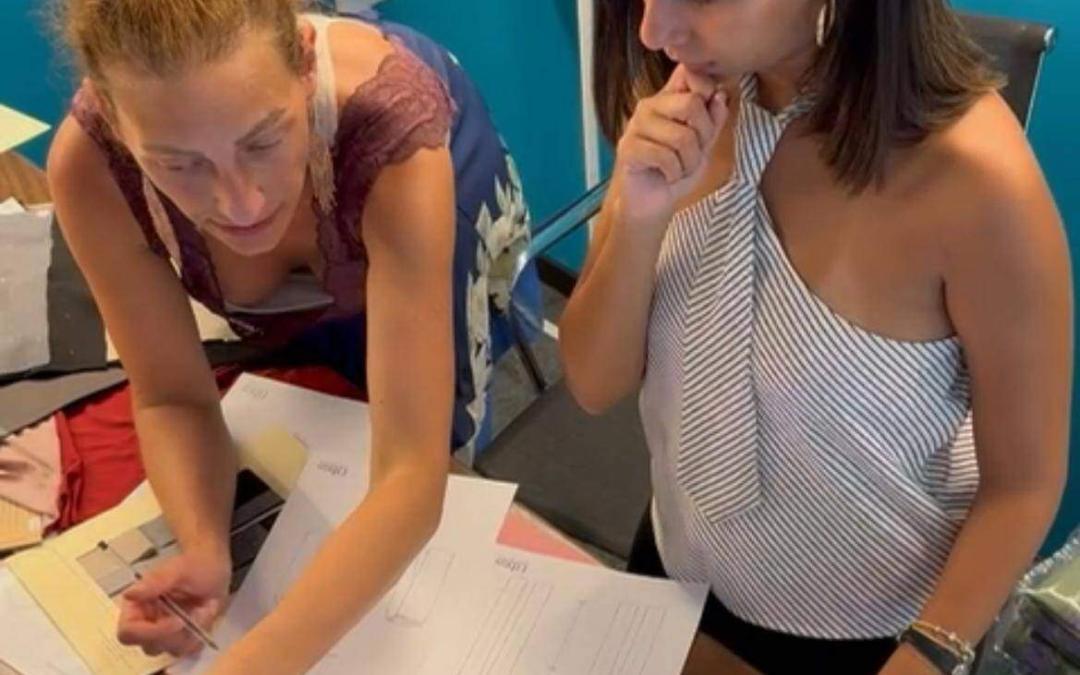
A beautiful fashion sample proves that a garment can be made once. It does not yet prove that the garment can be reproduced consistently across sizes, operators and production quantities.
An approved fashion sample may confirm the silhouette, fit, colour, fabric direction or creative intent. Bulk production, however, asks a different question:
Can the same garment be reproduced repeatedly, within defined tolerances, using the final materials, construction method, grading, labels, quality standards, cost and production timing?
That transition requires more than visual approval. It requires garment industrialisation, a complete production tech pack, a validated garment BOM, an approved pre-production sample and a controlled release to bulk production.
Apparel product development is inherently iterative: samples are made, fitted, reviewed and corrected before the pattern and specifications can be considered stable. Production-oriented pattern systems likewise distinguish design development from the later industrialisation work needed to finalize seam values, notches, pattern information and grading across sizes. ScienceDirect
For fashion brands, this distinction protects much more than product quality. It protects:
- production timing;
- target cost;
- material availability;
- delivery reliability;
- consistency across the size range;
- supply-chain documentation;
- brand reputation.
Brands that have not yet developed their first prototype should begin with our guide to what must be ready before sampling.
Quick Answer: When Is an Approved Fashion Sample Production-Ready?
An approved fashion sample is production-ready only when the brand and production partner have locked and documented:
- the final master pattern;
- seam allowances, notches and construction references;
- the approved size range and grading;
- points of measure and measurement tolerances;
- final fabric, trims and accessories;
- the complete Bill of Materials;
- construction and workmanship specifications;
- artwork and placement;
- labels, care information and packaging;
- target quantities and size breakdown;
- final costing assumptions;
- production timing and capacity;
- quality-control criteria;
- the approved pre-production sample;
- the process for authorizing any subsequent change.
A production-ready garment is therefore not simply a garment that looks correct. It is a garment that is technically specified, materially available, commercially validated, repeatable and controllable.
Sample Approval Is Not One Single Approval
One of the most common causes of misunderstanding in fashion development is the word approved.
A message such as “the sample is approved” is incomplete unless it also explains:
- what has been approved;
- which sample version was reviewed;
- which size was tested;
- which materials were used;
- which points remain open;
- whether production may begin.
Design Approval
Design approval normally confirms elements such as:
- silhouette;
- proportion;
- volume;
- length;
- visual balance;
- colour direction;
- surface appearance;
- overall creative intent.
It does not automatically confirm that the pattern has been industrialised, the grading is correct or the garment is ready for bulk production.
Fit Approval
Fit approval confirms how a specific sample behaves on a particular fitting model, mannequin or body size.
It may validate:
- balance;
- ease;
- shoulder position;
- armhole shape;
- waist and hip relationship;
- garment length;
- movement;
- comfort;
- interaction between fabric and construction.
A fit approval on one sample size does not automatically approve the entire size range.
Material Approval
Material approval may confirm:
- fabric appearance;
- hand feel;
- weight;
- colour;
- print;
- texture;
- trim selection;
- lining;
- buttons;
- closures.
However, a sample may have been produced with a short sample length, a temporary trim or a different fabric lot. Material approval is not complete until the intended production article, colour, finish, availability and technical behaviour have been confirmed.
Production Approval
Production approval is broader.
It confirms that the garment can move into bulk production according to a controlled package of:
- patterns;
- grading;
- measurements;
- tolerances;
- materials;
- construction instructions;
- Bill of Materials;
- approved sample;
- quality criteria;
- cost;
- quantities;
- timing.
The word approved should never stand alone. Every approval should identify its scope.
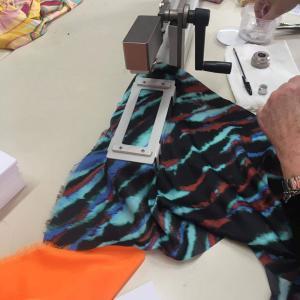
Pre-Production Sample: Prototype Approval to Bulk
Prototype, Fit Sample, Size Set, PPS and TOP: What Each Sample Proves
Garment sample terminology can vary between brands, product categories and manufacturers. Some companies combine stages, while others use additional samples. The essential principle is to define each sample’s purpose before it is made.
| Sample type | Main purpose | What it does not automatically prove |
|---|---|---|
| Prototype sample | Tests the initial design, construction idea and general feasibility | Final fit, grading, production materials or bulk repeatability |
| Fit sample | Tests balance, measurements, ease, movement and fit in a selected size | Performance across the full size range |
| Size set sample | Verifies grading and proportion across selected or all sizes | Final production quality unless materials and construction are also final |
| Pre-production sample — PPS | Confirms the intended production standard before bulk release | That every bulk unit will automatically comply without further control |
| Sealed or golden sample | Preserves the approved physical reference against which production is compared | Ongoing production consistency without inspection |
| Top of production sample — TOP | Checks the first garments made through the actual production route | Conformity of the entire production order |
The stages should not be treated as bureaucratic duplication. Each one answers a different technical question.
Why a Beautiful fashion Sample Can Still Fail in Bulk Production
A garment can look excellent during a fitting and still contain unresolved production risks.
The Sample May Depend on Exceptional Manual Intervention
A sample maker may spend additional time correcting, easing, pressing or adjusting a single garment.
During bulk production, those corrections cannot remain dependent on individual interpretation. They must be converted into:
- accurate patterns;
- clear construction instructions;
- repeatable operations;
- measurable standards;
- realistic production time.
The question is not only whether an expert can make the garment.
The question is whether the approved result can be reproduced by the assigned production team, with the agreed materials, within the agreed cost and delivery schedule.
The Pattern May Not Yet Be Industrialised
A creative or fitting pattern may still require technical preparation before production.
Garment industrialisation may include:
- finalizing seam allowances;
- adding notches and drill references;
- defining grain-lines and pattern axes;
- naming every pattern piece;
- confirming the required number of cut pieces;
- identifying mirrored or paired pieces;
- defining fusing areas;
- incorporating shrinkage allowances;
- verifying pattern intersections;
- confirming construction order;
- preparing the pattern for grading and marker planning.
Lectra describes pattern industrialisation as the stage in which information such as notches, seam values and axes is added so that the pattern can move smoothly into production, while grading adapts it across the required sizes. Lectra
A garment is not production-ready if essential information exists only in the sample maker’s memory.
One Approved Size Does Not Prove the Full Size Range
A fit sample normally represents one base size.
The proportions that work in that size may not behave correctly after grading. Problems can appear in:
- armhole depth;
- neckline position;
- pocket placement;
- collar proportions;
- lapel width;
- sleeve balance;
- rise;
- crotch curve;
- hem circumference;
- motif placement;
- trim position.
A size set sample or targeted grading review helps determine whether the design logic has been preserved across the commercial size range.
The fashion Sample May Use Temporary Materials
A first sample may be produced with:
- substitute fabric;
- available lining;
- temporary buttons;
- a different zip length;
- sample-yardage colour;
- provisional interfacing;
- temporary labels;
- hand-applied artwork.
Substitutions may be acceptable during development, provided they are clearly recorded.
They become dangerous when the team later assumes that the sample already represents final bulk materials.
For custom fabrics, the development team must also determine whether an existing article can be used, an established construction can be adapted, or a new textile development is required. Our guide to custom fabric development in Italy explains how a reference swatch becomes a repeatable fabric specification.
The Garment BOM May Still Be Incomplete
The Bill of Materials, or garment BOM, is not simply a purchasing list.
It should identify every relevant component required to reproduce the approved garment, including:
- main fabric;
- contrast fabric;
- lining;
- interfacing;
- thread;
- buttons;
- zips;
- snaps;
- hooks;
- elastic;
- tapes;
- embroidery threads;
- labels;
- care labels;
- size labels;
- hangtags;
- packaging materials.
A production tech pack should connect visual information, garment specifications, measurements, artwork and BOM data in one controlled source. Browzwear’s production documentation similarly treats sketches, specifications, BOM, measurements and artwork as core elements of a production-ready tech pack. browzwear.com
An incomplete BOM creates several risks:
- missing components;
- incorrect purchasing;
- unapproved substitutions;
- costing errors;
- production delays;
- inconsistent garments;
- incorrect labels or packaging.
The Production Tech Pack May Describe Intention Rather Than Execution
A design tech pack may communicate the creative idea without containing enough information for repeatable production.
A production-ready tech pack should define not only what the garment should look like, but how it must be made and controlled.
That may include:
- technical drawings;
- pattern version;
- construction call-outs;
- seam types;
- stitch type or density where relevant;
- reinforcement points;
- interfacing;
- edge finishing;
- pressing requirements;
- measurements;
- grading;
- tolerances;
- fabric and trim codes;
- artwork placement;
- label positioning;
- packaging instructions;
- revision history.
The physical sample and the technical file must agree. When they do not agree, the production team does not have one reliable standard.
Final Costing May Still Be Provisional
The first estimate may be based on:
- expected fabric consumption;
- assumed construction time;
- provisional trims;
- approximate quantities;
- an unfinished pattern;
- incomplete packaging information.
Reliable final pricing becomes possible only when the garment is sufficiently stable to calculate:
- real fabric consumption;
- marker efficiency;
- trim quantities;
- production operations;
- make time;
- special finishing;
- quality-control requirements;
- packaging;
- expected waste and tolerances.
ARNIA’s operating procedure therefore states that final pricing is confirmed only after a repeatable prototype, a validated BOM and client approval.
An approved aesthetic sample is not automatically a reliable costing reference.
Quality Acceptance Criteria May Not Yet Exist
“High quality” is not a measurable production instruction.
Before bulk production, the parties should agree how quality will be assessed, including where relevant:
- measurement tolerances;
- construction tolerances;
- colour expectations;
- placement tolerances;
- workmanship criteria;
- pressing and finishing;
- symmetry;
- seam appearance;
- label placement;
- packaging;
- critical, major and minor defects;
- inspection stages;
- approval responsibilities.
Without defined acceptance criteria, the manufacturer and the brand may inspect the same garment and reach different conclusions.

SELLING PRICE PRODUCTION COSTS
Garment Industrialisation: What Must Be Locked Before Bulk Production
Garment industrialisation — also spelled industrialization — is the process of converting an approved creative and fitting result into a controlled manufacturing standard.
It connects design, pattern development, grading, materials, costing, production planning and apparel quality control.
1. Final Master Pattern
The final master pattern should represent the approved garment and correspond to the latest sample.
Pattern Data That Should Be Frozen
Depending on the garment, the pattern file should identify:
- style code;
- pattern version;
- base size;
- piece name;
- grain-line;
- cut quantity;
- seam allowance;
- notches;
- drill points;
- fold lines;
- placement references;
- fusing areas;
- matching points;
- shrinkage or relaxation allowances;
- material assignment.
Whenever a physical correction is made directly to a sample, the same correction must be transferred back to the pattern and technical documentation.
Otherwise, the approved sample and the production file become two different products.
2. Grading and Size Set Validation
Grading must preserve the intended:
- fit;
- balance;
- function;
- proportion;
- visual identity.
Grading Questions That Must Be Answered
- Which size is the approved base size?
- What is the commercial size range?
- Which grading rules are being used?
- Do design details move proportionally?
- Are pockets, trims and artwork re-positioned correctly?
- Does ease remain coherent across sizes?
- Which sizes require a physical size set?
- Which measurements require special tolerances?
A standard mathematical grade may not be appropriate for every detail. Design elements sometimes need independent adjustment to remain visually balanced.
3. Measurement Specification and Tolerances
A production-ready garment requires a clear measurement chart.
For each point of measure, the file should define:
- point name;
- method of measurement;
- base-size measurement;
- grade increment;
- measurement for each size;
- acceptable tolerance.
The method of measurement is as important as the number itself.
For example, two teams may measure garment length, sleeve length or hip width differently unless the measuring method is specified.
4. Final Garment BOM
The final garment BOM should be complete, approved and aligned with costing.
What the Final BOM Should Contain
For each component, it should identify where applicable:
- component description;
- supplier;
- article or product code;
- colour;
- size or dimension;
- composition;
- unit of measure;
- consumption per garment;
- expected waste;
- approval status;
- alternative component policy;
- certification or documentation requirement;
- delivery status.
A change to one BOM item can affect fit, appearance, performance, cost, timing or compliance.
A heavier zip may influence drape. A different interfacing can change the structure. A substitute button can change both appearance and care requirements.
5. Production Fabric and Trims
The fabric approved for production should be assessed in relation to the finished garment, not only as a swatch.
Fabric Controls
Depending on the project, these may include:
- composition;
- usable width;
- weight;
- colour;
- print or weave repeat;
- hand feel;
- drape;
- dimensional stability;
- shrinkage;
- skew or spirality;
- colour fastness;
- rubbing fastness;
- pressing behaviour;
- fusing compatibility;
- relaxation requirements;
- motif placement;
- lot availability.
Trim Controls
Trims may require confirmation of:
- colour;
- dimension;
- function;
- compatibility;
- strength;
- finish;
- logo;
- supplier;
- lead time;
- minimum order;
- care behaviour.
A trim should not be approved only because it looks correct. It must also work correctly within the garment.
6. Construction and Workmanship Standard
The pre-production sample should represent the intended construction route.
The technical file should specify relevant details such as:
- seam construction;
- stitch type;
- thread;
- needle requirements;
- reinforcement;
- fusing;
- edge finishing;
- top-stitching;
- seam direction;
- lining attachment;
- closure installation;
- pressing;
- final finishing.
The objective is not to document every obvious operation unnecessarily. It is to remove ambiguity from any detail that could influence quality, appearance, cost or repeatability.
7. Artwork, Labels and Packaging
Artwork and branding require their own approval.
The team should lock:
- artwork file and version;
- dimensions;
- colour reference;
- placement;
- orientation;
- distance from seams;
- repeat position;
- label type;
- label wording;
- care information;
- size identification;
- hang-tag;
- folding method;
- individual packaging;
- carton requirements.
Legal, fibre-content, care, origin and certification wording must be assessed according to the actual product and destination market. A visually approved label is not necessarily a compliant label.
8. Final Cost and Production Timing
Before bulk release, the commercial and technical assumptions must refer to the same garment version.
Final cost should be based on:
- approved construction;
- final materials;
- validated consumption;
- confirmed quantities;
- size breakdown;
- production method;
- finishing;
- packaging;
- agreed quality controls.
Production timing should consider:
- material availability;
- trim lead times;
- pattern completion;
- grading;
- sample approval;
- production capacity;
- specialist processes;
- quality-control stages;
- shipment preparation.
A delivery date cannot be considered reliable if materials, specifications or approval responsibilities remain open.
9. Quality Plan and Change Control
Production readiness also requires a method for handling changes.
The project should define:
- who may request a change;
- who approves it;
- how it is recorded;
- which document version becomes valid;
- whether re-sampling is required;
- how cost and timing are affected;
- whether already-purchased materials are affected.
A small undocumented adjustment can create large inconsistencies when repeated across a production order.
The Pre-Production Sample as the Production-Readiness Gate
The pre-production sample, commonly abbreviated as PPS, should represent the garment that the production team is expected to reproduce.
Where technically possible, it should be made with:
- the approved master pattern;
- the intended production fabric;
- the intended trims;
- final construction;
- approved measurements;
- approved artwork;
- final labels;
- representative pressing and finishing.
When a final material is not yet available, the exception should be recorded explicitly. The missing approval should remain open rather than being silently treated as complete.
What the PPS Should Confirm
| Area | Production-readiness question |
|---|---|
| Design | Does the garment correspond to the approved creative direction? |
| Fit | Is the approved fit reflected in the final pattern? |
| Pattern | Is the correct production pattern version being used? |
| Grading | Has the size range been reviewed or validated as required? |
| Fabric | Is the intended production article, colour and finish confirmed? |
| Trims | Are final components identified and approved? |
| Construction | Can the approved workmanship be reproduced consistently? |
| Measurements | Are points of measure and tolerances documented? |
| Artwork | Are dimensions, colour and placement locked? |
| Labels | Is wording, content and position approved? |
| Packaging | Are folding and packing instructions defined? |
| Costing | Does final costing refer to this garment version? |
| Quality | Is there a clear reference for inspection? |
How to Approve a Pre-Production Sample Correctly
The approval record should identify:
- brand;
- style code;
- style name;
- season;
- sample type;
- sample version;
- pattern version;
- sample size;
- fabric and trim references;
- approval date;
- approver;
- comments;
- open issues;
- approval status;
- reference photographs;
- location of the physical sealed sample.
A useful approval status is not simply “OK”.
It should state one of the following:
- Approved for bulk production
- Approved subject to listed corrections and re-validation
- Not approved
“Approved with comments” can be dangerously ambiguous when nobody records whether the comments were implemented before cutting began.
What Happens After PPS Approval?
PPS approval is an important gate, but it is not the end of apparel quality control.
After approval, the project normally moves through a sequence such as:
- final update of pattern, tech pack and BOM;
- signed production-version release;
- purchase order and material confirmation;
- pre-production meeting;
- cutting authorization;
- first production units;
- TOP sample or first-off review;
- in-process controls;
- final inspection;
- shipment approval.
Independent quality-control organizations treat pre-production as a combination of specification setup, sample review, laboratory checks and production scheduling. Initial production inspections may then review raw materials, construction, dimensions, artwork, labels and packaging during the first stage of the actual production run. SGSCorp
The Role of the Top of Production Sample
A top of production sample, or TOP sample, is taken from the first garments produced through the actual bulk-production route.
Its purpose is to check whether:
- the correct materials reached production;
- the approved pattern was used;
- construction corresponds to the PPS;
- measurements remain within tolerance;
- artwork and labels are correct;
- pressing and finishing are consistent.
A TOP approval does not eliminate the need for ongoing production checks. It verifies the beginning of the run, not every unit that follows.
Small-Batch Production Does Not Remove the Need for Industrialisation
Small-batch fashion production is sometimes treated as an extension of sampling.
It is not.
A production of 20 garments is a small production order. It is not one large sample.
Small quantities still require:
- repeatable patterns;
- grading;
- material allocation;
- a final BOM;
- construction standards;
- production instructions;
- quality criteria;
- timing control.
In some respects, a small batch can be less forgiving:
- development costs are distributed across fewer units;
- replacement materials may be limited;
- one defective garment represents a larger percentage of the order;
- last-minute changes have a greater effect on unit cost;
- the entire launch may depend on one small delivery.
ARNIA’s Cut & Sew projects may start from 20 pieces per style, subject to product category and technical feasibility. The stated process remains sampling, industrialisation, quality control and production oversight. ARNIA TEXTILE FASHION Company P…
For a broader explanation of quantities, development costs and process, read Small-Batch Cut and Sew Manufacturing in Italy.
Certification and Traceability Are Separate Approval Gates
Physical sample approval does not automatically approve:
- a certified-garment claim;
- a Transaction Certificate;
- logo use;
- a recycled-content claim;
- an organic-content claim;
- a traceability statement;
- a Made in Italy origin claim.
Those claims depend on the real material, article, production lot, supply-chain route, technical MOQ, applicable standard and Chain of Custody.
ARNIA’s technical documentation states that a final product cannot automatically be claimed as certified merely because an upstream fabric is certified. Technical minimums and segregation requirements may also apply. 02 Allegato_Tecnico per contest…
Before finalizing labels, hangtags, product pages or wholesale information, brands should review:
- why certified fabric does not automatically mean certified garment;
- how Transaction Certificates, MOQ and Chain of Custody work.
A garment can be aesthetically approved while its certification or communication route remains unapproved.
Who Should Approve What Before Bulk Production?
Responsibilities vary according to the project, but they should be assigned clearly.
| Area | Production-readiness question |
|---|---|
| Design | Does the garment correspond to the approved creative direction? |
| Fit | Is the approved fit reflected in the final pattern? |
| Pattern | Is the correct production pattern version being used? |
| Grading | Has the size range been reviewed or validated as required? |
| Fabric | Is the intended production article, colour and finish confirmed? |
| Trims | Are final components identified and approved? |
| Construction | Can the approved workmanship be reproduced consistently? |
| Measurements | Are points of measure and tolerances documented? |
| Artwork | Are dimensions, colour and placement locked? |
| Labels | Is wording, content and position approved? |
| Packaging | Are folding and packing instructions defined? |
| Costing | Does final costing refer to this garment version? |
| Quality | Is there a clear reference for inspection? |
The project should identify one authorized person responsible for the final production release.
Multiple people may comment. Not everyone should be able to change the approved standard independently.
How ARNIA Moves a Garment from Approved Sample to Repeatable Production
ARNIA TEXTILE FASHION is an Italian textile converter and production partner based in the Lombardy Textile District — Varese, Como and Milan.
Its model connects:
- fabric development;
- sourcing;
- garment development;
- pattern and production coordination;
- industrialisation;
- quality oversight;
- traceability;
- responsible Made in Italy production.
ARNIA coordinates selected specialist partners while retaining responsibility for product development, documentation, production monitoring, quality control, client communication, traceability and ethical oversight.
1. Project Brief and Pre-Feasibility
The first step is to understand:
- product category;
- number of styles;
- expected quantities;
- development stage;
- target market;
- target retail price;
- production-cost architecture;
- desired timing;
- material requirements;
- certification or traceability expectations.
This determines whether the project is ready for quotation or still requires development.
2. Technical File Review
ARNIA reviews the available:
- tech pack;
- patterns;
- size specifications;
- reference garments;
- fabric swatches;
- BOM;
- trim references;
- artwork;
- labels;
- packaging requirements.
Missing information is identified before the project moves deeper into sampling or production.
3. Prototype and Fitting
The prototype is developed to answer defined questions about:
- design;
- construction;
- fit;
- fabric behaviour;
- technical feasibility.
Corrections are recorded and transferred to the relevant files.
4. Industrialisation and BOM Validation
Once the creative and fitting direction is stable, the project moves toward:
- production pattern finalization;
- grading;
- measurement specification;
- material validation;
- BOM completion;
- construction definition;
- quality criteria.
A Textile Project Manager can coordinate the connections between textile sourcing, garment development, approvals and production partners.
5. Pre-Production Fashion Sample Approval
The PPS is checked against the final project specifications.
Open points are resolved before bulk production is released.
6. Final Pricing and Timing Confirmation
Firm pricing and final production timing are based on the technically validated garment, not on an early visual reference.
This protects both parties from estimates based on incomplete assumptions.
7. Bulk Production and Quality Oversight
After approval, ARNIA coordinates the production route through selected Lombardy partners, with agreed controls over:
- materials;
- workflow;
- production progress;
- quality;
- documentation;
- delivery.
Brands seeking this route can review ARNIA’s Italian Cut & Sew Services or begin with the structured First Call and production onboarding process.
Production-Readiness Checklist for Fashion Brands
Before authorizing bulk production, confirm every item below.
| Production-readiness control | Status |
|---|---|
| Creative and commercial brief approved | Ready / Open |
| Style code, season and version confirmed | Ready / Open |
| Final master pattern approved | Ready / Open |
| Pattern corrections transferred from the sample | Ready / Open |
| Size range and grading approved | Ready / Open |
| Size set reviewed where required | Ready / Open |
| Points of measure defined | Ready / Open |
| Measurement tolerances defined | Ready / Open |
| Final production fabric confirmed | Ready / Open |
| Final trims and accessories confirmed | Ready / Open |
| Material availability confirmed | Ready / Open |
| Garment BOM complete | Ready / Open |
| Construction specifications complete | Ready / Open |
| Artwork and placement approved | Ready / Open |
| Labels and care information approved | Ready / Open |
| Packaging instructions approved | Ready / Open |
| Certification and traceability route validated | Ready / Open |
| Pre-production sample approved in writing | Ready / Open |
| Final costing confirmed | Ready / Open |
| Quantities and size breakdown confirmed | Ready / Open |
| Production capacity and timeline confirmed | Ready / Open |
| Quality-control plan agreed | Ready / Open |
| Change-control responsibility agreed | Ready / Open |
| No unresolved “TBC” item affects fit, cost or timing | Ready / Open |
When a critical item remains open, the garment is not fully production-ready.
From a Beautiful fashion Sample to a Reliable Product
A prototype is evidence of possibility.
A production-ready garment is evidence of repeatability.
The real value of professional fashion development lies in transforming:
- visual approval into technical specifications;
- fitting decisions into stable patterns;
- selected materials into an approved BOM;
- craftsmanship into repeatable workmanship;
- a sample price into reliable costing;
- a desired delivery date into a feasible production plan.
That discipline does not reduce creativity.
It protects the creative intention while the garment moves from one carefully made sample to a complete, consistent and commercially viable production order.
ARNIA TEXTILE FASHION connects creative vision, textile feasibility, garment industrialisation, quality control and responsible Made in Italy production through one accountable Lombardy-based partnership.
Already working with an approved sample? Complete the ARNIA Textile and Garment Project Brief with your product category, quantity, current development stage, target timing, price architecture and traceability requirements.
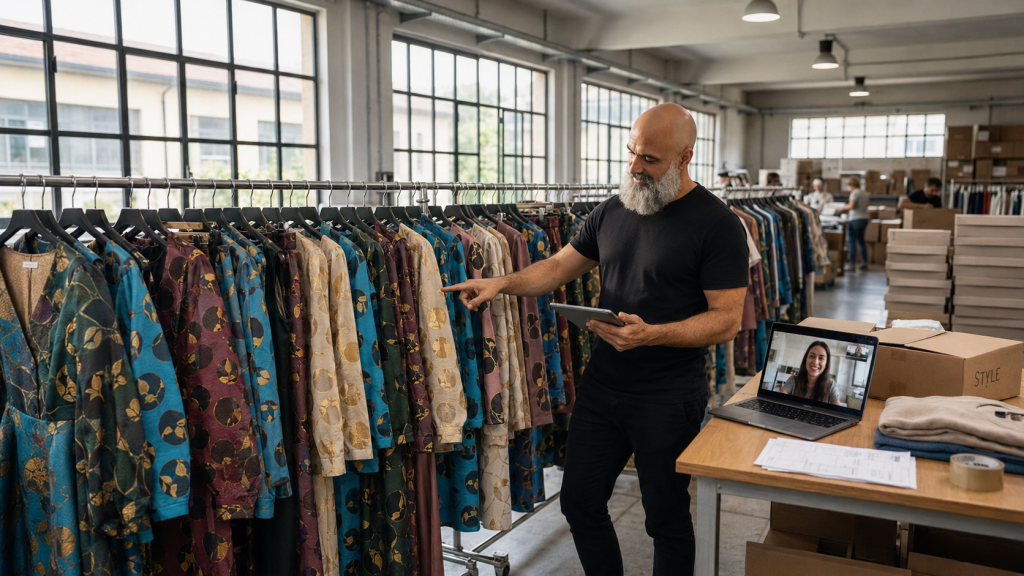
Italian textile converter coordinating mills, printers and finishers in the Lombardy Textile District
FAQ – Why an Approved Fashion Sample Is Not Yet Production-Ready
Is an approved fashion sample ready for bulk production?
Not necessarily. It may be approved for design, fit or presentation while the production pattern, grading, BOM, final materials, tolerances, costing or quality-control plan remain incomplete.
Bulk production should begin only after the production standard has been fully defined and approved.
What is a pre-production sample?
A pre-production sample is a garment made to represent the intended bulk-production standard.
It should use the approved pattern, intended materials, final construction and relevant labels, artwork and finishing wherever technically possible.
What does PPS mean in fashion production?
PPS means pre-production sample.
The expression “PPS sample” is commonly used in searches and industry conversations, although the final word repeats the meaning of the letter S.
What is the difference between a prototype and a pre-production sample?
A prototype explores whether the design and construction concept can work.
A pre-production sample confirms how the final garment should be reproduced in bulk, using the production pattern, approved materials, specifications and construction route.
Is fit-sample approval enough to begin bulk production?
No. Fit-sample approval normally confirms the fit of one sample size.
The team must still validate the production pattern, grading, size specifications, materials, BOM, construction, cost and production instructions.
What is a size set sample?
A size set contains samples in selected or all commercial sizes.
It is used to check whether grading preserves fit, proportion, comfort and design details across the size range.
Does every size need a physical sample?
Not always.
The appropriate size-set strategy depends on the garment, fit complexity, size range, grading risk and brand requirements. Critical sizes or proportions may require physical validation even when every size is not sampled.
What is a sealed or golden sample?
A sealed or golden sample is the approved physical reference preserved for comparison with production.
It should correspond to the approved technical documentation and be clearly identified by style, size, version and approval date.
What is a top of production sample?
A top of production sample is selected from the first garments made during the actual production run.
It helps verify that the production line is reproducing the approved PPS, pattern, materials, measurements, labels and workmanship.
Is a tech pack still necessary when a physical sample exists?
Yes.
A physical sample cannot communicate every measurement, tolerance, component code, grading rule, construction instruction, label requirement or approved revision.
The sample and production tech pack should be used together.
Why can the final price change after the first sample?
The first sample may still contain provisional materials, unfinished patterns or unresolved construction details.
Final pricing becomes more reliable after actual fabric consumption, production operations, trims, finishing, packaging, quantities and quality requirements have been validated.
Can a small-batch production skip industrialisation?
It should not.
Small-batch production may use a simplified process appropriate to the quantity and product, but the garment still requires a repeatable pattern, final materials, clear specifications and an approved production standard.
When should bulk fabric be cut?
Bulk cutting should begin only after the authorized production version has been released and all critical approvals affecting pattern, fit, fabric, placement, consumption and construction have been closed.
Cutting before those decisions are final creates avoidable commercial risk.
Does an approved sample confirm that the garment is certified?
No.
Sample approval concerns the physical product. Certification and marketing claims depend on the applicable standard, material, article, production lot, technical MOQ, Chain of Custody, documentation and brand status.
Who gives the final production approval?
The final approval should be issued by the brand representative formally authorized to release the style into production.
The production partner should retain a clear written record of the approved version, any permitted corrections and the date of release.


